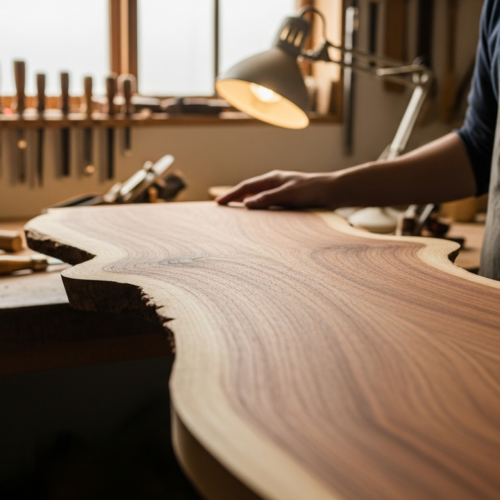

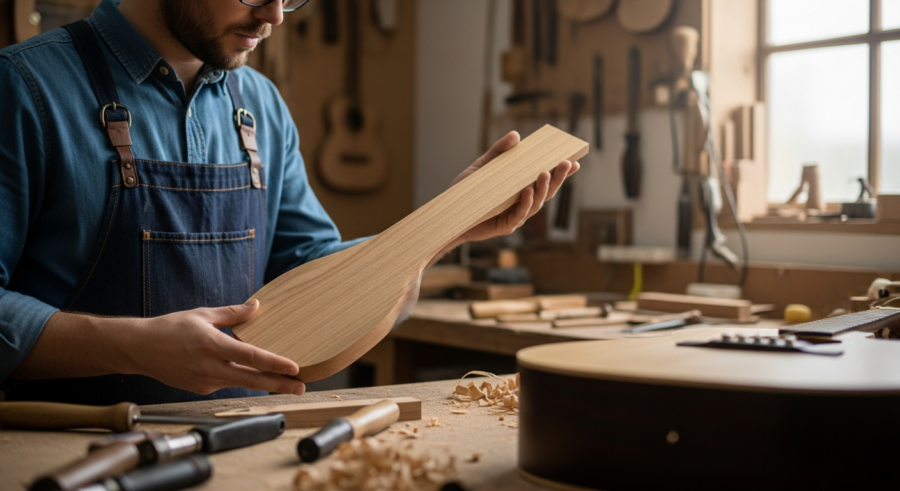
When it comes to crafting the perfect guitar, the choice of wood is paramount. The wood used, known as tonewood, significantly influences the instrument’s sound, feel, and overall quality.
Among the many options available to luthiers, alder stands out as a versatile and widely favored choice. Its balanced tonal properties and ease of workability make it a staple in the guitar-building world.
This article provides a comprehensive look into alder tonewood characteristics, exploring its benefits, tonal impact, and how it compares to other popular woods. Whether you’re a seasoned luthier or a guitar enthusiast, understanding alder’s qualities can help you appreciate its role in creating exceptional instruments.
The Benefits of Using Alder in Guitar Construction
Alder offers a unique combination of tonal and practical advantages for guitar builders. Its balanced frequency response makes it a versatile choice for various musical styles and playing techniques.
One of the primary benefits of alder is its lightweight nature, which contributes to comfortable playing experiences, especially for extended periods. Guitars made from alder are often easier to handle, reducing strain on the player’s body.
The wood’s consistent density and grain structure also make it easy to work with, allowing for precise shaping and carving. This is particularly important for achieving optimal resonance and tonal clarity in the final instrument.
Furthermore, alder’s ability to accept finishes well adds to its appeal. The wood can be easily stained, painted, or clear-coated to achieve a variety of aesthetic effects, making it a favorite among luthiers seeking both sonic and visual excellence.
Another significant advantage of alder is its availability. It’s a relatively common wood, making it more accessible and affordable than some of the more exotic tonewood options.

This cost-effectiveness allows guitar manufacturers to produce high-quality instruments at a more accessible price point. This benefits both the builders and the musicians who can then acquire quality instruments without breaking the bank.
Alder’s consistent nature also allows for more predictable results in the guitar-building process. Unlike some woods that can exhibit significant variations in density and grain, alder tends to be more uniform, leading to more consistent tonal characteristics from one guitar to another.
This predictability is valuable for luthiers who are striving to create instruments with consistent quality and performance. It also allows them to fine-tune their building techniques and achieve specific tonal goals with greater accuracy.
Alder’s Impact on Guitar Tone and Sustain
The sonic characteristics of alder are often described as balanced and neutral, making it a great canvas for different pickup configurations and playing styles. Alder’s tonal profile doesn’t heavily emphasize any particular frequency range, providing a clear and articulate sound across the spectrum.
The wood’s ability to transmit vibrations efficiently contributes to good sustain, allowing notes to ring out clearly and evenly. This is especially appreciated in electric guitars, where sustain is a crucial factor in achieving expressive and dynamic performances.
Alder’s balanced frequency response also means that it doesn’t muddy the low end or sound harsh in the high frequencies. This makes it suitable for a wide range of musical genres, from blues and rock to pop and jazz.
Players often describe alder guitars as having a “woody” or “organic” sound, which adds warmth and character to their playing. This natural tonal quality makes alder a favorite among guitarists seeking a versatile and expressive instrument.
The neutral tonal character of alder allows the guitar’s pickups to truly shine. Different pickup types can be used to achieve a wide array of sounds, from bright and sparkling cleans to thick and saturated distortions.
This versatility makes alder guitars a popular choice for session musicians and guitarists who need to cover a variety of musical styles. The wood’s balanced tone provides a solid foundation for any sound, allowing the player to easily adapt to different musical contexts.
Furthermore, alder’s contribution to sustain is not just about the length of the notes, but also the quality of the sustain. The wood’s ability to transmit vibrations evenly ensures that the notes decay smoothly and naturally, without any abrupt drop-offs or unwanted resonances.
This smooth sustain is particularly important for lead players who rely on it to create expressive solos and melodies. It allows them to hold notes for longer periods and create a more fluid and seamless playing experience.
Workability and Finishing Considerations for Alder
Alder is renowned for its ease of workability, making it a favorite among luthiers of all skill levels. The wood’s soft and consistent texture allows for smooth cutting, shaping, and sanding, reducing the risk of chipping or splintering.
Its uniform grain structure also makes it easy to glue, ensuring strong and durable joints in guitar construction. This is particularly important for neck-to-body joints, which must withstand significant tension and vibration.
| Characteristic | Description | Benefit |
|---|---|---|
| Softness | Relatively soft wood | Easy to shape and sand |
| Grain | Consistent and even | Glues well, finishes evenly |
| Density | Medium density | Good resonance, moderate weight |
| Pore Structure | Closed pore | Requires minimal pore filling |
Alder’s closed-pore structure also simplifies the finishing process, requiring minimal pore filling to achieve a smooth and glossy surface. This saves time and effort, while also reducing the amount of finish required.
The ease of workability of alder also allows luthiers to create more intricate and detailed designs. The wood can be easily carved and shaped to create unique body contours, headstock shapes, and other aesthetic features.
This allows for greater creativity and customization in guitar design, making alder a popular choice for both mass-produced and custom-built instruments. Luthiers can easily adapt their designs to suit the specific needs and preferences of their clients.
The finishing process is also simplified by alder’s ability to accept a wide range of finishes. The wood can be easily stained, painted, or clear-coated to achieve a variety of aesthetic effects, from classic vintage looks to modern high-gloss finishes.
This versatility allows luthiers to create guitars that are not only sonically pleasing but also visually stunning. The ability to customize the finish allows them to create instruments that are truly unique and reflect the personality of the player.
Alder’s Popularity in Electric Guitars
Alder has long been a staple in the world of electric guitars, particularly for solid-body instruments. Its balanced tonal properties and comfortable weight make it an ideal choice for various playing styles and genres.
Many iconic guitar models, such as the Fender Stratocaster and Telecaster, have been crafted with alder bodies, contributing to their signature sounds. Alder’s ability to provide a neutral platform for pickups allows these guitars to deliver a wide range of tones, from clean and articulate to overdriven and aggressive.
The wood’s consistent density and resonance also contribute to the sustain and clarity of electric guitars. This is especially important for lead players who rely on sustain to create expressive solos and melodies.
Furthermore, alder’s workability and finishing characteristics make it easy to customize and personalize electric guitars. Luthiers can easily shape and contour the body to create comfortable and ergonomic designs, while also applying a variety of finishes to achieve unique aesthetic effects.
The widespread use of alder in iconic guitar models has solidified its reputation as a reliable and versatile tonewood. Guitarists have come to associate the sound of alder with the classic tones of rock, blues, and pop music.
This association has further contributed to alder’s popularity, as many players seek to emulate the sounds of their favorite guitar heroes. The wood’s balanced tone and comfortable weight make it an ideal choice for achieving these classic tones.
Alder’s consistent performance also makes it a popular choice for mass-produced electric guitars. Manufacturers can rely on the wood’s predictable tonal characteristics to create instruments that consistently deliver a high-quality sound.
This consistency is important for ensuring that players can purchase an alder guitar with confidence, knowing that it will perform as expected. It also allows manufacturers to streamline their production processes and reduce the risk of defects or inconsistencies.
Comparing Alder to Ash and Other Tonewoods
While alder is a popular choice for guitar bodies, it’s important to consider how it compares to other common tonewoods, such as ash. Ash is known for its bright and resonant tone, with a pronounced emphasis on the high and low frequencies.
In contrast, alder offers a more balanced frequency response, with a slightly warmer and rounder tone. Ash typically has a more open grain structure than alder, requiring more pore filling to achieve a smooth finish.
- Alder: Balanced tone, medium weight, easy to work with
- Ash: Bright tone, can be heavier, more open grain
- Mahogany: Warm tone, good sustain, can be dense
- Basswood: Soft tone, lightweight, often used for budget guitars
- Maple: Bright tone, dense, often used for necks and tops
Mahogany is another popular tonewood, known for its warm and rich tone with excellent sustain. Mahogany guitars often have a darker and more complex sound than alder guitars, with a pronounced midrange emphasis.
Basswood is a softer and lighter wood that is often used for budget guitars. It has a relatively neutral tone, but it can lack the sustain and resonance of alder or ash.
Maple is a dense and bright-sounding wood that is often used for guitar necks and tops. It provides excellent clarity and articulation, but it can also be quite heavy.
The choice between these different tonewoods ultimately depends on the desired tonal characteristics and playing style. Alder is a versatile option that can work well for a wide range of musical genres, while other woods may be better suited for specific applications.
The weight of the wood is also an important consideration. Alder’s medium weight is generally considered comfortable for most players, while ash can be heavier and mahogany can be quite dense.
Understanding Alder Wood Sound Characteristics
The alder wood sound is often described as balanced, clear, and articulate, making it a versatile choice for various musical styles. Its relatively neutral tonal properties mean that it doesn’t heavily emphasize any particular frequency range, allowing other components of the guitar, such as the pickups and hardware, to shine through.
Alder’s balanced frequency response also contributes to its suitability for a wide range of playing techniques, from fingerpicking to strumming to lead work. Whether you’re playing blues, rock, pop, or jazz, an alder guitar can provide a solid foundation for your sound.
Players often describe alder guitars as having a “woody” or “organic” sound, which adds warmth and character to their playing. This natural tonal quality makes alder a favorite among guitarists seeking a versatile and expressive instrument.
The wood’s ability to transmit vibrations efficiently also contributes to good sustain, allowing notes to ring out clearly and evenly. This is especially appreciated in electric guitars, where sustain is a crucial factor in achieving expressive and dynamic performances.
The clarity of alder allows for complex chord voicings to be heard distinctly. Each note in the chord rings out with definition, preventing the sound from becoming muddy or indistinct.
This clarity is particularly important for jazz guitarists and other players who rely on complex chord progressions. It allows them to create rich and nuanced harmonies that are easily heard and appreciated.
The “woody” or “organic” sound of alder is often attributed to its natural resonance and ability to transmit vibrations efficiently. The wood seems to breathe and respond to the player’s touch, creating a more intimate and expressive playing experience.
This natural tonal quality is highly valued by guitarists who seek a more authentic and organic sound. It allows them to connect with their instrument on a deeper level and express their musical ideas with greater nuance and emotion.
The Role of Alder in Alder Guitar Body Designs
Alder’s popularity in electric guitar construction is particularly evident in the design of alder guitar body styles. The wood’s workability allows luthiers to create comfortable and ergonomic body shapes, such as the contoured designs found on Stratocasters and similar models.
These contours enhance the playing experience by providing a more natural and comfortable fit against the player’s body. Alder’s consistent density and resonance also contribute to the overall stability and sustain of the guitar.
The wood’s ability to accept finishes well also allows for a wide range of aesthetic options in guitar body design. From classic sunburst finishes to vibrant solid colors, alder can be easily customized to create visually stunning instruments.
Furthermore, alder’s lightweight nature makes it an ideal choice for larger guitar bodies, such as those found on some hollow-body and semi-hollow-body guitars. This reduces the overall weight of the instrument, making it more comfortable to play for extended periods.
The contoured body designs made possible by alder’s workability are not just about comfort, but also about playability. The contours allow the player to access the higher frets more easily and comfortably, facilitating more expressive and dynamic playing.
This enhanced playability is particularly important for lead guitarists who often spend a lot of time playing in the upper registers of the instrument. The contours allow them to move freely and comfortably across the fretboard, without any unnecessary strain or discomfort.
The wide range of finish options available for alder guitar bodies also allows players to express their individual style and personality. Whether they prefer a classic vintage look or a modern high-gloss finish, alder can be easily customized to suit their specific tastes.
This aesthetic versatility makes alder a popular choice for guitarists who want an instrument that not only sounds great but also looks great. The ability to personalize the finish allows them to create a guitar that is truly unique and reflects their individual style.
Identifying and Selecting Quality Alder
When selecting alder for guitar construction, it’s important to look for certain characteristics that indicate quality and suitability. The wood should be straight-grained and free from knots, cracks, or other defects that could compromise its structural integrity.
The density of the alder can also affect its tonal properties, with denser pieces generally producing a brighter and more resonant sound. However, excessively dense alder can also be heavier and more difficult to work with.
The color of the alder can also vary, ranging from creamy white to light brown. While color doesn’t necessarily affect the wood’s tonal properties, it can influence its aesthetic appeal.
It’s also important to consider the moisture content of the alder, which should be properly dried to prevent warping or cracking. Kiln-dried alder is generally preferred, as it ensures consistent moisture content throughout the wood.
Straight grain is crucial for ensuring the stability and resonance of the guitar body. Wood with irregular grain patterns can be more prone to warping and cracking, which can negatively impact the instrument’s sound and playability.
Knots and other defects can also weaken the wood and reduce its ability to transmit vibrations efficiently. This can result in a duller and less resonant sound.
The density of the alder should be carefully considered based on the desired tonal characteristics. Denser alder tends to produce a brighter and more focused sound, while lighter alder tends to be warmer and more resonant.
The moisture content of the alder is also critical for ensuring the long-term stability of the instrument. Wood that is not properly dried can warp or crack over time, which can significantly affect the guitar’s playability and sound.
Conclusion
Alder stands as a versatile and reliable tonewood in the world of guitar construction. Its balanced tonal properties, ease of workability, and comfortable weight make it a favorite among luthiers and guitarists alike.
Whether you’re seeking a neutral platform for your pickups or a comfortable and resonant instrument, alder offers a solid foundation for creating exceptional guitars. Understanding alder tonewood characteristics empowers you to make informed decisions about your instrument’s construction and appreciate its role in shaping your sound.
From its prominent role in iconic guitar models to its versatility in accommodating various playing styles, alder’s contribution to the world of music is undeniable. Its consistent performance and readily available nature make it a practical and reliable choice for both manufacturers and individual luthiers.
As you continue your journey in exploring the world of guitars, keep in mind the significant impact that tonewoods like alder have on the overall sound and feel of the instrument. With a deeper understanding of these materials, you’ll be better equipped to choose the perfect guitar that resonates with your unique musical expression.