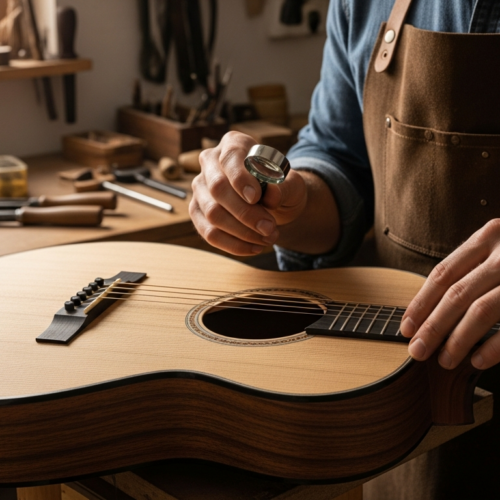


Bocote, scientifically known as Cordia gerascanthus, is a hardwood species native to Central America, particularly Mexico, Belize, Guatemala, and Honduras. The tree itself can grow to impressive heights, often reaching 50 to 75 feet, with a trunk diameter of 3 to 5 feet, making it a substantial source of timber.
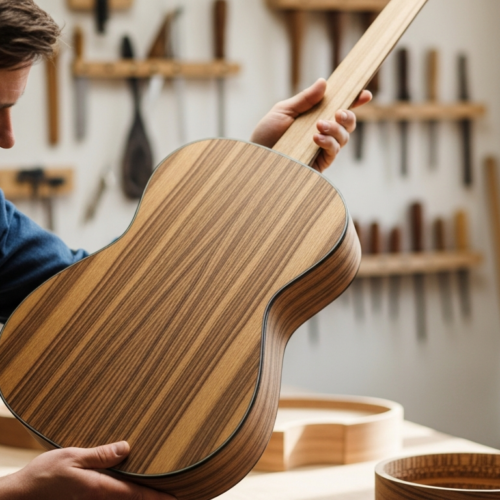
The heartwood of bocote is where its visual appeal truly shines. It typically exhibits a range of colors, from yellowish-brown to golden-brown, often accented with dramatic dark brown or black stripes and swirls, making each piece unique.
These striking grain patterns are not only aesthetically pleasing but also contribute to the wood’s overall character. Sapwood is usually a paler yellow, creating a noticeable contrast with the heartwood, which is generally removed during processing for luthierie.
Bocote is a moderately dense wood, with an average air-dried density ranging from 0.66 to 0.82 g/cm³ (41 to 51 lbs/ft³). This density contributes to its strength and stability, making it suitable for musical instrument construction, and influences its tonal properties.
Its hardness also plays a role in how well it can be worked and finished, which we will discuss in more detail later. The combination of density and hardness ensures that bocote instruments can withstand the stresses of playing and environmental changes.
Tonal Characteristics of Bocote in Musical Instruments
Bocote is often described as having a bright and clear tonal character, making it a popular choice for instruments where clarity and projection are desired. Luthiers appreciate its ability to produce a balanced sound with a strong fundamental tone, meaning that the notes are well-defined and distinct.

The bocote sound is often compared to that of rosewood, but with a slightly brighter and more focused response. This makes it particularly well-suited for instruments like acoustic guitars, where it can provide a lively and articulate sound.
In terms of frequency response, bocote tends to emphasize the mid-range and high frequencies, contributing to its clarity and projection. This can be particularly beneficial in instruments that need to cut through a mix or be heard clearly in ensemble settings.
Bocote also exhibits good sustain, allowing notes to ring out clearly and evenly. This sustain is a result of its density and stiffness, which help to transfer energy efficiently through the instrument.
Some luthiers also note that bocote can add a certain “punch” to the sound, making it feel more immediate and responsive. This characteristic can be especially desirable in instruments used for percussive playing styles or for genres where rhythmic precision is important.
Bocote’s Workability and Finishing Considerations
Bocote is generally considered to be a moderately easy wood to work with, although it does have some specific characteristics that luthiers should be aware of. Its hardness and density mean that sharp tools are essential for clean cuts and smooth surfaces.
When machining bocote, it’s important to use appropriate feed rates and speeds to avoid tear-out, especially when working against the grain. Pre-drilling screw holes is also recommended to prevent splitting, particularly when attaching hardware or braces.
| Operation | Considerations | Recommendations |
|---|---|---|
| Cutting | Can be prone to tear-out | Use sharp blades, moderate feed rates |
| Sanding | Produces fine dust | Use dust collection, wear a mask |
| Gluing | Generally good, but surface prep is key | Ensure surfaces are clean and lightly sanded |
| Finishing | Takes finishes well | Test finish on a small area first |
Sanding bocote can produce a fine dust, so it’s important to use dust collection systems and wear a respirator to avoid inhalation. The wood sands relatively easily, but care should be taken to avoid over-sanding, which can round over edges and reduce definition.
Gluing bocote is generally straightforward, but it’s important to ensure that the surfaces are clean and lightly sanded to provide a good bond. Some luthiers recommend wiping the surfaces with acetone or denatured alcohol before gluing to remove any oils that might interfere with adhesion.
Using Bocote for Backs, Sides, and Fingerboards
Bocote is a versatile tonewood that can be used in various parts of musical instruments, each contributing to the instrument’s overall sound and aesthetic. Its stability and tonal properties make it a suitable choice for backs and sides of acoustic guitars, providing a balanced and articulate sound.
When used for backs and sides, bocote can enhance the guitar’s projection and clarity, while also adding a touch of visual elegance. The wood’s density helps to reflect sound waves effectively, resulting in a lively and responsive instrument.
For fingerboards, bocote offers a smooth and durable surface that is comfortable to play on. Its hardness provides good resistance to wear and tear, ensuring that the fingerboard will maintain its shape and playability over time.
The striking grain patterns of bocote can also add a unique visual element to the fingerboard, making it stand out from more traditional options like ebony or rosewood. Some luthiers also use bocote for bridges, where its density and stiffness can contribute to improved tone transfer and sustain.
In electric guitars, bocote can be used for tops, adding a distinctive look and a slightly brighter tonal character. Its use is more common in acoustic instruments however, as luthiers seek to enhance the acoustic properties of the instrument.
Bocote’s Distinctive Grain Patterns and Colors
One of the most appealing aspects of bocote is its highly variable and visually striking grain patterns. Each piece of bocote is unique, showcasing a range of figures that can include bold stripes, swirling patterns, and even bird’s-eye effects.
The colors of bocote can range from light yellow-brown to deep golden-brown, often with contrasting dark brown or black lines that accentuate the grain. This combination of color and figure makes bocote a popular choice for instruments where aesthetics are a primary concern.
The grain patterns in bocote are formed by the wood’s natural growth patterns and the presence of mineral deposits, creating a visually complex and appealing surface. These patterns can be further enhanced by careful sanding and finishing, bringing out the wood’s natural beauty.
Luthiers often select bocote for its visual appeal, using it to create instruments that are not only sonically pleasing but also visually stunning. The wood’s distinctive appearance can add a touch of elegance and sophistication to any instrument, making it a true work of art.
Whether used for backs, sides, tops, or fingerboards, bocote’s grain and color variations ensure that each instrument is one-of-a-kind. The bocote finish enhances the natural beauty of the wood, highlighting its unique characteristics and adding depth to its appearance.
Comparing Bocote to Other Exotic Tonewoods
When considering tonewoods for luthierie, it’s helpful to compare bocote to other exotic options to understand its unique strengths and weaknesses. Some popular alternatives include rosewood, koa, ziricote, and cocobolo, each with its own distinct tonal and visual characteristics.
Rosewood, for example, is known for its warm and balanced sound, with a rich overtone series. Bocote shares some similarities with rosewood in terms of tonal balance, but tends to be brighter and more focused, with less emphasis on overtones.
- Rosewood: Warm, rich overtones, balanced
- Koa: Bright, focused, good sustain
- Ziricote: Clear, articulate, complex grain
- Cocobolo: Dense, bright, colorful
- Maple: Bright, clear, strong projection
Koa, another popular tonewood, is often described as having a bright and punchy sound, with good sustain. Bocote is similar to koa in terms of brightness, but it tends to have a more pronounced mid-range response, which can add warmth and body to the sound.
Ziricote is known for its clear and articulate sound, with a complex grain pattern that is similar to bocote. However, ziricote tends to be denser than bocote, which can result in a slightly stiffer and more focused sound.
Sourcing and Sustainability of Bocote Tonewood
As with any exotic tonewood, it’s important to consider the sourcing and sustainability of bocote to ensure responsible and ethical practices. Bocote is not currently listed on the CITES (Convention on International Trade in Endangered Species) Appendices, but it’s still crucial to source it from suppliers who practice sustainable forestry.
Sustainable forestry practices involve managing forests in a way that maintains biodiversity, protects ecosystems, and ensures the long-term availability of timber resources. Look for suppliers who are certified by organizations like the Forest Stewardship Council (FSC), which promotes responsible forest management worldwide.
When sourcing bocote, inquire about the origin of the wood and the harvesting practices used. Responsible suppliers should be able to provide information about the forest management practices in place and demonstrate their commitment to sustainability.
Additionally, consider supporting organizations that are working to protect and restore forests in Central America, where bocote is primarily sourced. By supporting these efforts, you can help ensure that bocote and other valuable timber species are available for future generations.
Choosing bocote from sustainable sources not only protects the environment but also supports local communities that depend on these forests for their livelihoods. By making informed choices, luthiers and instrument makers can contribute to the responsible use of this beautiful and versatile tonewood.
Bocote’s Resistance to Environmental Factors
Bocote’s density and natural oil content contribute to its resistance to environmental factors such as moisture and temperature changes, making it a stable choice for musical instruments. This stability is particularly important for instruments that are exposed to varying climates, as it helps to prevent warping, cracking, and other forms of damage.
The wood’s resistance to moisture also makes it less susceptible to fungal growth and decay, which can be a concern for instruments stored in humid environments. However, it’s still important to properly care for and maintain instruments made with bocote to ensure their longevity.
Regular cleaning and polishing can help to protect the wood from moisture and dirt, while also enhancing its natural beauty. It’s also recommended to store instruments in a case when not in use, especially in environments with extreme temperature or humidity fluctuations.
Bocote’s stability also makes it a good choice for instruments that are frequently transported, as it can withstand the stresses of travel without significant changes in shape or sound. This is particularly important for professional musicians who rely on their instruments for performances and recordings.
By choosing bocote for its resistance to environmental factors, luthiers can create instruments that are not only beautiful and sonically pleasing but also durable and long-lasting. Proper care and maintenance will further extend the life of these instruments, ensuring that they can be enjoyed for many years to come.
Conclusion
Bocote is a compelling tonewood choice for luthiers seeking a balance of visual appeal, tonal clarity, and workability. Its distinctive grain patterns and bright sound make it a versatile option for a variety of musical instruments, from acoustic guitars to electric basses.
While it shares some similarities with other exotic tonewoods like rosewood and koa, bocote offers its own unique characteristics that can enhance an instrument’s sound and appearance. By understanding its properties and working with it carefully, luthiers can create instruments that are both beautiful and sonically pleasing.
When sourcing bocote, it’s important to prioritize sustainability and ethical practices to ensure the long-term availability of this valuable resource. By making informed choices and supporting responsible forestry, we can help protect the environment and support local communities.
Whether you’re a seasoned luthier or a beginner exploring different tonewoods, bocote is worth considering for your next project. Its combination of beauty, tone, and workability make it a standout choice for creating instruments that are truly special.
Experimenting with bocote tonewood uses can open up new possibilities for instrument design and sound, adding a touch of exotic flair to your creations. The bocote properties make it a good choice for both experienced and novice luthiers.
Bocote is a visually striking tonewood that is gaining popularity among luthiers for its unique appearance and tonal properties. This exotic wood, sourced primarily from Central America, offers a compelling alternative to traditional tonewoods like rosewood and maple. Its distinctive grain patterns and balanced sound make it a favorite for crafting various musical instruments.
In this article, we’ll explore the origin, appearance, and tonal characteristics of bocote, along with its workability and finishing considerations. We will also examine how bocote is used in different parts of instruments, compare it to other exotic tonewoods, and discuss its overall suitability for luthierie, highlighting the many different bocote tonewood uses.
Whether you’re a seasoned luthier or a beginner exploring different tonewoods, understanding bocote’s properties can help you make informed decisions for your next project. From backs and sides to fingerboards, bocote presents a versatile option for creating instruments with both visual appeal and sonic clarity.
Bocote: Origin, Appearance, and Density
Bocote, scientifically known as Cordia gerascanthus, is a hardwood species native to Central America, particularly Mexico, Belize, Guatemala, and Honduras. The tree itself can grow to impressive heights, often reaching 50 to 75 feet, with a trunk diameter of 3 to 5 feet, making it a substantial source of timber.
The heartwood of bocote is where its visual appeal truly shines. It typically exhibits a range of colors, from yellowish-brown to golden-brown, often accented with dramatic dark brown or black stripes and swirls, making each piece unique.
These striking grain patterns are not only aesthetically pleasing but also contribute to the wood’s overall character. Sapwood is usually a paler yellow, creating a noticeable contrast with the heartwood, which is generally removed during processing for luthierie.
Bocote is a moderately dense wood, with an average air-dried density ranging from 0.66 to 0.82 g/cm³ (41 to 51 lbs/ft³). This density contributes to its strength and stability, making it suitable for musical instrument construction, and influences its tonal properties.
Its hardness also plays a role in how well it can be worked and finished, which we will discuss in more detail later. The combination of density and hardness ensures that bocote instruments can withstand the stresses of playing and environmental changes.
Tonal Characteristics of Bocote in Musical Instruments
Bocote is often described as having a bright and clear tonal character, making it a popular choice for instruments where clarity and projection are desired. Luthiers appreciate its ability to produce a balanced sound with a strong fundamental tone, meaning that the notes are well-defined and distinct.
The bocote sound is often compared to that of rosewood, but with a slightly brighter and more focused response. This makes it particularly well-suited for instruments like acoustic guitars, where it can provide a lively and articulate sound.
In terms of frequency response, bocote tends to emphasize the mid-range and high frequencies, contributing to its clarity and projection. This can be particularly beneficial in instruments that need to cut through a mix or be heard clearly in ensemble settings.
Bocote also exhibits good sustain, allowing notes to ring out clearly and evenly. This sustain is a result of its density and stiffness, which help to transfer energy efficiently through the instrument.
Some luthiers also note that bocote can add a certain “punch” to the sound, making it feel more immediate and responsive. This characteristic can be especially desirable in instruments used for percussive playing styles or for genres where rhythmic precision is important.
Bocote’s Workability and Finishing Considerations
Bocote is generally considered to be a moderately easy wood to work with, although it does have some specific characteristics that luthiers should be aware of. Its hardness and density mean that sharp tools are essential for clean cuts and smooth surfaces.
When machining bocote, it’s important to use appropriate feed rates and speeds to avoid tear-out, especially when working against the grain. Pre-drilling screw holes is also recommended to prevent splitting, particularly when attaching hardware or braces.
| Operation | Considerations | Recommendations |
|---|---|---|
| Cutting | Can be prone to tear-out | Use sharp blades, moderate feed rates |
| Sanding | Produces fine dust | Use dust collection, wear a mask |
| Gluing | Generally good, but surface prep is key | Ensure surfaces are clean and lightly sanded |
| Finishing | Takes finishes well | Test finish on a small area first |
Sanding bocote can produce a fine dust, so it’s important to use dust collection systems and wear a respirator to avoid inhalation. The wood sands relatively easily, but care should be taken to avoid over-sanding, which can round over edges and reduce definition.
Gluing bocote is generally straightforward, but it’s important to ensure that the surfaces are clean and lightly sanded to provide a good bond. Some luthiers recommend wiping the surfaces with acetone or denatured alcohol before gluing to remove any oils that might interfere with adhesion.
Using Bocote for Backs, Sides, and Fingerboards
Bocote is a versatile tonewood that can be used in various parts of musical instruments, each contributing to the instrument’s overall sound and aesthetic. Its stability and tonal properties make it a suitable choice for backs and sides of acoustic guitars, providing a balanced and articulate sound.
When used for backs and sides, bocote can enhance the guitar’s projection and clarity, while also adding a touch of visual elegance. The wood’s density helps to reflect sound waves effectively, resulting in a lively and responsive instrument.
For fingerboards, bocote offers a smooth and durable surface that is comfortable to play on. Its hardness provides good resistance to wear and tear, ensuring that the fingerboard will maintain its shape and playability over time.
The striking grain patterns of bocote can also add a unique visual element to the fingerboard, making it stand out from more traditional options like ebony or rosewood. Some luthiers also use bocote for bridges, where its density and stiffness can contribute to improved tone transfer and sustain.
In electric guitars, bocote can be used for tops, adding a distinctive look and a slightly brighter tonal character. Its use is more common in acoustic instruments however, as luthiers seek to enhance the acoustic properties of the instrument.
Bocote’s Distinctive Grain Patterns and Colors
One of the most appealing aspects of bocote is its highly variable and visually striking grain patterns. Each piece of bocote is unique, showcasing a range of figures that can include bold stripes, swirling patterns, and even bird’s-eye effects.
The colors of bocote can range from light yellow-brown to deep golden-brown, often with contrasting dark brown or black lines that accentuate the grain. This combination of color and figure makes bocote a popular choice for instruments where aesthetics are a primary concern.
The grain patterns in bocote are formed by the wood’s natural growth patterns and the presence of mineral deposits, creating a visually complex and appealing surface. These patterns can be further enhanced by careful sanding and finishing, bringing out the wood’s natural beauty.
Luthiers often select bocote for its visual appeal, using it to create instruments that are not only sonically pleasing but also visually stunning. The wood’s distinctive appearance can add a touch of elegance and sophistication to any instrument, making it a true work of art.
Whether used for backs, sides, tops, or fingerboards, bocote’s grain and color variations ensure that each instrument is one-of-a-kind. The bocote finish enhances the natural beauty of the wood, highlighting its unique characteristics and adding depth to its appearance.
Comparing Bocote to Other Exotic Tonewoods
When considering tonewoods for luthierie, it’s helpful to compare bocote to other exotic options to understand its unique strengths and weaknesses. Some popular alternatives include rosewood, koa, ziricote, and cocobolo, each with its own distinct tonal and visual characteristics.
Rosewood, for example, is known for its warm and balanced sound, with a rich overtone series. Bocote shares some similarities with rosewood in terms of tonal balance, but tends to be brighter and more focused, with less emphasis on overtones.
- Rosewood: Warm, rich overtones, balanced
- Koa: Bright, focused, good sustain
- Ziricote: Clear, articulate, complex grain
- Cocobolo: Dense, bright, colorful
- Maple: Bright, clear, strong projection
Koa, another popular tonewood, is often described as having a bright and punchy sound, with good sustain. Bocote is similar to koa in terms of brightness, but it tends to have a more pronounced mid-range response, which can add warmth and body to the sound.
Ziricote is known for its clear and articulate sound, with a complex grain pattern that is similar to bocote. However, ziricote tends to be denser than bocote, which can result in a slightly stiffer and more focused sound.
Sourcing and Sustainability of Bocote Tonewood
As with any exotic tonewood, it’s important to consider the sourcing and sustainability of bocote to ensure responsible and ethical practices. Bocote is not currently listed on the CITES (Convention on International Trade in Endangered Species) Appendices, but it’s still crucial to source it from suppliers who practice sustainable forestry.
Sustainable forestry practices involve managing forests in a way that maintains biodiversity, protects ecosystems, and ensures the long-term availability of timber resources. Look for suppliers who are certified by organizations like the Forest Stewardship Council (FSC), which promotes responsible forest management worldwide.
When sourcing bocote, inquire about the origin of the wood and the harvesting practices used. Responsible suppliers should be able to provide information about the forest management practices in place and demonstrate their commitment to sustainability.
Additionally, consider supporting organizations that are working to protect and restore forests in Central America, where bocote is primarily sourced. By supporting these efforts, you can help ensure that bocote and other valuable timber species are available for future generations.
Choosing bocote from sustainable sources not only protects the environment but also supports local communities that depend on these forests for their livelihoods. By making informed choices, luthiers and instrument makers can contribute to the responsible use of this beautiful and versatile tonewood.
Bocote’s Resistance to Environmental Factors
Bocote’s density and natural oil content contribute to its resistance to environmental factors such as moisture and temperature changes, making it a stable choice for musical instruments. This stability is particularly important for instruments that are exposed to varying climates, as it helps to prevent warping, cracking, and other forms of damage.
The wood’s resistance to moisture also makes it less susceptible to fungal growth and decay, which can be a concern for instruments stored in humid environments. However, it’s still important to properly care for and maintain instruments made with bocote to ensure their longevity.
Regular cleaning and polishing can help to protect the wood from moisture and dirt, while also enhancing its natural beauty. It’s also recommended to store instruments in a case when not in use, especially in environments with extreme temperature or humidity fluctuations.
Bocote’s stability also makes it a good choice for instruments that are frequently transported, as it can withstand the stresses of travel without significant changes in shape or sound. This is particularly important for professional musicians who rely on their instruments for performances and recordings.
By choosing bocote for its resistance to environmental factors, luthiers can create instruments that are not only beautiful and sonically pleasing but also durable and long-lasting. Proper care and maintenance will further extend the life of these instruments, ensuring that they can be enjoyed for many years to come.
Conclusion
Bocote is a compelling tonewood choice for luthiers seeking a balance of visual appeal, tonal clarity, and workability. Its distinctive grain patterns and bright sound make it a versatile option for a variety of musical instruments, from acoustic guitars to electric basses.
While it shares some similarities with other exotic tonewoods like rosewood and koa, bocote offers its own unique characteristics that can enhance an instrument’s sound and appearance. By understanding its properties and working with it carefully, luthiers can create instruments that are both beautiful and sonically pleasing.
When sourcing bocote, it’s important to prioritize sustainability and ethical practices to ensure the long-term availability of this valuable resource. By making informed choices and supporting responsible forestry, we can help protect the environment and support local communities.
Whether you’re a seasoned luthier or a beginner exploring different tonewoods, bocote is worth considering for your next project. Its combination of beauty, tone, and workability make it a standout choice for creating instruments that are truly special.
Experimenting with bocote tonewood uses can open up new possibilities for instrument design and sound, adding a touch of exotic flair to your creations. The bocote properties make it a good choice for both experienced and novice luthiers.