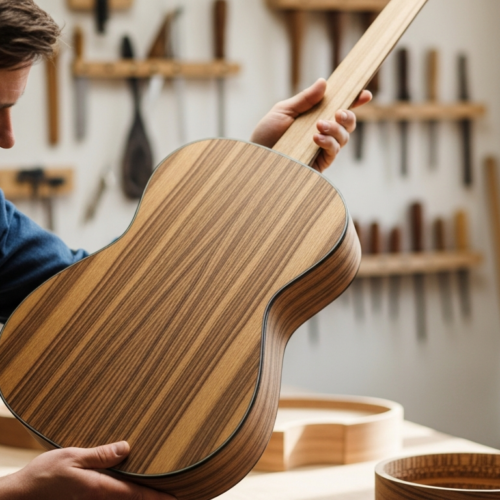

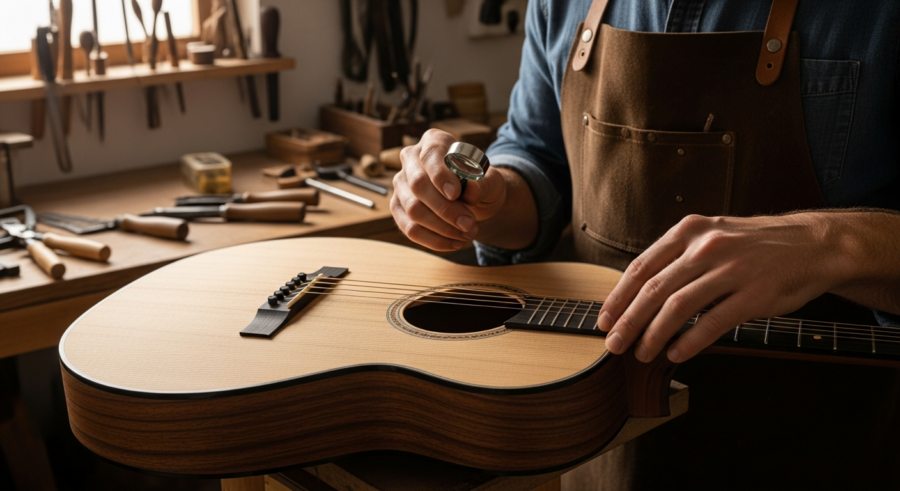
Lacewood is gaining popularity among luthiers and guitar enthusiasts alike. Its striking figure and unique visual texture make it a standout choice for acoustic guitar tops. But aesthetics are only part of the story; understanding its properties and tonal characteristics is key to using it effectively.
In this article, we’ll explore everything you need to know about using lacewood for guitar tops. We will cover its appearance, properties, tonal qualities, and finishing techniques. Let’s see why a lacewood guitar top might be the perfect choice for your next build or purchase.
From figuring out the best lacewood finish to understanding the importance of proper grain filling, we’ve got you covered. We’ll also compare it to other unique topwoods, giving you a complete picture of what lacewood brings to the table. Read on to learn more about the lacewood guitar top.
Understanding Lacewood: Appearance and Source
Lacewood isn’t a single species but rather a term applied to several types of wood with similar visual characteristics. The most common source is Cardwellia sublimis, a tree native to Australia, but other species from the Roupala and Platanus genera can also exhibit the distinctive lacewood figure. These different sources contribute to variations in color and density.
The defining characteristic of lacewood is its prominent medullary rays, which appear as shimmering, lace-like patterns on the surface. This figure is most pronounced when the wood is quartersawn, a cutting method that maximizes stability and showcases the ray fleck. The resulting visual effect is unlike any other tonewood.
Color-wise, lacewood typically ranges from a light tan to a reddish-brown, sometimes with pinkish undertones. The medullary rays are usually a shade darker, creating contrast and depth. The specific shade can vary depending on the species and growing conditions.
Beyond its Australian origins, lacewood can also be found in South America and even parts of Europe, depending on the specific species. This wider distribution means that sourcing lacewood can be relatively straightforward, although quality can vary significantly. Always check the source carefully.
The lace-like pattern is due to the medullary rays reflecting light in different directions. This creates a shimmering effect that is very eye-catching. The more pronounced the rays, the more dramatic the effect.
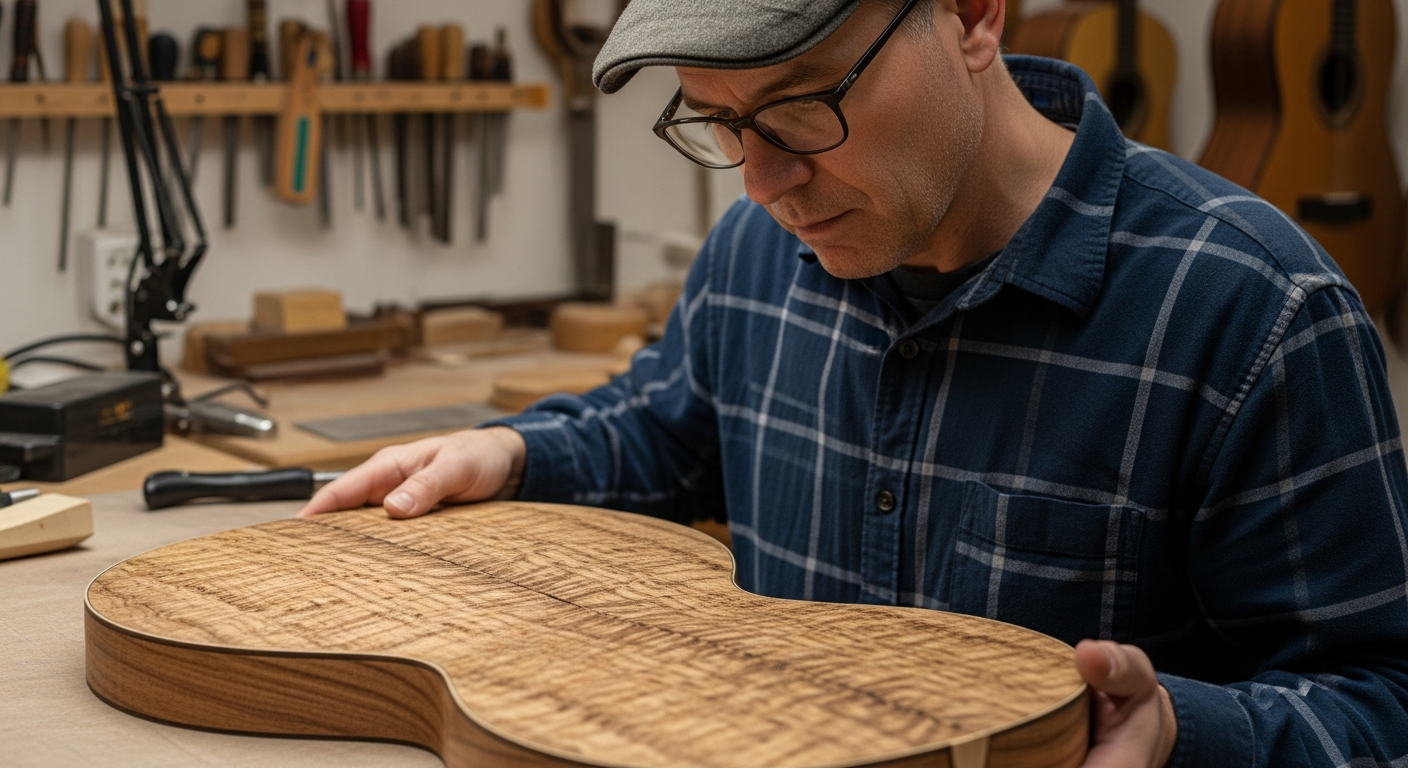
Quartersawing is crucial for maximizing the visual impact of lacewood. This cut exposes the medullary rays perpendicular to the surface. It also enhances the wood’s stability, making it less prone to warping.
When selecting lacewood, look for pieces with consistent color and well-defined medullary rays. Avoid pieces with knots, cracks, or other imperfections. These flaws can detract from the wood’s beauty and structural integrity.
The availability of lacewood can fluctuate depending on the source and demand. It’s always a good idea to check with multiple suppliers to find the best price and quality. Some suppliers specialize in tonewoods for musical instruments.
The term “lacewood” can be misleading, as it’s applied to several different species. Be sure to ask your supplier for the specific species of lacewood they are offering. This will help you understand its properties and appearance.
Consider the origin of the lacewood when making your selection. Australian lacewood (Cardwellia sublimis) is often considered the highest quality. However, other species can also be beautiful and suitable for guitar tops.
The color of lacewood can be influenced by the drying process. Kiln-dried lacewood tends to have a more consistent color than air-dried lacewood. However, air-drying can sometimes enhance the wood’s natural figure.
Lacewood is often used in furniture making and decorative veneers due to its striking appearance. This makes it relatively easy to find in various sizes and thicknesses. You may even find it at your local lumber yard.
The unique visual texture of lacewood makes it a popular choice for custom guitar builds. Many luthiers appreciate its ability to add a touch of elegance and sophistication to their instruments. It is a great choice for a custom build.
Lacewood’s distinctive figure is a result of the tree’s unique growth patterns. The medullary rays are responsible for transporting nutrients and water throughout the tree. This results in the beautiful lace-like pattern.
Lacewood’s Properties and Suitability for Guitar Tops
Lacewood’s density falls in the medium range for tonewoods, making it neither exceptionally stiff nor overly soft. This balance contributes to its unique tonal properties, which we’ll discuss later. However, its density also affects its workability and finishing characteristics.
One of the key considerations for any guitar topwood is stability. Lacewood is moderately stable, but it can be prone to movement if not properly dried and acclimated. Kiln-drying is essential to minimize warping and cracking.
The open grain structure of lacewood means it can require more effort to achieve a smooth, glass-like finish. Grain filling is often necessary to prevent the finish from sinking into the pores over time. This is an important step in the lacewood finish process.
Despite these challenges, lacewood’s visual appeal often outweighs any extra effort required in preparation and finishing. Its unique figure can transform an ordinary guitar into a true work of art. Many luthiers find the extra work worth it.
The medium density of lacewood contributes to its balanced tonal response. It’s not as bright as maple, nor as warm as mahogany. It offers a middle ground that many players find appealing.
Stability is paramount for a guitar top, as it directly affects the instrument’s intonation and playability. Properly kiln-dried lacewood will be much more stable and less prone to movement. This is important to consider.
The open grain structure of lacewood can be both a blessing and a curse. While it adds to the wood’s visual texture, it also requires more effort to fill and smooth. Proper grain filling is essential for a professional-looking finish.
Lacewood’s workability is generally good, but it can be prone to tearout if not handled carefully. Sharp tools and light passes are essential when machining lacewood. This will prevent chipping and splintering.
The hardness of lacewood is moderate, making it suitable for both hand and machine tools. However, it’s important to use sharp tools to avoid crushing the fibers. This will ensure clean cuts and smooth surfaces.
Lacewood’s resistance to decay is moderate, making it suitable for indoor use. However, it’s not recommended for outdoor applications without proper treatment. This is important to keep in mind.
The weight of lacewood is moderate, making it comfortable to hold and play. It’s not as heavy as some hardwoods, nor as light as some softwoods. This is a good balance for many guitarists.
Lacewood’s acoustic properties make it a good choice for guitar tops. It transmits sound waves efficiently, resulting in a clear and resonant tone. This is important for any guitar.
The stiffness of lacewood is moderate, contributing to its balanced tonal response. It’s not as stiff as spruce, nor as flexible as cedar. This is a good balance for many playing styles.
Lacewood’s moderate damping characteristics help to control unwanted vibrations and resonances. This results in a cleaner and more focused tone. This is important for clarity.
Finishing Techniques to Highlight Lacewood’s Figure
The key to a great lacewood finish is enhancing its natural figure without obscuring it. This requires careful selection of finishing products and techniques. Consider using clear finishes to allow the wood’s natural color to shine through.
Dyeing or staining can add depth and contrast, but it’s crucial to test the color on a sample piece first. Some stains can muddy the figure, while others can accentuate it beautifully. Experimentation is key to finding the right balance.
| Finish Type | Pros | Cons |
|---|---|---|
| Oil-based | Easy to apply, natural look | Less durable, requires more maintenance |
| Water-based lacquer | Durable, low VOCs | Can raise the grain, may require more coats |
| Nitrocellulose lacquer | Classic look, easy to repair | High VOCs, can yellow over time |
| Epoxy resin | Extremely durable, glossy finish | Difficult to apply, can look artificial |
Clear finishes, such as lacquer or varnish, allow the natural beauty of lacewood to shine through. These finishes protect the wood while enhancing its figure. They also provide a durable surface.
Dyeing can be used to accentuate the medullary rays and add depth to the figure. However, it’s important to use a dye that is compatible with your chosen finish. Test the dye on a sample piece first to ensure the desired effect.
Staining can also be used to enhance the figure of lacewood. However, it’s important to use a stain that is not too dark, as this can obscure the figure. Test the stain on a sample piece first to ensure the desired effect.
Grain filling is essential for achieving a smooth, glass-like finish on lacewood. Use a high-quality grain filler that is compatible with your chosen finish. Apply the filler in thin layers and sand it flush with the surface.
Sanding is a crucial step in the finishing process. Use progressively finer grits of sandpaper to achieve a smooth surface. Be careful not to sand through the finish or the grain filler.
Polishing can be used to add a high-gloss shine to the finish. Use a polishing compound that is designed for your chosen finish. Apply the compound with a soft cloth and buff the surface to a high shine.
Consider using a sealer coat before applying the finish. This will help to prevent the finish from sinking into the pores of the wood. It will also improve the adhesion of the finish.
The choice of finish will depend on your personal preferences and the desired look. Oil-based finishes offer a natural look and are easy to apply. Water-based finishes are durable and have low VOCs. Nitrocellulose lacquer offers a classic look and is easy to repair. Epoxy resin is extremely durable and provides a glossy finish.
Experiment with different finishing techniques to find the one that works best for you. There are many different ways to finish lacewood, so don’t be afraid to try new things. The key is to be patient and pay attention to detail.
Always wear appropriate safety gear when working with finishing products. This includes gloves, eye protection, and a respirator. Follow the manufacturer’s instructions carefully.
Proper preparation is essential for a successful finish. Make sure the wood is clean, dry, and free of any imperfections. Sand the surface smooth and remove any dust or debris.
The finishing process can take time, so be patient. Allow each coat of finish to dry completely before applying the next coat. This will ensure a durable and long-lasting finish.
Lacewood’s Tonal Characteristics in Guitar Tops
Lacewood’s tonal properties are often described as being somewhere between maple and mahogany. It offers a balanced sound with good clarity and projection, without being overly bright or dark. The specific tonal characteristics will vary based on the guitar’s construction and other tonewoods used.
Compared to spruce, a common topwood, lacewood tends to have a warmer, less immediate response. This can be advantageous for players who prefer a more rounded tone. It also complements other tonewoods well.
Some luthiers find that lacewood works particularly well in guitars designed for fingerstyle playing. The wood’s balanced response allows individual notes to stand out clearly. This makes it suitable for intricate arrangements.
However, lacewood may not be the ideal choice for players seeking a very loud or aggressive sound. Its moderate density and damping characteristics limit its volume potential compared to stiffer woods like Adirondack spruce. It depends on the sound you are looking for.
The balanced tonal response of lacewood makes it a versatile choice for a variety of playing styles. It’s suitable for both strumming and fingerpicking. It also works well with different genres of music.
The warmer tone of lacewood can be particularly appealing to players who find spruce to be too bright. It offers a more mellow and rounded sound. This is great for some players.
The good clarity and projection of lacewood ensure that individual notes are clearly defined. This is especially important for fingerstyle playing. It also helps the guitar to cut through the mix in a band setting.
The moderate damping characteristics of lacewood help to control unwanted overtones and resonances. This results in a cleaner and more focused tone. This is important for clarity and definition.
The specific tonal characteristics of lacewood will be influenced by the other tonewoods used in the guitar. The back and sides, neck, and fretboard all contribute to the overall sound. It is important to consider all aspects.
The bracing pattern of the guitar also plays a significant role in shaping the tone. Different bracing patterns can emphasize different frequencies and resonances. This is a key factor in the sound.
The finish applied to the guitar can also affect the tone. Thinner finishes tend to allow the wood to vibrate more freely, resulting in a louder and more resonant tone. Thicker finishes can dampen the vibrations, resulting in a quieter and more focused tone.
The strings used on the guitar can also influence the tone. Different string gauges and materials can produce different sounds. It is important to experiment with different strings.
Ultimately, the best way to determine if lacewood is the right choice for you is to play a guitar with a lacewood top. This will allow you to hear its tonal characteristics firsthand. This is the best way to tell.
Consider the type of music you play and the sound you are looking for when choosing a tonewood. Lacewood is a versatile choice that can work well for a variety of styles. It is a great option.
Talk to luthiers and other guitar players to get their opinions on lacewood. They may have valuable insights and experiences to share. This can help you make an informed decision.
Working with Lacewood: Stability and Grain Filling
As mentioned earlier, lacewood’s stability requires careful attention during the building process. Proper acclimation to your shop’s humidity levels is crucial before starting any work. This will minimize the risk of warping or cracking.
Grain filling is almost always necessary to achieve a smooth, professional finish on lacewood. Several products are available for this purpose, including epoxy-based fillers and traditional paste fillers. Choose a filler that is compatible with your chosen finish.
- Use a high-quality grain filler
- Apply the filler in thin layers
- Sand the filler flush with the surface
- Allow the filler to dry completely
- Apply a sealer coat before finishing
Acclimating the wood to your shop’s environment is essential for minimizing movement after the guitar is built. Allow the wood to sit in your shop for several weeks before starting any work. This will allow it to adjust to the humidity levels.
Grain filling is a crucial step in the finishing process for lacewood. The open grain structure of lacewood can cause the finish to sink into the pores over time. This results in an uneven and unprofessional-looking finish.
Epoxy-based grain fillers are known for their durability and resistance to shrinking. They provide a smooth and stable base for the finish. However, they can be more difficult to apply and sand than traditional paste fillers.
Traditional paste fillers are easier to apply and sand than epoxy-based fillers. However, they may shrink over time, requiring additional coats of finish. Choose a paste filler that is compatible with your chosen finish.
Applying the grain filler in thin layers is important for preventing air bubbles and ensuring even coverage. Use a flexible spreader or a squeegee to apply the filler. Work the filler into the pores of the wood.
Sanding the filler flush with the surface is essential for creating a smooth and even base for the finish. Use progressively finer grits of sandpaper to achieve a smooth surface. Be careful not to sand through the filler.
Allowing the filler to dry completely is important for preventing shrinkage and ensuring a durable finish. Follow the manufacturer’s instructions for drying time. Be patient and allow the filler to cure properly.
Applying a sealer coat before finishing helps to prevent the finish from sinking into the pores of the wood. It also improves the adhesion of the finish. Use a sealer coat that is compatible with your chosen finish.
Consider using a vacuum to remove dust and debris from the wood before applying the grain filler. This will help to ensure a clean and smooth surface. It will also improve the adhesion of the filler.
Always wear appropriate safety gear when working with grain fillers and finishing products. This includes gloves, eye protection, and a respirator. Follow the manufacturer’s instructions carefully.
Proper preparation is essential for a successful grain filling and finishing process. Make sure the wood is clean, dry, and free of any imperfections. Sand the surface smooth and remove any dust or debris.
The grain filling and finishing process can take time, so be patient. Allow each layer of filler and finish to dry completely before applying the next layer. This will ensure a durable and long-lasting finish.
Lacewood Alternatives for Unique Topwoods
If you’re drawn to lacewood’s unique appearance but want to explore other options, several alternative topwoods offer similar visual textures. These alternatives can provide different tonal characteristics and working properties. It is important to consider all the options.
Quilted maple, for example, offers a similar three-dimensional figure but with a brighter, more focused tone. Buckeye burl can provide a wild, swirling pattern with a warm, resonant sound. Each type of wood is unique.
For a more subtle figure, consider using figured walnut or koa. These woods offer a blend of visual interest and tonal complexity. They also have great natural beauty.
Ultimately, the best alternative will depend on your specific tonal goals and aesthetic preferences. Experimenting with different tonewoods is the best way to find the perfect match. Consider the overall look as well.
Quilted maple is known for its shimmering, three-dimensional figure. It offers a bright and focused tone with good clarity and projection. It is a popular choice for electric guitars.
Buckeye burl is characterized by its wild, swirling patterns and unique color variations. It offers a warm and resonant tone with good sustain. It is often used for acoustic guitars.
Figured walnut offers a more subtle figure than lacewood, quilted maple, or buckeye burl. It provides a warm and balanced tone with good clarity and sustain. It is a versatile choice for a variety of playing styles.
Koa is a Hawaiian hardwood known for its beautiful grain patterns and warm, resonant tone. It offers a balanced sound with good clarity and projection. It is a popular choice for ukuleles and acoustic guitars.
Consider the tonal characteristics of each alternative when making your selection. Think about the type of music you play and the sound you are looking for. This will help you narrow down your choices.
Also consider the working properties of each alternative. Some woods are easier to work with than others. Think about your skill level and the tools you have available.
The availability and cost of each alternative can also vary. Some woods are more readily available and affordable than others. Consider your budget when making your selection.
Look at pictures and videos of guitars made with different topwoods. This will give you a better idea of how they look and sound. It will also help you visualize your own guitar.
Talk to luthiers and other guitar players to get their opinions on different topwoods. They may have valuable insights and experiences to share. This can help you make an informed decision.
Experiment with different tonewoods to find the perfect match for your playing style and aesthetic preferences. The best way to find the right topwood is to try different options and see what works best for you. Do not be afraid to experiment.
Remember that the topwood is only one factor that contributes to the overall tone of the guitar. The back and sides, neck, fretboard, and bracing pattern all play a significant role. It is important to consider all aspects of the guitar.
Ultimately, the best topwood is the one that you like the best. Choose a wood that inspires you and that you are excited to play. This will make your guitar even more enjoyable.
Conclusion
Lacewood offers a compelling combination of visual appeal and balanced tonal characteristics. Its unique figure makes it a standout choice for guitar tops. However, it requires careful preparation and finishing to achieve the best results.
By understanding its properties and working with its natural beauty, you can create a truly exceptional instrument. A lacewood guitar top can be a great option. The extra effort is often worth it.
Whether you’re a luthier or a guitar enthusiast, consider the possibilities that lacewood offers. Its unique combination of beauty and tone makes it a worthy contender for your next project. You will not be disappointed.
With the right techniques and a bit of patience, a lacewood guitar top can be a stunning addition to any collection. It is a great choice for many different playing styles. Take the time to learn about it.
Lacewood’s distinctive appearance sets it apart from other tonewoods. Its lace-like figure adds a touch of elegance and sophistication to any guitar. It is a great choice for those looking for something unique.
The balanced tonal characteristics of lacewood make it a versatile choice for a variety of playing styles. It’s suitable for both strumming and fingerpicking. It also works well with different genres of music.
The challenges associated with working with lacewood, such as its stability and open grain structure, can be overcome with proper preparation and finishing techniques. The extra effort is well worth it for the stunning results.
Consider the overall aesthetic of your guitar when choosing a topwood. Lacewood can be a great choice for those who want a visually striking instrument. It can also be a good choice for those who want a more subtle and understated look.
Think about the type of music you play and the sound you are looking for when choosing a tonewood. Lacewood is a versatile choice that can work well for a variety of styles. It is a great option for many players.
Talk to luthiers and other guitar players to get their opinions on lacewood. They may have valuable insights and experiences to share. This can help you make an informed decision. It is a good idea to get their input.
Experiment with different tonewoods to find the perfect match for your playing style and aesthetic preferences. The best way to find the right topwood is to try different options and see what works best for you. Do not be afraid to try new things.
Remember that the topwood is only one factor that contributes to the overall tone of the guitar. The back and sides, neck, fretboard, and bracing pattern all play a significant role. It is important to consider all aspects of the guitar.
Ultimately, the best topwood is the one that you like the best. Choose a wood that inspires you and that you are excited to play. This will make your guitar even more enjoyable. It is important to choose something you like.
Lacewood guitars are becoming increasingly popular among collectors and enthusiasts. Their unique appearance and balanced tone make them highly sought after. This is a good sign for the future.
If you are looking for a guitar that is both beautiful and functional, lacewood is an excellent choice. It offers a unique combination of visual appeal and tonal characteristics. This makes it a great option for many players.