
The allure of the acoustic guitar lies not only in its design, but also in the careful selection of woods that contribute to its unique voice. Among the many options available to luthiers, macassar ebony stands out as a visually striking and tonally complex choice.
This dense, dark wood offers a compelling alternative to traditional ebony, bringing its own set of characteristics to the instrument-making process. For guitar builders seeking to craft instruments with both beauty and sonic depth, understanding the nuances of the macassar ebony guitar is essential.
In this comprehensive guide, we’ll explore the origins, properties, and applications of this remarkable tonewood. We will also discuss its sustainability, compare it to other ebony varieties, and provide insights into working with macassar ebony to achieve optimal results in lutherie.
Macassar Ebony: Origin, Appearance, and Density
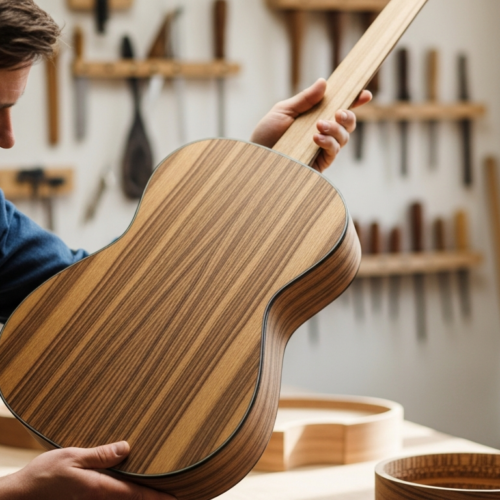
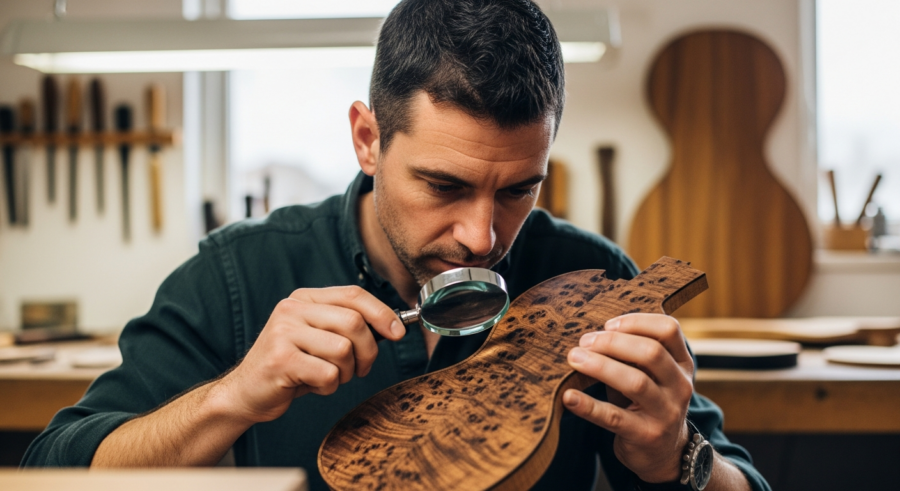
Macassar ebony, scientifically known as Diospyros celebica, hails from the lush forests of Southeast Asia, primarily the island of Sulawesi (formerly known as Celebes) in Indonesia. This exotic wood is renowned for its striking appearance, characterized by a deep, dark brown or black base color interlaced with contrasting streaks of lighter brown or golden hues.
The visual complexity of macassar ebony makes it a favorite among luthiers who appreciate the aesthetic dimension of their craft. The density of macassar ebony is another key characteristic, typically ranging from 1.00 to 1.30 g/cm³, making it a heavy and dense wood, which significantly impacts its tonal properties.
This high density contributes to the wood’s hardness and stiffness, qualities that are crucial for its use in musical instruments. These physical properties also affect how the wood transmits sound waves, influencing the instrument’s overall tone and sustain.
The unique grain patterns and coloration of each piece of macassar ebony ensure that no two guitars made with this wood will ever be exactly alike. This makes every macassar ebony guitar a unique work of art, combining visual appeal with exceptional tonal qualities.
Sulawesi, the origin of Macassar Ebony, is an island with a rich biodiversity, contributing to the unique characteristics of the wood. The specific soil composition and climate conditions influence the growth patterns and density of the trees.
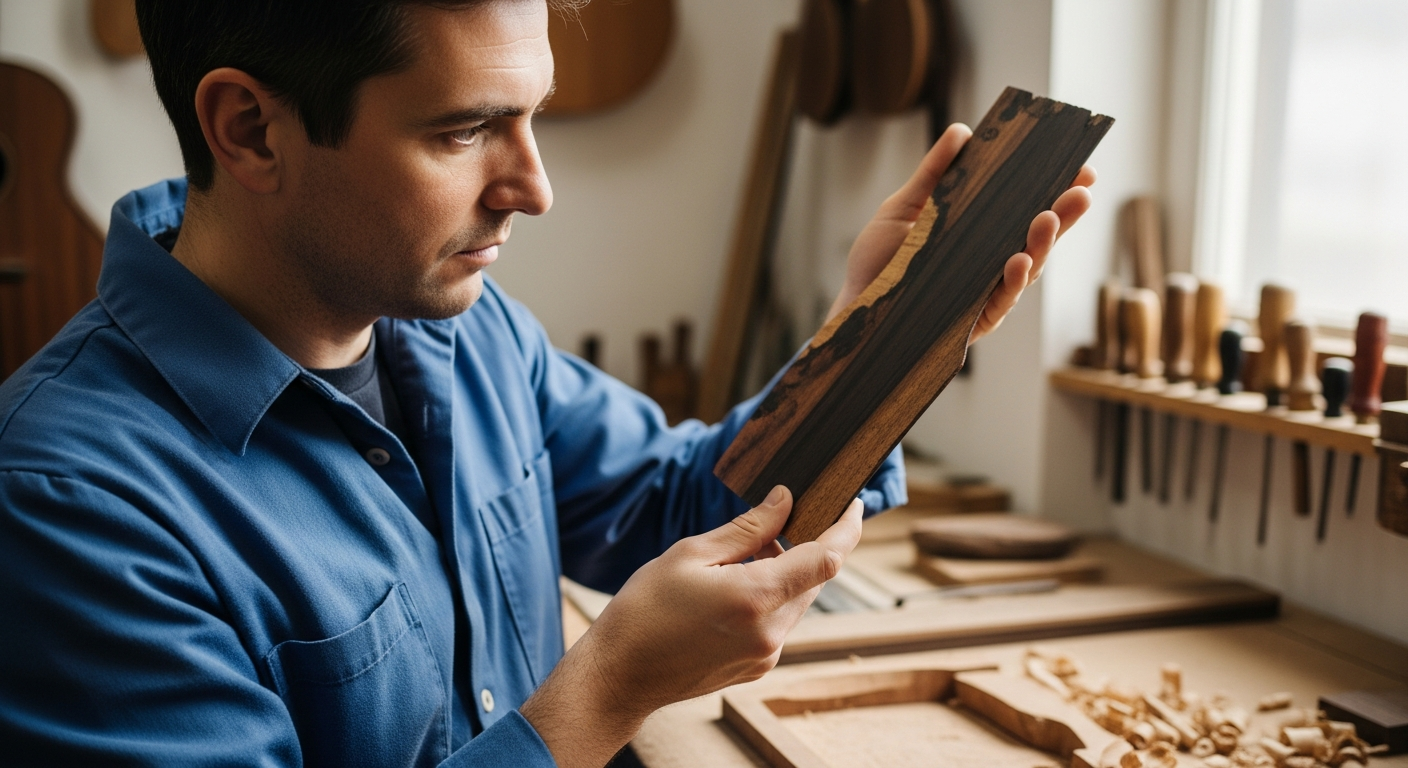
The swirling patterns and contrasting colors are not only visually appealing but also a testament to the wood’s natural history. These variations make each piece of macassar ebony a unique canvas for the luthier to work with, adding character to the finished instrument.
The density of macassar ebony, often compared to that of stone, is a key factor in its tonal properties. This density allows for efficient sound transmission, contributing to the guitar’s clarity and sustain.
Luthiers carefully select pieces of macassar ebony based on their specific grain patterns and density to achieve the desired tonal characteristics in their instruments. The wood’s hardness also ensures that it can withstand the stresses of string tension and playing, making it a durable choice for guitar construction.
Tonal Characteristics of Macassar Ebony in Guitars
Macassar ebony is celebrated for its bright, clear, and articulate tonal properties, making it a favored choice for guitar builders aiming for clarity and projection. The high density of the wood contributes to a strong fundamental tone with rich overtones, providing a balanced and complex sound profile.
Guitars crafted with macassar ebony often exhibit excellent sustain, allowing notes to ring out clearly and resonate for an extended period. This sustain is particularly beneficial for fingerstyle players and those who appreciate the nuances of individual notes in complex chords.
The wood’s stiffness also enhances the guitar’s responsiveness, allowing it to react quickly and accurately to the player’s touch. This responsiveness is crucial for achieving dynamic control and expressive playing, making macassar ebony a versatile choice for various musical styles.
Compared to other tonewoods, macassar ebony offers a unique blend of warmth and clarity, often described as being brighter than rosewood but warmer than maple. This tonal balance makes it suitable for both strumming and fingerpicking, providing a versatile sound that can adapt to different playing techniques.
The clarity of macassar ebony allows individual notes to stand out, making it ideal for complex fingerstyle arrangements. Its ability to project sound ensures that the guitar can be heard clearly in both solo and ensemble settings.
The rich overtones contribute to a complex and nuanced sound, adding depth and character to the guitar’s overall tone. This combination of clarity, projection, and rich overtones makes macassar ebony a highly sought-after tonewood among discerning guitarists.
The extended sustain allows notes to linger and blend together, creating a smooth and seamless sound. This is particularly beneficial for legato playing and creating atmospheric textures.
The responsiveness of macassar ebony allows the player to easily control the dynamics of the instrument, from delicate whispers to powerful chords. This makes it a versatile choice for a wide range of musical styles, from classical and jazz to folk and rock.
Working with Macassar Ebony: Challenges and Solutions
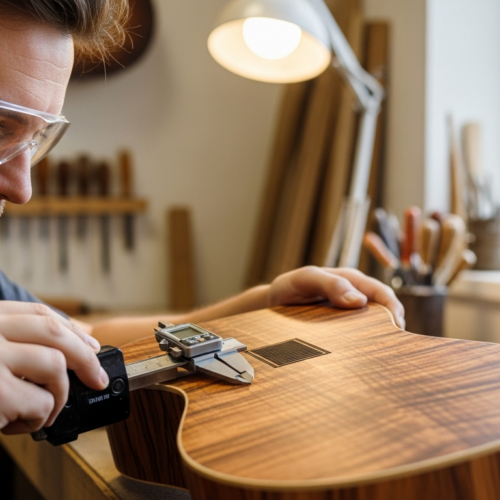
While macassar ebony offers numerous benefits in terms of aesthetics and tone, it also presents certain challenges when it comes to workability. Its high density and hardness can make it difficult to cut, shape, and bend, requiring specialized tools and techniques.
Due to its density, macassar ebony can be prone to chipping and splintering, especially when working against the grain. Careful attention to grain direction and the use of sharp, well-maintained tools are essential to minimize these issues.
| Challenge | Solution | Tool/Technique |
|---|---|---|
| Chipping and Splintering | Use Sharp Tools | Sharp chisels, planes, and saws |
| Difficulty in Bending | Steam Bending | Steam box and bending iron |
| Gluing Issues | Proper Surface Preparation | Sanding and cleaning with solvent |
| Tearout | Backing Wood | Support wood during machining |
Sharp tools are crucial for achieving clean cuts and minimizing the risk of chipping and splintering. Regular sharpening and maintenance of tools are essential when working with macassar ebony.
Steam bending is a technique that uses moisture and heat to make the wood more pliable, allowing it to be bent into the desired shape. This technique requires specialized equipment and careful monitoring to prevent the wood from cracking or breaking.
Proper surface preparation is essential for achieving a strong and durable bond when gluing macassar ebony. This involves sanding the surface to create a slightly rough texture and cleaning it with a solvent to remove any oils or contaminants.
Using backing wood during machining provides support to the macassar ebony, preventing tearout and ensuring clean cuts. The backing wood should be a softer material that can be easily removed after machining.
Sustainability Concerns and Ethical Sourcing of Macassar Ebony
Like many exotic hardwoods, macassar ebony faces sustainability challenges due to overharvesting and habitat destruction. The high demand for this visually striking wood has led to unsustainable logging practices in some regions, threatening the long-term availability of the species.
Ethical sourcing is therefore a critical consideration for luthiers and guitar manufacturers who wish to use macassar ebony responsibly. Seeking out suppliers who adhere to sustainable forestry practices and hold certifications such as the Forest Stewardship Council (FSC) is essential.
These certifications ensure that the wood is harvested from forests that are managed in an environmentally and socially responsible manner. Supporting initiatives aimed at reforestation and conservation in the regions where macassar ebony grows is another way to contribute to its sustainability.
Consumers also play a role in promoting ethical sourcing by choosing guitars made from sustainably harvested macassar ebony. By making informed purchasing decisions, musicians can encourage responsible forestry practices and help protect this valuable resource for future generations.
Overharvesting not only threatens the macassar ebony population but also disrupts the delicate ecosystems in which it grows. This can have far-reaching consequences for biodiversity and the livelihoods of local communities.
The Forest Stewardship Council (FSC) certification is a widely recognized standard for sustainable forestry practices. It ensures that the wood is harvested in a way that protects the environment, respects the rights of local communities, and promotes long-term forest health.
Reforestation efforts can help to replenish macassar ebony populations and restore degraded habitats. These initiatives often involve planting new trees and implementing sustainable forest management practices.
By choosing guitars made from sustainably harvested macassar ebony, consumers can send a strong message to the industry that they value ethical and responsible sourcing. This can help to drive demand for sustainable products and encourage more luthiers and manufacturers to adopt responsible practices.
Macassar Ebony vs. Other Ebony Varieties
While macassar ebony shares similarities with other ebony varieties, it also possesses distinct characteristics that set it apart. Compared to Gaboon ebony (Diospyros crassiflora), which is known for its uniformly black color, macassar ebony features striking stripes and variations in tone.
This visual contrast makes macassar ebony a more decorative choice, offering a unique aesthetic appeal that Gaboon ebony lacks. In terms of tonal properties, macassar ebony tends to be slightly brighter and more articulate than Gaboon ebony, which is often described as warmer and mellower.
Compared to other alternatives, such as striped ebony, macassar ebony generally has a more consistent grain pattern and density. This makes it easier to work with and more predictable in terms of tonal outcome. Some luthiers also use alternatives like Richlite, a resin-based material, but it lacks the organic feel and unique aesthetic of natural ebony.
Each ebony variety brings its own set of strengths to the table, and the choice ultimately depends on the luthier’s aesthetic preferences and desired tonal characteristics. For those seeking a visually striking wood with a bright, articulate tone, macassar ebony remains an excellent option.
Gaboon ebony’s uniform black color provides a classic and elegant look, often preferred for traditional guitar designs. Its warmer and mellower tone is well-suited for styles of music that require a more subdued and rounded sound.
The consistent grain pattern and density of macassar ebony make it a more predictable and reliable choice for luthiers. This allows them to achieve more consistent results in terms of both aesthetics and tonal properties.
Richlite is a sustainable alternative to ebony, made from recycled paper and resin. While it offers a similar look and feel to ebony, it lacks the unique character and tonal complexity of natural wood.
Ultimately, the choice of ebony variety depends on the luthier’s vision for the instrument and the player’s personal preferences. Macassar ebony’s unique combination of visual appeal and tonal properties makes it a compelling choice for those seeking a distinctive and high-performing guitar.
Using Macassar Ebony for Different Guitar Components
Macassar ebony’s unique properties make it suitable for various components of the guitar, each benefiting from its density, stability, and tonal characteristics. One of the most common applications is for fingerboards, where its hardness and smooth surface provide excellent playability and contribute to clear note articulation.
The density of macassar ebony also helps to enhance sustain and projection, making it a popular choice for high-end guitars. In addition to fingerboards, macassar ebony is often used for bridges, where its stiffness helps to transfer string vibrations efficiently to the soundboard.
- Fingerboards for smooth play
- Bridges for vibration transfer
- Headplates for aesthetic appeal
- Binding for edge protection
- Back and sides for tonal balance
The smooth surface of a macassar ebony fingerboard allows for effortless gliding and precise fretting. Its hardness ensures that it can withstand the wear and tear of frequent playing, maintaining its smooth surface for years to come.
The efficient vibration transfer of a macassar ebony bridge contributes to a louder and more resonant sound. Its stiffness helps to prevent energy loss, ensuring that the soundboard receives the maximum amount of vibration.
Using macassar ebony for the headplate adds a touch of elegance and sophistication to the guitar’s overall appearance. Its unique grain patterns and coloration make each headplate a one-of-a-kind work of art.
Macassar ebony binding provides a durable and attractive edge to the guitar’s body. It helps to protect the edges from damage and adds a visual contrast that enhances the guitar’s overall aesthetic.
Using macassar ebony for the back and sides of a guitar can contribute to a balanced and complex tonal profile. Its density and stiffness help to shape the sound and provide a strong foundation for the instrument’s overall tone.
Macassar Ebony: Care and Maintenance Tips
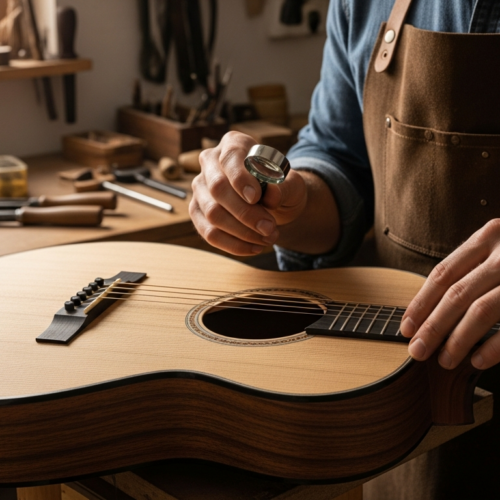
Proper care and maintenance are essential to preserve the beauty and tonal qualities of a macassar ebony guitar. Regular cleaning with a soft, lint-free cloth will help to remove dust, fingerprints, and other surface contaminants.
Avoid using harsh chemicals or abrasive cleaners, as these can damage the wood’s finish and affect its tonal properties. Maintaining proper humidity levels is also crucial, as macassar ebony is susceptible to cracking or warping in extremely dry conditions.
Using a humidifier in your guitar case or room will help to keep the wood stable and prevent damage. Periodically conditioning the fingerboard with a specialized oil will help to keep it moisturized and prevent it from drying out.
When restringing your guitar, be sure to use strings that are appropriate for the instrument and avoid over-tightening them. Regularly inspecting your guitar for any signs of damage, such as cracks or loose binding, is also important.
Dust and fingerprints can accumulate on the guitar’s surface over time, dulling its finish and potentially affecting its tone. Regular cleaning helps to maintain the guitar’s beauty and performance.
Harsh chemicals and abrasive cleaners can strip away the guitar’s finish and damage the wood. Always use gentle cleaning products specifically designed for guitars.
Low humidity can cause the wood to dry out and shrink, leading to cracks and warping. Maintaining proper humidity levels is essential for preserving the integrity of the guitar.
Fingerboard oil helps to keep the wood moisturized and prevents it from becoming dry and brittle. This is especially important for macassar ebony, which can be prone to drying out in dry climates.
The Macassar Ebony Guitar: A Sound Investment
Investing in a macassar ebony guitar is not only a purchase but also an acquisition of an instrument with unique tonal and aesthetic qualities. The use of macassar ebony can significantly enhance the guitar’s sound, providing clarity, sustain, and a balanced tonal spectrum that appeals to discerning players.
The wood’s visual appeal, characterized by its dark stripes and unique grain patterns, also adds to the instrument’s value. Guitars made with macassar ebony often stand out for their distinctive look, making them a prized possession for musicians who appreciate both sound and aesthetics.
While macassar ebony guitars may come with a higher price tag compared to those made with more common tonewoods, the investment is often justified by the instrument’s enhanced performance and visual appeal. The durability of macassar ebony ensures that the guitar will withstand the test of time, making it a worthwhile investment for serious musicians.
Moreover, the growing awareness of sustainable sourcing practices adds to the value of macassar ebony guitars, as ethically sourced instruments become increasingly desirable. By choosing a macassar ebony guitar from a reputable luthier or manufacturer, you are not only investing in a high-quality instrument but also supporting responsible forestry practices.
The clarity and sustain provided by macassar ebony allow musicians to explore a wider range of musical styles and techniques. Its balanced tonal spectrum ensures that the guitar sounds great in a variety of settings, from solo performances to ensemble playing.
The unique grain patterns and coloration of macassar ebony make each guitar a one-of-a-kind work of art. This adds to the instrument’s value and makes it a prized possession for musicians who appreciate both sound and aesthetics.
The durability of macassar ebony ensures that the guitar will maintain its beauty and performance for many years to come. This makes it a worthwhile investment for serious musicians who are looking for an instrument that will last a lifetime.
Supporting responsible forestry practices helps to protect the environment and ensure the long-term availability of macassar ebony. By choosing an ethically sourced guitar, you are making a positive contribution to the planet.
Notable Guitar Makers Using Macassar Ebony
Several renowned guitar makers have embraced macassar ebony for its exceptional tonal and aesthetic qualities. These luthiers often highlight the wood’s unique properties in their high-end instruments, catering to musicians who seek both performance and visual appeal.
Companies like Taylor Guitars have incorporated macassar ebony into their fingerboards and bridges, enhancing the clarity and sustain of their instruments. Other boutique luthiers, such as those specializing in custom-made guitars, frequently use macassar ebony for its distinctive look and tonal characteristics.
These custom builders often work closely with clients to select the perfect piece of macassar ebony, ensuring that each guitar is a unique work of art. The use of macassar ebony by these notable guitar makers underscores its reputation as a premium tonewood that delivers exceptional results.
Their endorsement of macassar ebony also encourages other luthiers to explore its potential, contributing to the wood’s growing popularity in the guitar-making community. As more musicians discover the benefits of macassar ebony, its presence in the world of acoustic guitars is likely to continue to expand.
Taylor Guitars’ use of macassar ebony reflects their commitment to innovation and quality. They carefully select pieces of macassar ebony that meet their high standards for both aesthetics and tonal performance.
Boutique luthiers often use macassar ebony to create truly unique and personalized instruments. They work closely with clients to understand their individual needs and preferences, selecting the perfect piece of macassar ebony to achieve the desired sound and look.
The reputation of these notable guitar makers helps to build confidence in macassar ebony as a premium tonewood. Their expertise and craftsmanship ensure that guitars made with macassar ebony deliver exceptional results.
The growing popularity of macassar ebony is a testament to its unique combination of visual appeal and tonal properties. As more luthiers and musicians discover its benefits, it is likely to become an even more prominent tonewood in the world of acoustic guitars.
Conclusion
Macassar ebony offers a compelling blend of visual beauty and tonal complexity, making it a valuable choice for guitar builders seeking to create instruments with character and depth. Its unique grain patterns, combined with its bright, articulate sound, provide a distinctive alternative to more traditional tonewoods.
While working with macassar ebony presents certain challenges, the results are well worth the effort for those who appreciate its unique qualities. By understanding its properties, addressing sustainability concerns, and implementing proper care and maintenance practices, luthiers and musicians can fully appreciate the potential of the macassar ebony guitar.
The visual beauty of macassar ebony adds a touch of elegance and sophistication to any guitar. Its unique grain patterns and coloration make each instrument a one-of-a-kind work of art.
The bright, articulate sound of macassar ebony is well-suited for a wide range of musical styles. Its clarity and sustain make it a versatile choice for both fingerstyle and strumming.