
The quest for the perfect guitar tone often leads luthiers down a path of exploring various tonewoods. Among the many options available, pau ferro has emerged as a popular choice for fretboards, offering a unique blend of tonal and physical properties that appeal to both builders and players.
This exotic wood is celebrated for its balanced sound, smooth feel, and attractive appearance, making it a worthy contender in the world of luthierie. Let’s examine the pau ferro fretboard benefits that make it so desirable.
In this article, we’ll explore the origins and characteristics of pau ferro, its tonal advantages, and its durability. We’ll also compare it to other common fretboard materials like rosewood and ebony, discuss its aesthetic qualities, and provide tips for working with this unique wood.
Understanding Pau Ferro: Origin and Characteristics
Pau ferro, also known as Brazilian ironwood or morado, is a tonewood that hails from the forests of Brazil and Bolivia. This wood is known for its density and hardness, which contribute to its bright and articulate sound.
The wood has a medium to coarse texture with interlocking grain patterns that give it strength and stability. Its color can range from light brown to a reddish-purple hue, often featuring striking dark streaks that add to its visual appeal.
Pau ferro trees grow to substantial sizes, allowing for the production of large, clear pieces of lumber suitable for fretboards and other instrument components. This availability, combined with its desirable properties, has made it a favored choice among luthiers seeking a reliable and attractive alternative to traditional tonewoods.
Beyond its use in musical instruments, pau ferro is also used in flooring, furniture, and cabinetry, showcasing its versatility and durability. The wood’s resistance to wear and tear makes it suitable for high-traffic areas, while its aesthetic qualities make it a desirable material for decorative applications.
The name “pau ferro” translates to “iron wood” in Portuguese, a testament to its robust nature. This name accurately reflects the wood’s impressive density and resistance to wear.

The interlocking grain pattern not only contributes to its strength but also makes it less prone to splitting, a valuable characteristic for woodworking. This makes it easier to work with compared to some other exotic hardwoods.
The reddish-purple hues often deepen with age, adding to the wood’s visual appeal over time. This natural aging process can create a beautiful, rich patina that enhances the instrument’s overall aesthetic.
While primarily sourced from Brazil and Bolivia, pau ferro can also be found in other parts of South America. Its widespread availability within the region contributes to its relative affordability compared to some rarer tonewoods.
The wood’s density also contributes to its ability to hold frets securely. This is crucial for maintaining proper intonation and ensuring that the instrument plays in tune accurately.
Luthiers often appreciate the consistency of pau ferro, as it tends to be less prone to wild variations in grain and color compared to some other woods. This allows for greater predictability in the final appearance of the instrument.
Tonal Advantages of Using Pau Ferro for Fretboards
One of the primary reasons luthiers choose pau ferro for fretboards is its distinct tonal characteristics. Many compare its sound profile to that of rosewood, but with a slightly brighter and snappier quality.
Pau ferro offers a balanced sound with clear highs, warm mids, and a focused low end. This makes it a versatile choice for a wide range of musical styles, from rock and blues to jazz and classical.
The wood’s density contributes to its excellent sustain, allowing notes to ring out clearly and evenly across the fretboard. This is especially beneficial for soloing and melodic playing, where sustained notes are crucial for creating expressive musical phrases.
Furthermore, the hardness of pau ferro helps to enhance clarity and articulation, ensuring that each note is well-defined and present in the mix. This makes it an excellent choice for players who value precision and detail in their playing.
The slightly brighter tonal character of pau ferro can be particularly useful for guitars with darker or warmer sounding bodies. It can help to add some sparkle and clarity to the overall tone, preventing the instrument from sounding muddy or muffled.
The focused low end of pau ferro helps to prevent the bass frequencies from becoming too boomy or overpowering. This is especially important for players who prefer a tight and controlled bass response.
The wood’s ability to sustain notes evenly across the fretboard ensures that there are no dead spots or areas where notes sound weaker or less resonant. This contributes to a more consistent and enjoyable playing experience.
The enhanced clarity and articulation provided by pau ferro can be particularly beneficial for complex chords and intricate fingerpicking patterns. It allows each note to be heard distinctly, preventing the sound from becoming muddled or indistinct.
Players who use a lot of effects, such as distortion or overdrive, may find that pau ferro helps to maintain clarity and definition in their tone. The wood’s brightness and articulation can help to cut through the effects and prevent the sound from becoming too muddy or undefined.
The balanced tonal properties of pau ferro make it a versatile choice for a wide range of playing styles and genres. Whether you’re playing blues, rock, jazz, or classical, pau ferro can provide a solid foundation for your sound.
Pau Ferro’s Durability and Resistance to Wear
Durability is a crucial factor to consider when selecting a material for a fretboard, as this part of the instrument is subject to constant friction and wear. Pau ferro excels in this area, offering excellent resistance to dents, scratches, and general wear and tear.
Its density and hardness make it less prone to developing grooves or divots from the strings, ensuring that the fretboard remains smooth and playable for years to come. This is particularly important for players who use heavier gauge strings or have a more aggressive playing style.
| Property | Pau Ferro | Rosewood | Ebony |
|---|---|---|---|
| Janka Hardness | 1,960 lbf | 1,225 lbf | 3,690 lbf |
| Density | 55-65 lbs/ft³ | 45-55 lbs/ft³ | 60-75 lbs/ft³ |
| Dimensional Stability | Excellent | Good | Excellent |
| Resistance to Wear | High | Moderate | High |
In addition to its resistance to physical wear, pau ferro is also less susceptible to changes in humidity and temperature compared to some other tonewoods. This dimensional stability helps to prevent warping or cracking, ensuring that the fretboard remains straight and true over time.
The Janka hardness rating of 1,960 lbf indicates that pau ferro is significantly harder than rosewood, making it more resistant to indentation and wear. This translates to a longer lifespan for the fretboard and less frequent need for maintenance or repair.
The wood’s density also contributes to its resistance to moisture absorption. This is important for preventing the fretboard from swelling or shrinking in response to changes in humidity, which can lead to problems with fret protrusion and playability.
The excellent dimensional stability of pau ferro makes it a reliable choice for instruments that will be exposed to a wide range of environmental conditions. This is particularly important for touring musicians or players who live in areas with extreme climates.
The high resistance to wear of pau ferro means that the fretboard will maintain its smooth and comfortable playing surface for longer, even with heavy use. This can improve the overall playing experience and reduce the need for costly fretboard replacements.
The combination of hardness, density, and dimensional stability makes pau ferro a very durable and long-lasting material for fretboards. This is a significant advantage for players who want an instrument that will stand the test of time.
Comparing Pau Ferro to Rosewood and Ebony
Rosewood and ebony have long been the standard choices for fretboards, each offering its own unique set of characteristics. Pau ferro provides an interesting alternative, sitting somewhere between the two in terms of both tonal and physical properties.
Compared to rosewood, pau ferro tends to be brighter and more articulate, with a snappier attack and a slightly less pronounced low end. Rosewood, on the other hand, offers a warmer, more mellow tone with a richer and more complex harmonic content.
When compared to ebony, pau ferro is generally less dense and hard, resulting in a slightly softer feel under the fingers. Ebony is known for its extremely smooth and glassy surface, which provides exceptional clarity and note definition, as well as a very fast playing experience.
However, ebony can sometimes sound a bit sterile or clinical, while pau ferro offers a more organic and natural tone. The choice between these woods ultimately depends on the player’s individual preferences and the desired sound of the instrument.
Another consideration is the availability and sustainability of these tonewoods. Rosewood, particularly Brazilian rosewood, has become increasingly scarce and expensive due to overharvesting and trade restrictions. Ebony, too, faces sustainability challenges, as the highest quality, jet-black ebony is becoming harder to source.
Pau ferro is generally more readily available and is considered a more sustainable option compared to some of the rarer rosewood and ebony species. This makes it an attractive choice for luthiers who are concerned about environmental impact and responsible sourcing.
The brighter tone of pau ferro can be a good choice for players who find rosewood to be too warm or muddy. It can help to add some clarity and definition to the overall sound.
The softer feel of pau ferro compared to ebony can be more comfortable for players who prefer a less rigid playing surface. It can also be easier on the fingers for extended playing sessions.
The more organic and natural tone of pau ferro can be a good fit for players who prefer a more vintage-inspired sound. It can add some warmth and character to the instrument’s overall tone.
The greater availability and sustainability of pau ferro make it a more ethical and responsible choice for luthiers who are concerned about the environment. It can help to reduce the demand for endangered or overharvested tonewoods.
Ultimately, the best choice between pau ferro, rosewood, and ebony depends on the individual player’s preferences and the specific characteristics of the instrument. Each wood offers a unique set of tonal and physical properties that can enhance the playing experience.
The Aesthetic Appeal of Pau Ferro Fretboards
Beyond its tonal and physical properties, pau ferro is also prized for its attractive appearance. The wood’s color ranges from light brown to reddish-purple, often featuring striking dark streaks and grain patterns that add visual interest and character.
This natural variation means that no two pau ferro fretboards are exactly alike, giving each instrument a unique and individual look. The wood’s warm and inviting tones complement a wide range of guitar finishes and styles, making it a versatile choice for both modern and vintage-inspired instruments.
Pau ferro can be finished to a high gloss sheen, which enhances its natural beauty and provides a smooth and comfortable playing surface. Alternatively, it can be left with a more natural, satin finish, which provides a more tactile feel and a slightly warmer tone.
The wood’s aesthetic qualities also make it a popular choice for other instrument components, such as bridges, headstock veneers, and even entire necks. Its visual consistency and attractive grain patterns make it a cohesive and appealing choice for creating a unified and stylish instrument design.
The reddish-purple hues of pau ferro can add a touch of elegance and sophistication to any instrument. This can be particularly appealing to players who appreciate a visually striking and unique aesthetic.
The dark streaks and grain patterns in pau ferro can create a sense of depth and dimension in the fretboard. This can add visual interest and prevent the fretboard from looking too plain or uniform.
The warm and inviting tones of pau ferro can complement a wide range of guitar finishes, from classic sunburst to modern metallic colors. This makes it a versatile choice for instruments of all styles and designs.
The ability to finish pau ferro to either a high gloss or a satin sheen allows luthiers to customize the look and feel of the fretboard to suit the player’s preferences. This adds another layer of personalization to the instrument.
The use of pau ferro for other instrument components, such as bridges and headstock veneers, can create a cohesive and unified aesthetic throughout the instrument. This can enhance the overall visual appeal and create a more harmonious design.
Working with Pau Ferro: Tips and Techniques
While pau ferro is generally considered to be a stable and easy-to-work-with wood, there are a few tips and techniques that can help ensure optimal results when using it for luthierie. First, it’s important to use sharp tools, as pau ferro’s density can cause dull tools to tear or splinter the wood.
When sawing or routing pau ferro, use a slow and steady feed rate to prevent chipping or tear-out. It is also advisable to use a dust mask, as some individuals may experience allergic reactions to the wood dust.
- Use sharp tools
- Maintain a slow feed rate
- Wear a dust mask
- Pre-drill screw holes
- Use appropriate glue
Pau ferro can be glued easily with most common woodworking adhesives, but it’s always a good idea to test the bond strength on a small sample piece before committing to the final assembly. When screwing into pau ferro, pre-drilling pilot holes is essential to prevent splitting the wood.
Sharp tools are essential for achieving clean cuts and preventing tear-out when working with pau ferro. Dull tools can cause the wood to splinter and create a rough or uneven surface.
A slow and steady feed rate allows the cutting tool to remove material cleanly and efficiently, reducing the risk of chipping or tear-out. This is particularly important when routing edges or shaping complex curves.
Wearing a dust mask is crucial for protecting your lungs from the fine dust particles produced when working with pau ferro. Some individuals may be allergic to the wood dust, so it’s always best to take precautions.
Pre-drilling pilot holes before driving screws into pau ferro is essential for preventing the wood from splitting. The density of the wood can make it difficult to drive screws without pre-drilling.
Using an appropriate glue for woodworking is important for ensuring a strong and durable bond when assembling pau ferro components. It’s always a good idea to test the bond strength on a small sample piece before committing to the final assembly.
Pau Ferro Guitar Neck: A Solid Choice
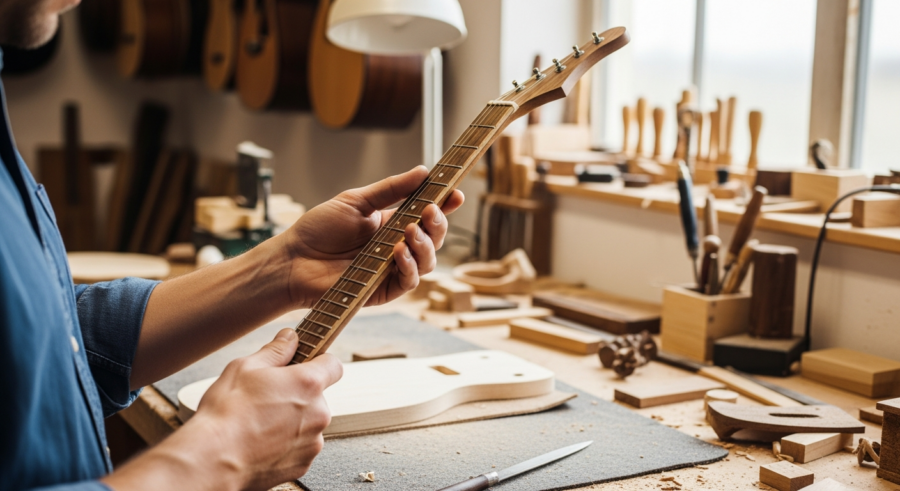
While pau ferro is most commonly used for fretboards, its stability and tonal properties also make it a viable option for guitar necks. A pau ferro guitar neck offers a unique blend of warmth and clarity, providing a comfortable feel and excellent sustain.
Compared to maple, which is a common choice for guitar necks, pau ferro offers a slightly warmer and more resonant tone. This can be particularly beneficial for players who prefer a more vintage-inspired sound or who find maple necks to be too bright or harsh.
When used for a neck, pau ferro’s density helps to provide stability and rigidity, ensuring that the neck remains straight and true even under string tension. This is especially important for guitars with longer scale lengths or heavier gauge strings.
The wood’s attractive appearance also makes it a visually appealing choice for guitar necks, adding a touch of elegance and sophistication to the instrument. Whether finished with a gloss or satin sheen, a pau ferro neck is sure to stand out and make a statement.
A pau ferro neck can add a unique tonal character to a guitar, blending the warmth of mahogany with the clarity of maple. This can create a versatile and balanced sound that is suitable for a wide range of musical styles.
The comfortable feel of a pau ferro neck can enhance the playing experience, allowing for smooth and effortless movement across the fretboard. This can be particularly beneficial for players who value comfort and playability.
The excellent sustain provided by a pau ferro neck can improve the overall tone and resonance of the guitar. This can be particularly noticeable when playing single notes or chords.
The stability and rigidity of a pau ferro neck can help to ensure that the guitar stays in tune longer and requires less frequent adjustments. This is particularly important for players who perform live or record frequently.
The visual appeal of a pau ferro neck can add a touch of elegance and sophistication to the guitar, making it a more attractive and desirable instrument. This can be particularly appealing to players who value aesthetics and craftsmanship.
Pau Ferro vs Rosewood: Key Differences
The “pau ferro vs rosewood” debate is common among guitar players, as both woods share similarities but also possess distinct characteristics. Pau ferro is often considered a brighter and snappier alternative to rosewood, with a more focused and articulate sound.
Rosewood, on the other hand, offers a warmer and more complex tone with a richer harmonic content. Many players describe rosewood as having a “sweeter” sound, while pau ferro is often described as being more “punchy” and “direct.”
In terms of feel, pau ferro tends to be slightly harder and smoother than rosewood, providing a faster and more effortless playing experience. Rosewood, with its more open grain structure, can sometimes feel a bit more textured under the fingers.
The choice between pau ferro and rosewood ultimately comes down to personal preference and the desired sound and feel of the instrument. Both woods are excellent choices for fretboards, offering a unique blend of tonal and physical properties that can enhance the playing experience.
The brighter tone of pau ferro can be a good choice for players who want a more modern and aggressive sound. It can help to cut through the mix and provide a more articulate and defined tone.
The warmer tone of rosewood can be a good choice for players who want a more vintage-inspired and mellow sound. It can add a richness and complexity to the tone that is well-suited for blues, jazz, and other traditional styles.
The smoother feel of pau ferro can be a good choice for players who prefer a faster and more effortless playing experience. It can allow for quicker and more precise finger movements across the fretboard.
The more textured feel of rosewood can be a good choice for players who prefer a more tactile and organic playing experience. It can provide a better grip and a more natural feel under the fingers.
Ultimately, the best choice between pau ferro and rosewood depends on the individual player’s preferences and the specific characteristics of the instrument. It’s important to try both woods and see which one feels and sounds best to you.
Maintaining Your Pau Ferro Fretboard
Proper maintenance is essential for keeping your pau ferro fretboard in top condition. Regular cleaning and conditioning will help to prevent the wood from drying out, cracking, or warping.
To clean your pau ferro fretboard, use a soft cloth to wipe away dirt, grime, and finger oils after each playing session. For more stubborn buildup, you can use a specialized fretboard cleaner or a mild soap and water solution, being careful not to saturate the wood.
After cleaning, it’s important to condition the fretboard with a high-quality fretboard oil or conditioner. This will help to replenish the wood’s natural oils and prevent it from drying out, especially in dry climates.
Apply a small amount of oil to the fretboard and allow it to soak in for a few minutes, then wipe away any excess with a clean cloth. Avoid using excessive amounts of oil, as this can lead to buildup and attract dirt.
In addition to regular cleaning and conditioning, it’s also important to protect your pau ferro fretboard from extreme temperature and humidity changes. Store your instrument in a case when not in use, and avoid leaving it in direct sunlight or near sources of heat or cold.
By following these simple maintenance tips, you can ensure that your pau ferro fretboard remains smooth, playable, and beautiful for years to come. A well-maintained fretboard not only enhances the playing experience but also helps to preserve the value of your instrument.
Regular cleaning helps to remove dirt and grime that can accumulate on the fretboard and affect its playability. This can also prevent the buildup of oils and acids from your fingers, which can damage the wood over time.
Conditioning the fretboard helps to keep the wood moisturized and prevent it from drying out and cracking. This is particularly important in dry climates, where the wood can lose moisture quickly.
Protecting the fretboard from extreme temperature and humidity changes can help to prevent warping and cracking. This is especially important for instruments that are stored or transported in uncontrolled environments.
A well-maintained fretboard not only enhances the playing experience but also helps to preserve the value of your instrument. A clean and well-conditioned fretboard will look and feel better, and it will also be more resistant to wear and tear.
Conclusion
Pau ferro has solidified its place as a valuable tonewood in the world of luthierie. Its unique combination of tonal characteristics, durability, and aesthetic appeal make it a popular choice for fretboards and other instrument components.
Whether you’re a luthier seeking a reliable and sustainable alternative to traditional tonewoods or a player looking for a fretboard with a balanced sound and comfortable feel, pau ferro is well worth considering. Its versatility and attractive appearance make it a welcome addition to any instrument.
From its origins in the forests of Brazil to its presence on some of the world’s finest guitars, pau ferro has proven its worth as a tonewood. As luthiers continue to explore new and innovative materials, pau ferro is sure to remain a staple in the world of guitar building for years to come, offering a unique blend of tone, feel, and beauty.
So, if you’re in the market for a new guitar or looking to upgrade your current instrument, consider the benefits of a pau ferro fretboard. You might just find that it’s the perfect fit for your playing style and musical preferences.
The continued popularity of pau ferro is a testament to its versatility and performance. It offers a compelling alternative to more traditional tonewoods, providing a unique set of benefits for both luthiers and players.
As sustainability becomes an increasingly important consideration in the world of guitar building, pau ferro is likely to become even more popular as a responsible and ethical choice. Its availability and renewability make it a viable alternative to endangered or overharvested tonewoods.
Whether you’re a seasoned professional or a beginner just starting out, a pau ferro fretboard can enhance your playing experience and help you to achieve your musical goals. Its balanced tone, comfortable feel, and attractive appearance make it a worthwhile investment for any guitarist.