
Achieving the perfect color on a guitar through staining is an art form. It’s a process that combines technical skill with an understanding of wood properties and color theory. The goal is to enhance the natural beauty of the wood or completely transform its appearance, depending on the desired aesthetic.
Whether you’re a seasoned luthier or a hobbyist, mastering the art of staining can significantly elevate the quality and visual appeal of your instrument. This guide will walk you through the essential steps, from preparing the wood to applying the final finish, ensuring a professional-looking result.
We’ll cover everything from selecting the right type of stain to troubleshooting common issues, so you can confidently stain guitar wood and achieve the exact color you envision. Let’s get started and explore the world of guitar staining.
Why Stain a Guitar? Exploring Aesthetic and Functional Reasons
Staining a guitar serves both aesthetic and functional purposes. From an aesthetic standpoint, staining allows you to customize the appearance of the wood, enhancing its natural grain or completely altering its color to match a specific design vision. It’s a way to make each instrument unique and visually appealing.
Functionally, staining can also help to protect the wood from UV damage, which can cause fading or discoloration over time. It can also highlight the wood’s natural figure, bringing out details that might otherwise be missed.
Many builders like to use wood stain to add depth to figured pieces of wood. A light stain can really make the flame or quilt pop on a maple top. This is a common practice in the guitar world.
Ultimately, the decision to stain guitar wood is a personal one, driven by the desire to create a visually stunning and long-lasting instrument. Some builders may prefer the natural look of the wood, but a great many use stain to enhance the look.
Beyond the immediate visual impact, staining can also contribute to the overall character of the instrument. A carefully chosen stain can evoke a sense of vintage charm or modern sophistication, depending on the desired effect. This allows the builder to cater to a wide range of tastes and preferences.

Consider, too, the role of staining in concealing minor imperfections in the wood. While not a substitute for proper preparation, a well-applied stain can help to minimize the appearance of small blemishes or variations in grain pattern. This can be particularly useful when working with less-than-perfect cuts of wood.
Furthermore, staining offers an opportunity to create a cohesive aesthetic across different parts of the guitar. For instance, a builder might use a stain to match the color of the body to the headstock or fretboard. This attention to detail can significantly enhance the overall visual harmony of the instrument.
Finally, staining can be a form of artistic expression for the luthier. It’s a chance to showcase their creativity and skill by experimenting with different colors, techniques, and finishes. The result is a truly unique and personalized instrument that reflects the builder’s individual style.
Types of Guitar Stains: Water-Based, Oil-Based, and More
When it comes to staining guitar wood, you have several options to choose from, each with its own unique characteristics and advantages. The most common types of stains are water-based, oil-based, and alcohol-based stains, each offering different levels of penetration, drying times, and color intensity.
Water-based stains are known for their ease of use, low odor, and environmental friendliness, making them a popular choice for many luthiers. Oil-based stains, on the other hand, offer deeper penetration and richer colors, but they typically have longer drying times and require more ventilation.
Alcohol-based stains dry very quickly, which can be useful for layering colors or achieving specific effects, but they can also be more difficult to control. Gel stains are also available, providing a thicker consistency that’s ideal for vertical surfaces or figured woods.
Ultimately, the best type of guitar stain depends on your specific project requirements, personal preferences, and the type of wood you’re working with. Each type of stain has its own unique pros and cons.
Water-based stains are particularly appealing for their ease of cleanup; spills and messes are easily addressed with just water. They also tend to raise the grain of the wood less than other types of stains, which can reduce the amount of sanding required after staining. However, their color intensity may not be as deep as oil-based stains.
Oil-based stains, with their richer color saturation, are often preferred for highlighting the natural grain of the wood. They penetrate deeply, providing a long-lasting color that enhances the wood’s inherent beauty. The longer drying time, however, can be a drawback for some luthiers.
Alcohol-based stains are a favorite among those who need to work quickly. Their rapid drying time allows for multiple coats to be applied in a single day. This can be particularly useful for achieving complex color blends or creating unique visual effects.
Gel stains are a versatile option, especially for working with figured woods like quilted maple or burled walnut. Their thicker consistency prevents them from running or dripping on vertical surfaces, ensuring an even and consistent color application. They are also great for filling in pores in open-pored woods.
Beyond these common types, there are also specialized stains available, such as aniline dyes and NGR (non-grain raising) stains. Aniline dyes offer exceptional color clarity and vibrancy, while NGR stains minimize grain raising, resulting in a smoother finish.
Understanding Wood Porosity and Stain Absorption
Wood porosity plays a significant role in how well a stain is absorbed and how the final color appears. Different wood species have varying degrees of porosity, which affects the depth and uniformity of the stain.
For instance, hardwoods like maple and birch have closed pores, making them more challenging to stain evenly compared to open-pore woods like mahogany or ash. Understanding the porosity of the wood you’re working with is essential for achieving a consistent and professional-looking stain.
Closed-pore woods often require a pre-stain conditioner or sealer to ensure even stain absorption. This helps to prevent blotching and streaking, resulting in a more uniform color across the surface.
Open-pore woods, on the other hand, may require multiple coats of stain to achieve the desired color intensity. Filling the pores can also create a smoother surface for finishing.
The cellular structure of the wood determines its porosity, and this varies greatly between species. Softwoods, like pine and cedar, tend to have larger, more open pores, making them highly absorbent. Hardwoods, on the other hand, can range from open-pored (like oak and ash) to closed-pored (like maple and cherry).
The direction of the wood grain also influences stain absorption. End grain, which is exposed when the wood is cut across the grain, is much more porous than the face grain. This means that end grain will absorb stain more quickly and deeply, resulting in a darker color.
Temperature and humidity can also affect how stain is absorbed. Warmer temperatures and lower humidity levels can cause the wood to dry out, making it more absorbent. Conversely, cooler temperatures and higher humidity levels can slow down the absorption process.
When working with woods that are prone to blotching, such as cherry or maple, it’s crucial to take extra precautions to ensure even stain absorption. This may involve using a pre-stain conditioner, applying multiple thin coats of stain, or using a gel stain.
Ultimately, understanding the relationship between wood porosity and stain absorption is key to achieving a flawless finish. By taking the time to assess the wood you’re working with and adjusting your techniques accordingly, you can ensure a consistent and professional-looking stain every time.
Preparing the Wood for Staining: Sanding and Sealing
Proper preparation is key to achieving a flawless stain job on guitar wood. This involves thorough sanding to create a smooth, even surface and, in some cases, sealing the wood to control stain absorption.
Start by sanding the wood with progressively finer grits of sandpaper, typically beginning with 120-grit and working your way up to 220-grit or 320-grit. This removes any imperfections and creates a consistent surface for the stain to adhere to.
| Step | Description | Purpose |
|---|---|---|
| 1. Initial Sanding | Use 120-grit sandpaper to remove imperfections. | Create a smooth base. |
| 2. Intermediate Sanding | Use 180-grit sandpaper to refine the surface. | Remove scratches from the initial sanding. |
| 3. Final Sanding | Use 220-grit or 320-grit sandpaper for a smooth finish. | Prepare the wood for even stain absorption. |
| 4. Sealing (Optional) | Apply a pre-stain conditioner or sealer. | Control stain absorption and prevent blotching. |
| 5. Cleaning | Remove sanding dust with a tack cloth or vacuum. | Ensure a clean surface for staining. |
Once the sanding is complete, remove all sanding dust with a tack cloth or vacuum. Depending on the wood species, you may also want to apply a pre-stain conditioner or sealer to ensure even stain absorption and prevent blotching, especially on woods like maple or pine.
Sanding is not just about creating a smooth surface; it’s also about opening up the wood pores to allow for better stain penetration. Each grit of sandpaper progressively refines the surface, removing scratches and imperfections from the previous grit.
The choice of sandpaper grit depends on the condition of the wood and the desired level of smoothness. For rough wood with significant imperfections, you may need to start with a coarser grit, such as 80-grit or even 60-grit. For wood that is already relatively smooth, you can start with 120-grit or 150-grit.
When sanding, always sand in the direction of the grain to avoid creating cross-grain scratches. Use a sanding block or orbital sander to ensure even pressure and avoid creating dips or hollows in the surface.
A pre-stain conditioner or sealer helps to create a more uniform surface for staining by partially sealing the wood pores. This prevents the stain from being absorbed too quickly or unevenly, resulting in a blotchy or streaky finish. Conditioners are especially important for woods like maple, pine, and cherry, which are prone to blotching.
After sanding and sealing, it’s crucial to remove all sanding dust before applying the stain. Even a small amount of dust can interfere with the stain absorption and create an uneven finish. Use a tack cloth, vacuum, or compressed air to remove all traces of dust from the surface.
Applying Guitar Stain: Techniques for Uniform Color
Applying guitar stain requires patience and attention to detail to achieve a uniform and consistent color. There are several techniques you can use, including wiping, spraying, and brushing, each with its own set of advantages and disadvantages.
Wiping is a popular method for applying stain, as it allows for precise control over the color intensity and helps to work the stain into the wood’s pores. Spraying provides a more even and consistent coat, but it requires specialized equipment and a well-ventilated area.
- Apply stain in the direction of the grain
- Use a lint-free cloth or foam brush
- Wipe off excess stain immediately
- Apply multiple thin coats for desired color
- Allow each coat to dry completely
Brushing can also be effective, but it’s important to use a high-quality brush and apply the stain in smooth, even strokes to avoid brush marks. Regardless of the technique you choose, always test the stain on a scrap piece of wood first to ensure you’re happy with the color and application.
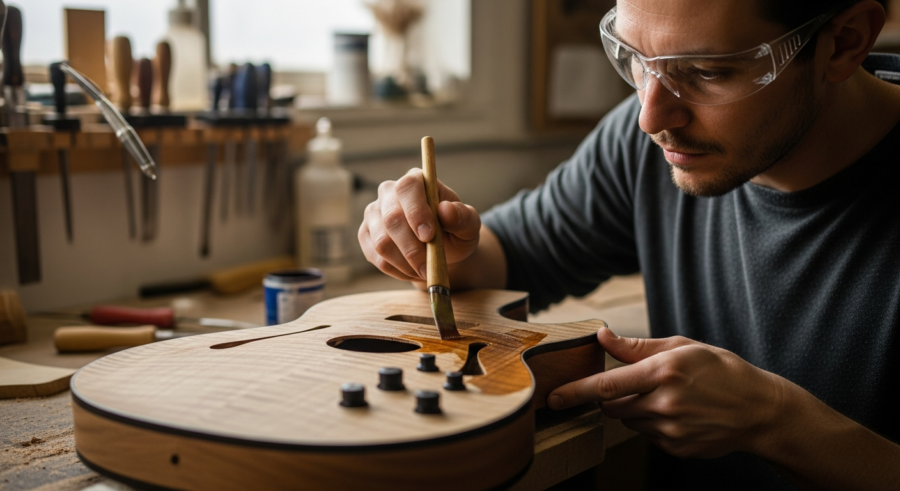
When wiping stain, use a clean, lint-free cloth or a foam applicator. Apply the stain liberally to the wood surface, working it into the pores with a circular motion. Then, immediately wipe off the excess stain with a clean cloth, following the direction of the grain.
Spraying stain requires a spray gun and a compressor. Thin the stain according to the manufacturer’s instructions and apply it in thin, even coats, overlapping each coat slightly. Maintain a consistent distance and angle from the surface to avoid runs or drips.
When brushing stain, use a high-quality brush with soft bristles. Dip the brush into the stain and tap off the excess. Apply the stain in smooth, even strokes, following the direction of the grain. Avoid applying too much stain at once, as this can lead to brush marks and uneven color.
Regardless of the application method, it’s always best to apply multiple thin coats of stain rather than one thick coat. This allows you to control the color intensity and avoid runs, drips, or brush marks. Allow each coat to dry completely before applying the next.
Testing the stain on a scrap piece of wood is crucial for ensuring that you’re happy with the color and application. The scrap piece should be the same type of wood as the guitar body and should be prepared in the same way. This will give you an accurate representation of how the stain will look on the finished product.
Achieving Specific Color Effects and Tones
One of the great things about staining guitar wood is the ability to create a wide range of color effects and tones. Whether you’re aiming for a vintage look, a modern aesthetic, or something completely unique, there are several techniques you can use to achieve your desired results.
For example, you can use layering techniques to create depth and dimension by applying multiple coats of different stain colors. You can also use masking techniques to create patterns or highlights, or distressing techniques to give the wood a weathered or aged appearance.
Dye stains can be used to create vibrant, transparent colors that allow the wood grain to show through, while pigment stains offer more opaque coverage. Experimenting with different combinations of stains and techniques can lead to some truly stunning and unique results.
Don’t be afraid to try new things and push the boundaries of what’s possible. With a little creativity and practice, you can achieve any color effect or tone you can imagine.
For a sunburst effect, you can apply a darker stain around the edges of the guitar body and a lighter stain in the center. Blend the two colors together to create a seamless transition. This is a classic look that is often used on vintage guitars.
To create a figured effect, you can use a technique called “dye popping.” This involves applying a dark dye stain to the wood, allowing it to dry, and then sanding back the surface. The dye will remain in the pores of the wood, highlighting the figure and creating a three-dimensional effect.
For a distressed or aged look, you can use a variety of techniques, such as sanding through the stain in certain areas, applying a crackle finish, or using steel wool to create scratches and wear marks. This can give the guitar a vintage vibe and make it look like it has been played for many years.
You can also use masking techniques to create patterns or designs on the guitar body. Apply masking tape to the areas that you want to protect from the stain and then apply the stain to the exposed areas. Remove the masking tape to reveal the pattern.
Experimenting with different types of stains and techniques is the best way to discover new and exciting color effects. Don’t be afraid to try new things and push the boundaries of what’s possible. With a little creativity and practice, you can achieve any color effect or tone you can imagine.
Troubleshooting Common Staining Issues
Even with careful preparation and application, staining guitar wood can sometimes present challenges. Common issues include blotching, streaking, uneven color, and raised grain, but with the right knowledge and techniques, these problems can be overcome.
Blotching often occurs on woods with uneven porosity, and it can be prevented by using a pre-stain conditioner or sealer. Streaking can be caused by improper application or using a dirty cloth or brush, so it’s important to apply the stain evenly and use clean tools.
Uneven color can be corrected by sanding back the affected areas and re-staining, while raised grain can be addressed by lightly sanding the wood after the stain has dried. Always test your techniques on a scrap piece of wood first to avoid any surprises on your finished project.
By understanding the causes of these common staining issues and how to address them, you can ensure a professional-looking result every time. Patience is key to a great finish.
Blotching is often the result of uneven stain absorption due to variations in wood density. A pre-stain conditioner helps to even out the absorption rate, preventing the stain from penetrating too deeply in some areas and not enough in others. Applying the stain in light coats can also help to minimize blotching.
Streaking can occur if the stain is not applied evenly or if the cloth or brush is not clean. Always use a clean, lint-free cloth or a high-quality brush. Apply the stain in smooth, even strokes, following the direction of the grain. Avoid overlapping strokes or applying too much stain at once.
Uneven color can be caused by a variety of factors, including uneven sanding, variations in wood density, or improper stain application. If you notice uneven color, you can try sanding back the affected areas and re-staining. You may also need to use a different type of stain or adjust your application technique.
Raised grain occurs when the wood fibers swell after being exposed to moisture. This can happen when you apply a water-based stain. To prevent raised grain, you can lightly dampen the wood with water before sanding. This will raise the grain, allowing you to sand it off before applying the stain.
If you encounter any staining issues, don’t panic. Take a deep breath and assess the situation. Identify the cause of the problem and then take steps to correct it. With a little patience and perseverance, you can overcome any staining challenge.
Sealing and Finishing Over Stain
Once the stain has dried completely, it’s important to seal and finish the wood to protect the stain and enhance its appearance. Sealing helps to lock in the stain and prevent it from bleeding or fading over time, while finishing provides a durable and attractive surface.
There are several types of finishes you can use, including lacquer, polyurethane, and varnish, each with its own unique properties and application methods. Lacquer is a popular choice for guitars due to its fast drying time and ability to create a high-gloss finish.
Polyurethane is more durable and resistant to scratches and chemicals, making it a good option for guitars that will be heavily used. Varnish offers a more traditional look and feel, but it typically requires more coats and longer drying times.
Always follow the manufacturer’s instructions for applying the finish, and be sure to sand lightly between coats to ensure a smooth and even surface. The finish is just as important as the stain itself.
Sealing the stain is typically done with a clear coat of lacquer, shellac, or varnish. This helps to create a barrier between the stain and the final finish, preventing the stain from bleeding or reacting with the finish. It also helps to create a more uniform surface for the finish to adhere to.
Lacquer is a popular choice for guitars because it dries quickly, is easy to apply, and can be buffed to a high gloss. However, it is not as durable as polyurethane and can be susceptible to scratches and dings. Nitrocellulose lacquer is a traditional choice, known for its ability to age gracefully and develop a vintage patina over time.
Polyurethane is a more durable finish that is resistant to scratches, chemicals, and UV light. It is a good choice for guitars that will be heavily used or exposed to the elements. However, it is more difficult to apply than lacquer and does not buff to as high of a gloss. It is also less breathable than lacquer, which can affect the tone of the guitar.
Varnish is a traditional finish that offers a warm, amber tone and a smooth, satin sheen. It is a good choice for guitars that are intended to have a vintage or classic look. However, it requires more coats and longer drying times than lacquer or polyurethane.
Sanding between coats of finish is essential for creating a smooth and even surface. Use a fine-grit sandpaper (400-grit or higher) and sand lightly in the direction of the grain. Be careful not to sand through the finish, especially on edges and corners.
Conclusion
Staining guitar wood is a rewarding process that allows you to customize the appearance of your instrument and enhance its natural beauty. By understanding the different types of stains, preparing the wood properly, and applying the stain with care, you can achieve professional-looking results that will last for years to come.
Don’t be afraid to experiment with different techniques and colors to create unique and personalized finishes that reflect your individual style. With a little practice and patience, you can master the art of staining and take your guitar building skills to the next level.
The journey of staining a guitar is one of continuous learning and refinement. Each project offers an opportunity to hone your skills, experiment with new techniques, and develop your own unique style. Embrace the challenges, learn from your mistakes, and celebrate your successes.
Remember that the perfect stain job is not just about achieving the right color; it’s also about creating a finish that is durable, long-lasting, and enhances the overall beauty of the instrument. Take pride in your work and strive for excellence in every detail.
As you continue to explore the world of guitar staining, don’t hesitate to seek out resources and inspiration from other luthiers and woodworkers. Share your knowledge, learn from others, and contribute to the collective wisdom of the craft. Together, we can elevate the art of guitar building to new heights.