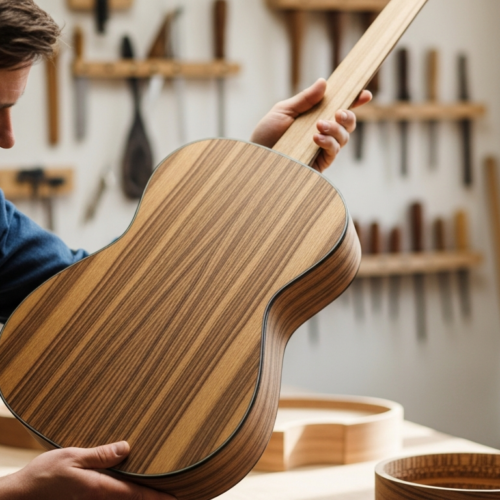


In the world of guitar building, the choice of wood is paramount. It dictates not only the instrument’s aesthetic appeal but also, and more importantly, its sonic characteristics and structural integrity. For guitar necks, in particular, stability is key, and one wood stands out for its remarkable ability to provide just that: wenge.
Renowned for its exceptional stiffness and resistance to bending, wenge has become a favorite among luthiers seeking to craft necks that can withstand the test of time and the rigors of constant playing. Let’s examine what makes wenge such a prized material, exploring its origins, properties, tonal qualities, and working characteristics, all while keeping wenge guitar neck stability in mind.
Whether you’re a seasoned luthier or an aspiring guitar builder, understanding the nuances of wenge can empower you to make informed decisions and elevate the quality of your instruments. We’ll also touch on how to properly finish this wood to enhance its natural beauty and protect it from the elements, ensuring that your wenge guitar neck remains a steadfast foundation for musical expression for years to come.
What is Wenge and Where Does It Come From?
Wenge (Millettia laurentii) is a tropical hardwood native to Central Africa, particularly the Democratic Republic of Congo, Cameroon, Gabon, and Tanzania. This dense and durable wood is harvested from a medium-sized tree that can grow up to 60 feet tall and 3 feet in diameter.
The heartwood of wenge is dark brown, almost black, with closely spaced black veins, giving it a striking and distinctive appearance. Its texture is coarse, and the grain is generally straight, though it can sometimes be interlocked, adding to its visual appeal.
Wenge is prized not only for its aesthetic qualities but also for its exceptional physical properties, which make it well-suited for a variety of applications, including furniture making, flooring, and, of course, luthierie. Its density, hardness, and resistance to bending make it an ideal choice for guitar necks, where stability and rigidity are of utmost importance.
Beyond its use in guitars, wenge has also found its way into other musical instruments, such as bass guitars and even some woodwind instruments, where its tonal characteristics and stability are highly valued. The wood’s unique combination of beauty and brawn has solidified its place as a sought-after material in the world of woodworking and instrument making.
Wenge’s Exceptional Stiffness and Resistance to Bending
One of the primary reasons wenge is so highly regarded for guitar necks is its exceptional stiffness and resistance to bending. These properties are crucial for maintaining the neck’s shape and preventing warping or twisting, even under the constant tension of the strings.

Wenge’s high density, typically around 870 kg/m³ (54 lbs/ft³), contributes significantly to its stiffness. This density, combined with its interlocked grain in some cases, makes it incredibly resistant to deformation, ensuring that the neck remains straight and true over time.
The stiffness of a guitar neck directly impacts the instrument’s playability and intonation. A neck that bends or warps can cause buzzing frets, intonation problems, and an overall decrease in playing comfort, making wenge’s stability a major advantage.
Compared to other commonly used guitar neck woods, such as maple or mahogany, wenge generally exhibits greater stiffness and resistance to bending. This means that a wenge neck can be thinner and more streamlined while still maintaining the necessary stability, allowing for a more comfortable playing experience.
The Tonal Qualities of Wenge in Guitar Necks
While wenge’s stiffness and stability are its most prominent attributes, it also contributes to the overall tonal characteristics of the guitar. The wood’s density and hardness influence how vibrations travel through the neck, ultimately affecting the instrument’s sustain, clarity, and overall sound.
Wenge tends to produce a bright, clear tone with a strong fundamental, meaning that the notes are well-defined and articulate. It can also enhance the guitar’s sustain, allowing notes to ring out longer and with greater clarity.
| Tonewood | Tonal Characteristics | Typical Uses |
|---|---|---|
| Maple | Bright, crisp, focused | Necks, bodies, fingerboards |
| Mahogany | Warm, mellow, balanced | Necks, bodies |
| Wenge | Bright, clear, strong fundamental | Necks, fingerboards |
| Rosewood | Warm, complex, rich overtones | Fingerboards, bodies |
However, wenge’s tonal contribution is often subtle, especially when used in the neck. The body wood, pickups, and other components of the guitar typically have a more significant impact on the overall sound.
Working with Wenge: Addressing Splintering and Grain
Despite its many advantages, wenge can be somewhat challenging to work with due to its splintering tendencies and coarse grain. These characteristics require careful attention and specific techniques to ensure a smooth and professional finish.
One of the biggest challenges when working with wenge is its propensity to splinter, especially when cutting or shaping against the grain. The wood’s coarse texture and interlocked grain can cause small pieces to break off, leaving a rough and uneven surface.
To minimize splintering, it’s essential to use sharp tools and take light, controlled passes. When sawing or routing, avoid forcing the tool, and instead, let it do the work at its own pace, allowing for a cleaner cut.
Sanding wenge can also be tricky, as the coarse grain can make it difficult to achieve a perfectly smooth surface. Start with a coarser grit sandpaper (e.g., 120-grit) to level the surface, and then gradually work your way up to finer grits (e.g., 320-grit or higher) to refine the finish.
It’s also important to be mindful of the direction of the grain when sanding. Sanding against the grain can cause scratches and unevenness, so always sand in the direction of the grain to achieve the best results.
Finishing Wenge to Enhance Its Natural Beauty
Wenge’s natural beauty is one of its most appealing qualities, and a well-executed finish can enhance its rich color and striking grain patterns. However, due to the wood’s open pores, it’s important to choose the right finishing products and techniques to achieve a smooth and durable surface.
Before applying any finish, it’s crucial to properly prepare the wood surface. This includes sanding to a fine grit (e.g., 320-grit or higher) and removing any dust or debris with a tack cloth or compressed air.
One popular option for finishing wenge is to use a clear oil finish, such as tung oil or linseed oil. These oils penetrate the wood, enhancing its natural color and providing a subtle sheen.
When applying an oil finish, it’s important to apply thin, even coats and allow each coat to fully dry before applying the next. Multiple coats may be necessary to achieve the desired level of protection and sheen.
Another option is to use a lacquer or varnish finish, which provides a more durable and protective coating. These finishes can be applied in multiple coats, with sanding in between each coat to ensure a smooth and even surface.
Wenge’s Use in Fingerboards and Other Guitar Parts
While wenge is most commonly used for guitar necks, its properties also make it suitable for other guitar parts, such as fingerboards and even bodies in some cases. Its hardness, stability, and tonal characteristics can contribute to the overall quality and performance of the instrument.
Wenge fingerboards offer a unique alternative to traditional rosewood or ebony fingerboards. Its hardness provides excellent wear resistance, ensuring that the fingerboard can withstand years of use without developing excessive wear or grooves.
- Excellent wear resistance
- Unique aesthetic appeal
- Bright, clear tone
- Stable and rigid
- Suitable for various playing styles
However, wenge fingerboards can be more challenging to work with than rosewood or ebony, requiring sharp tools and careful attention to detail. The wood’s splintering tendencies and coarse grain can make it difficult to achieve a perfectly smooth and polished surface.
Wenge Oil Finish: Enhancing and Protecting the Wood
Applying an oil finish to wenge is a popular method to enhance its natural beauty and provide a layer of protection. The wenge oil finish not only brings out the wood’s rich, dark tones but also helps to seal the pores, preventing moisture from entering and causing potential damage.
When selecting an oil finish for wenge, options like tung oil, linseed oil, and various proprietary oil blends are available. Each type offers slightly different properties, such as drying time, sheen level, and durability, so it’s important to choose one that aligns with your desired outcome and application technique.
The process of applying an oil finish to wenge typically involves several steps. First, the wood surface must be properly prepared by sanding it smooth and removing any dust or debris.
Next, the oil is applied in thin, even coats, allowing each coat to penetrate the wood before applying the next. Multiple coats are usually necessary to achieve the desired level of protection and sheen, with light sanding between coats to ensure a smooth finish.
One of the benefits of using an oil finish on wenge is that it can be easily repaired or reapplied as needed. Over time, the finish may wear down or become scratched, but a fresh coat of oil can restore its beauty and protection.
The Importance of Proper Drying and Seasoning
Before wenge can be used in luthierie, it must be properly dried and seasoned to ensure its stability and prevent warping or cracking. This process involves reducing the wood’s moisture content to an acceptable level, typically between 6% and 8% for guitar necks.
Kiln drying is the most common method for drying wenge, as it allows for precise control over the temperature and humidity, resulting in a more consistent and predictable outcome. The wood is placed in a specialized kiln, where it is gradually heated and dried over a period of several weeks or months.
Air drying is another option, but it is a much slower process and requires careful monitoring to prevent the wood from drying too quickly, which can lead to cracking or warping. The wood is stacked in a well-ventilated area and allowed to dry naturally over a period of several months or even years.
Regardless of the drying method, it’s essential to ensure that the wenge is properly seasoned before using it in a guitar neck. Seasoning allows the wood to acclimate to its environment, reducing the risk of movement or distortion after the guitar is built.
Luthiers often store wenge in a controlled environment, such as a humidity-controlled room, for several months or even years before using it in their instruments. This allows the wood to fully stabilize and ensures that it will remain stable over the long term.
Wenge and Sustainable Sourcing
As with any wood species, it’s important to consider the sustainability of wenge and ensure that it is sourced responsibly. Overexploitation of wenge forests can lead to deforestation, habitat loss, and other environmental problems.
Fortunately, there are organizations and certification programs that promote sustainable forestry practices. The Forest Stewardship Council (FSC) is one such organization, and it certifies wood products that come from responsibly managed forests.
When purchasing wenge for luthierie, look for wood that is FSC-certified or comes from suppliers who are committed to sustainable sourcing practices. This helps to ensure that the wood is harvested in a way that minimizes environmental impact and supports the long-term health of wenge forests.
Additionally, consider using alternative wood species that are more readily available and sustainably harvested. There are many beautiful and tonally suitable woods that can be used in place of wenge, reducing the demand for this increasingly scarce resource.
By making conscious choices about the wood we use, we can help to protect our forests and ensure that future generations have access to these valuable resources. Supporting sustainable forestry practices is not only good for the environment but also good for the long-term health of the luthierie industry.
Conclusion
Wenge’s exceptional stiffness, resistance to bending, and tonal qualities make it a prized tonewood for guitar necks, contributing to the instrument’s stability, playability, and overall sound. While it can be challenging to work with due to its splintering tendencies and coarse grain, the results are well worth the effort for luthiers seeking a high-performance and visually striking material.
By understanding the nuances of wenge and employing proper techniques for working and finishing it, you can unlock its full potential and create guitar necks that are both beautiful and structurally sound. Remember to source wenge responsibly and consider alternative wood species to promote sustainable forestry practices.
Whether you’re a seasoned luthier or an aspiring guitar builder, wenge offers a unique and rewarding option for crafting exceptional instruments. With its distinctive appearance and impressive performance characteristics, wenge is sure to remain a favorite among luthiers for years to come, ensuring wenge guitar neck stability.