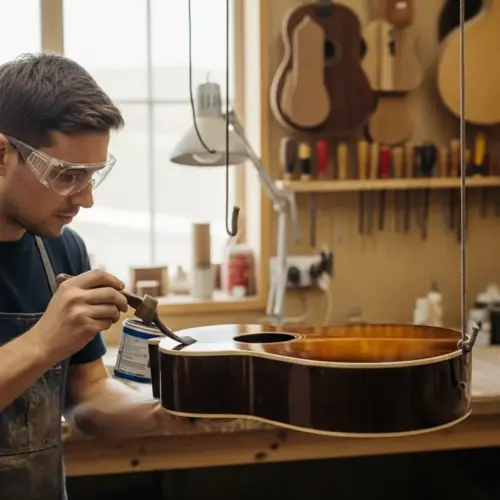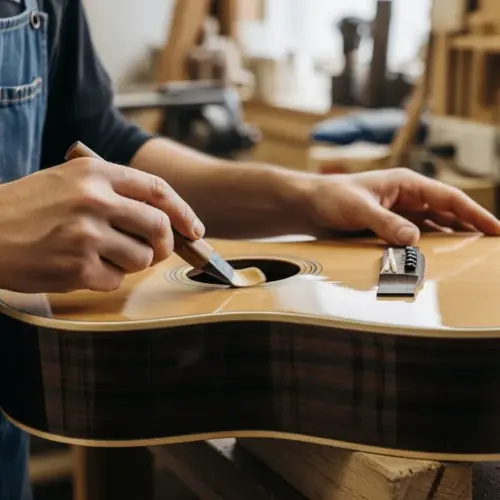


Achieving a flawless finish on a guitar is a meticulous process. It requires patience, skill, and the right techniques. One of the most critical steps in this process is guitar finish sanding, which prepares the surface for a smooth, reflective final coat.
Whether you’re working with lacquer, polyurethane, or another type of finish, mastering the art of sanding is essential for achieving professional-quality results. This article will guide you through the best practices for guitar finish sanding, covering everything from choosing the right sandpaper to dealing with common mistakes.
We’ll explore the differences between wet sanding and dry sanding, delve into specific sanding techniques for various finishes, and provide tips for leveling imperfections. By the end of this guide, you’ll have the knowledge and confidence to achieve a flawless guitar finish through proper guitar finish sanding.
The Importance of Sanding in Guitar Finishing
Sanding is not merely an extra step in guitar finishing; it’s a fundamental process that directly impacts the final appearance and quality of the instrument. Proper sanding ensures that each layer of finish adheres correctly and that the final surface is free of imperfections.
Without thorough sanding, even the most expensive finish can look amateurish. Sanding creates a smooth, even surface, removing any dust particles, orange peel texture, or other blemishes that may have accumulated during the application process.
Think of sanding as the foundation upon which the rest of the finish is built. Each layer of finish needs a properly prepared surface to bond to, and sanding provides that crucial adhesion. When done correctly, it allows the finish to level out and create a consistent, glossy appearance.
Moreover, sanding is essential for leveling the finish, especially when dealing with multiple coats of lacquer or other building finishes. By carefully sanding between coats, you can eliminate any unevenness and create a perfectly flat surface for the final polishing stage.
Choosing the Right Sandpaper Grit for Each Stage
Selecting the appropriate sandpaper grit is paramount for achieving the desired results in guitar finish sanding. Using the wrong grit can lead to scratches, unevenness, or even damage to the finish.
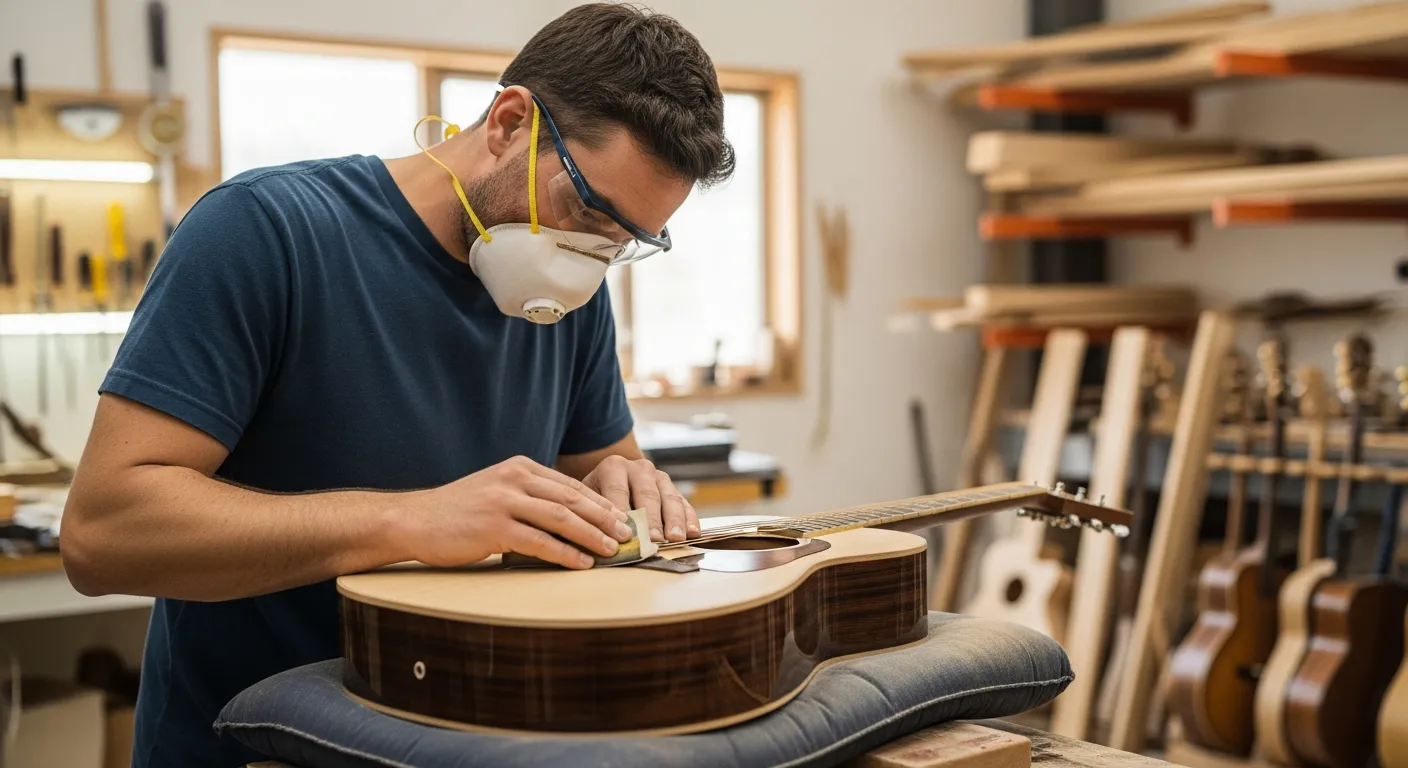
The sanding process typically involves several stages, each requiring a specific grit range. Starting with coarser grits and gradually moving to finer grits is crucial for achieving a smooth, polished surface.
For initial leveling of the finish, such as removing orange peel or imperfections in the first few coats, a coarser grit like 320 or 400 is often used. These grits are aggressive enough to remove material quickly but can leave noticeable scratches if not followed up with finer grits.
After the initial leveling, move on to intermediate grits like 600 or 800 to refine the surface and remove the scratches left by the coarser sandpaper. These grits are ideal for preparing the finish for subsequent coats or for the final sanding before polishing.
For the final sanding stages, especially before polishing, use ultra-fine grits like 1000, 1200, 1500, or even 2000. These grits will create a near-perfect surface, minimizing the amount of polishing needed to achieve a high-gloss shine. Remember to always work your way up through the grits to avoid deep scratches.
Wet Sanding vs. Dry Sanding: Which is Best?
Wet sanding and dry sanding are two common techniques used in guitar finish sanding, each with its own advantages and disadvantages. The choice between wet sanding and dry sanding often depends on the type of finish, the stage of the sanding process, and personal preference.
Dry sanding is generally used for the initial leveling of the finish and for removing imperfections in the early stages. It’s faster and more convenient than wet sanding but can produce more dust and heat, which can clog the sandpaper and potentially damage the finish.
| Technique | Advantages | Disadvantages |
|---|---|---|
| Wet Sanding | Reduces dust, minimizes heat, produces a smoother finish | Requires more cleanup, can be messy, some finishes are water-sensitive |
| Dry Sanding | Faster, more convenient, works well for initial leveling | Produces more dust, generates more heat, can clog sandpaper |
| Best Sandpaper for Dry Sanding | Stearate coated sandpaper | Can still clog if pressure is too high |
| Best Sandpaper for Wet Sanding | Silicon carbide sandpaper | Can scratch the finish if grit is too coarse |
Wet sanding, on the other hand, involves using water or a lubricant to keep the sandpaper and the surface cool and clean. This technique reduces dust, minimizes heat buildup, and helps to produce a smoother, more refined finish.
However, wet sanding can be messier and requires more cleanup than dry sanding. It’s also important to ensure that the finish is compatible with water, as some finishes can be damaged by prolonged exposure to moisture.
Sanding Techniques for Different Finishes
Different guitar finishes require specific sanding techniques to achieve the best results. Understanding the properties of each finish and tailoring your approach accordingly is crucial for avoiding common pitfalls.
For lacquer finishes, a popular choice for many guitars, both wet sanding and dry sanding can be used effectively. Start with dry sanding using 320 or 400 grit sandpaper to level the surface, followed by wet sanding with finer grits like 600, 800, and higher to refine the finish.
When sanding lacquer, it’s important to avoid excessive pressure, as lacquer can be relatively soft and prone to scratching. Use light, even strokes and allow the sandpaper to do the work.
Polyurethane finishes, known for their durability and resistance to chemicals, can be more challenging to sand than lacquer. Polyurethane tends to be harder and more prone to clogging sandpaper, so wet sanding is often preferred.
When sanding polyurethane, use a lubricant like mineral spirits or naphtha to help keep the sandpaper clean and prevent heat buildup. Start with coarser grits to level the surface and gradually move to finer grits for a smooth finish.
For shellac finishes, which are more delicate and prone to dissolving with excessive friction, use a light touch and avoid prolonged sanding in one area. Dry sanding with fine grits is generally recommended for shellac finishes.
Achieving a Level Surface: The Key to a Perfect Finish
A level surface is the foundation of a flawless guitar finish. Without a perfectly flat and even surface, the final finish will reflect any underlying imperfections, resulting in an unsatisfactory appearance.
Leveling the finish involves carefully sanding down any high spots or uneven areas to create a consistent plane. This process is particularly important when dealing with multiple coats of finish, as each coat can introduce new imperfections.
One effective technique for leveling is using a sanding block. A sanding block provides a flat, rigid surface that helps to distribute pressure evenly across the finish. This prevents you from accidentally creating dips or unevenness while sanding.
Another useful tool for leveling is a scraper. A scraper can be used to remove small imperfections or high spots without sanding the entire surface. This can be particularly helpful for addressing isolated blemishes or runs in the finish.
When leveling, it’s important to regularly check your progress using a straightedge or a leveling block. This will help you identify any areas that need further attention and ensure that you’re creating a perfectly flat surface.
Leveling Imperfections in the Finish
Imperfections in a guitar finish are almost inevitable, but with the right techniques, they can be effectively leveled out. Common imperfections include orange peel, dust nibs, runs, and sags, each requiring a slightly different approach.
Orange peel, characterized by a bumpy, uneven surface, is often caused by improper spraying technique or environmental conditions. To level orange peel, start with a coarser grit sandpaper (e.g., 400 grit) and sand until the surface is smooth and even.
- Use a sanding block for even pressure
- Inspect the surface frequently
- Work in good lighting
- Use a tack cloth to remove dust
- Be patient and methodical
Dust nibs, small particles of dust or debris trapped in the finish, can be removed by carefully spot-sanding with a fine-grit sandpaper (e.g., 800 grit) or by using a specialized nib file. Be gentle and avoid sanding the surrounding area.
Runs and sags, caused by applying too much finish in one area, can be leveled by carefully scraping the excess material with a sharp scraper or razor blade. Follow up with sanding to smooth out any remaining imperfections.
Dealing with Sand-Throughs and Other Mistakes
Despite the best efforts, mistakes can happen during guitar finish sanding. One of the most common and dreaded mistakes is sanding through the finish, exposing the wood underneath.
If you sand through the finish, don’t panic. The first step is to stop sanding immediately and assess the damage. The best course of action depends on the severity of the sand-through and the type of finish.
For minor sand-throughs, you may be able to touch up the area with additional coats of finish. Carefully apply thin layers of finish to the affected area, allowing each coat to dry completely before sanding and leveling.
For more severe sand-throughs, you may need to strip the entire finish and start over. While this can be a time-consuming process, it’s often the best way to ensure a consistent and professional-looking result.
Another common mistake is scratching the finish with too coarse of sandpaper. If this happens, you’ll need to sand the entire area with progressively finer grits to remove the scratches and restore a smooth surface.
Sanding Lacquer: Specific Tips and Techniques
Sanding lacquer requires a delicate touch and specific techniques to achieve a flawless finish. Lacquer is a popular choice for guitars due to its ability to produce a high-gloss shine and its relatively easy application.
One of the key considerations when sanding lacquer is to avoid excessive heat buildup. Lacquer can soften and become gummy when overheated, making it difficult to sand and potentially damaging the finish.
To minimize heat buildup, use a lubricant like mineral spirits or naphtha when wet sanding lacquer. These lubricants help to keep the sandpaper cool and prevent the lacquer from softening.
Another important tip is to use a light touch when sanding lacquer. Avoid applying excessive pressure, as this can lead to scratches and unevenness. Let the sandpaper do the work, and focus on maintaining consistent, even strokes.
When sanding lacquer, it’s also crucial to avoid sanding through the finish, especially on edges and corners. These areas tend to be thinner and more prone to sand-throughs, so be extra careful when sanding them.
For the final sanding stages, use ultra-fine grits like 1500 or 2000 to prepare the lacquer for polishing. These grits will create a near-perfect surface, minimizing the amount of polishing needed to achieve a high-gloss shine.
Guitar Polishing: The Final Step to a Mirror Finish
After sanding, the final step in achieving a flawless guitar finish is polishing. Polishing removes any remaining micro-scratches and imperfections, resulting in a mirror-like shine.
The polishing process typically involves using a series of polishing compounds, each designed to remove progressively finer scratches. Start with a coarser compound to remove any remaining sanding marks, and gradually move to finer compounds for a high-gloss finish.
When polishing, use a soft, clean cloth or a polishing pad attached to a power buffer. Apply the polishing compound to the cloth or pad, and gently rub it onto the finish in a circular motion.
Avoid applying excessive pressure, as this can generate heat and damage the finish. Let the polishing compound do the work, and focus on maintaining consistent, even pressure across the surface.
After polishing with each compound, wipe the surface clean with a soft cloth to remove any residue. Inspect the finish under bright light to identify any remaining imperfections.
For the final polishing stage, use a swirl remover or a fine polishing compound to eliminate any swirl marks left by the previous polishing steps. This will result in a crystal-clear, mirror-like finish.
Conclusion
Guitar finish sanding is a critical skill for any luthier or guitar enthusiast looking to achieve professional-quality results. By understanding the importance of sanding, choosing the right sandpaper grits, and mastering various sanding techniques, you can create a flawless finish that enhances the beauty and value of your instrument.
Remember to always work in a clean, well-lit environment, use the appropriate safety gear, and take your time. With patience and practice, you can master the art of guitar finish sanding and achieve a finish that you’ll be proud to show off.