
Zebrawood is increasingly capturing the attention of acoustic guitar builders and players alike. Its bold stripes and unique tonal qualities make it a standout choice for those seeking an instrument that is both visually striking and sonically pleasing.
From its exotic origins to its distinctive sound, zebrawood offers a compelling alternative to more traditional tonewoods. We’ll explore its properties, working characteristics, and how it compares to other visually impressive woods used in lutherie, so you can determine if a zebrawood acoustic guitar is right for you.
Whether you’re a seasoned luthier or a guitarist looking to add a unique instrument to your collection, understanding zebrawood’s potential is essential. This guide provides a comprehensive overview of zebrawood’s use in acoustic guitars, covering everything from its appearance to its tonal contributions.
Zebrawood: Appearance, Origin, and Density
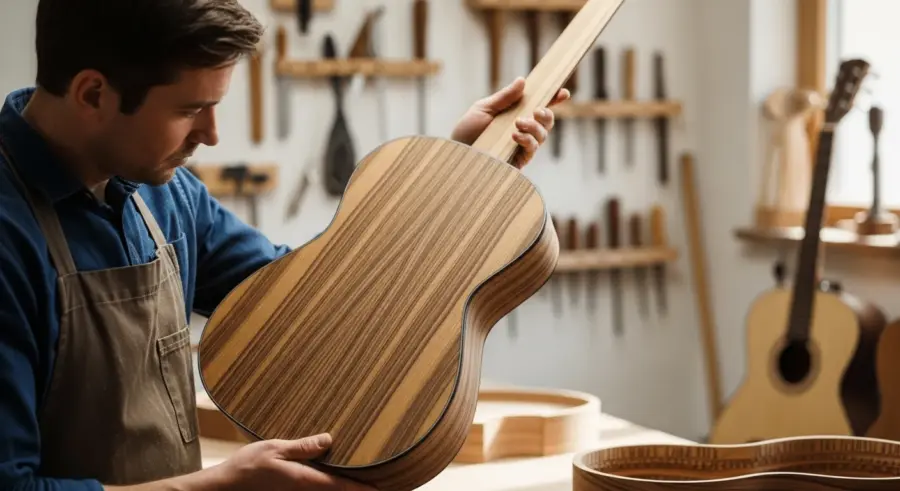
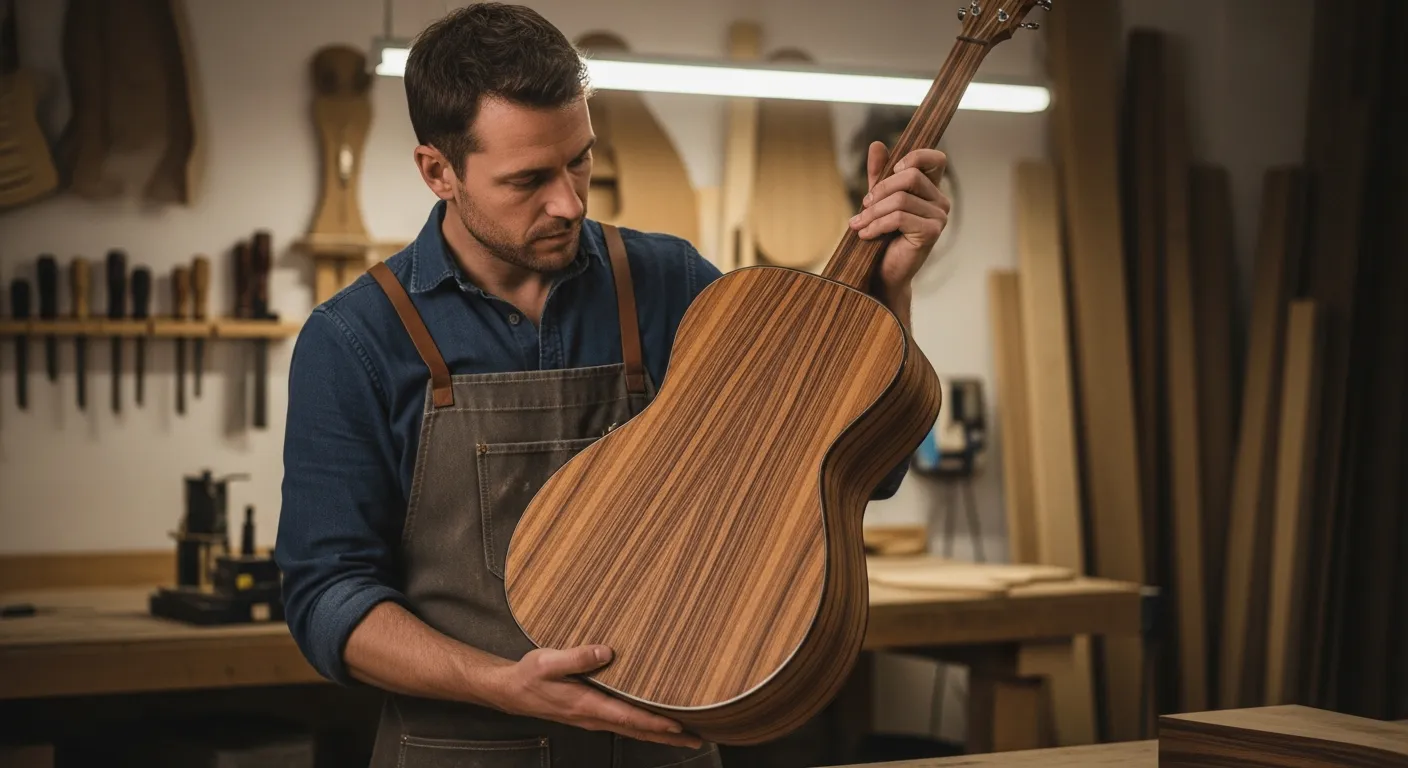
Zebrawood, scientifically known as Microberlinia brazzavillensis, is a hardwood native to West Africa, particularly Gabon and Cameroon. Its name comes from the bold, contrasting stripes that resemble a zebra’s markings, making it instantly recognizable and highly sought after for decorative purposes.
The heartwood ranges from a light golden yellow to a pale brown, with dark brown or black stripes that run irregularly throughout the wood. These stripes are not always uniform, and their width and spacing can vary considerably, contributing to the unique character of each piece of zebrawood.
Zebrawood is a moderately dense wood, typically ranging from 45 to 55 pounds per cubic foot when dried. This density contributes to its strength and stiffness, making it suitable for use in musical instrument construction, furniture making, and other applications where durability is important.
The density of zebrawood also affects its tonal properties when used in acoustic guitars, as we will discuss later. Because it’s a fairly hard and stiff wood, it can contribute to a bright, projective sound, but the exact effect depends on how it’s used in the guitar’s construction.
The striking appearance of zebrawood makes it a favorite for accent pieces in furniture and cabinetry. Its unique grain pattern adds a touch of exotic elegance to any project, whether it’s a small jewelry box or a large dining table.
Beyond its aesthetic appeal, zebrawood’s durability makes it a practical choice for high-wear applications. It can withstand everyday use and resist dents and scratches better than some softer hardwoods.
The origin of zebrawood in West Africa also contributes to its mystique. Sourcing exotic hardwoods requires careful consideration of sustainability and ethical harvesting practices.
Responsible sourcing ensures that future generations can continue to enjoy the beauty and benefits of zebrawood. Look for suppliers who are committed to sustainable forestry practices and who can provide documentation of their wood’s origin.
Tonal Characteristics of Zebrawood in Acoustic Guitars
When used in acoustic guitars, zebrawood is known for producing a bright and articulate tone. Its density and stiffness contribute to a sound that is often described as having a clear, focused midrange and a strong high-end response, making it well-suited for fingerstyle playing and recording applications.
Compared to rosewood, which is known for its warm and complex overtones, zebrawood offers a more direct and immediate sound. It doesn’t have the same level of sustain as some other tonewoods, but its clarity and responsiveness can be advantageous in certain musical styles.
Many players find that zebrawood guitars have a punchy, percussive quality, which can be especially appealing for rhythm playing and strumming. The strong fundamental tone and clear note separation make it easy to cut through a mix, both live and in the studio.
However, the tonal characteristics of a zebrawood acoustic guitar can vary depending on the specific instrument and the luthier’s construction techniques. The top wood, bracing pattern, and body shape all play a role in shaping the final sound, so it’s important to consider these factors when evaluating a zebrawood guitar.
The brightness of zebrawood can be particularly useful in situations where you need a guitar that projects well. It’s a great choice for cutting through a mix in a live band setting.
Fingerstyle players often appreciate the clarity and note separation that zebrawood provides. Each note rings out distinctly, making complex arrangements sound more defined.
While zebrawood may not be the first choice for blues or jazz players seeking a warm, mellow tone, it can still be used effectively in these genres. Experimenting with different strings and playing techniques can help to shape the sound to your liking.
Ultimately, the best way to determine if zebrawood is right for you is to play a few different zebrawood guitars and compare them to other tonewoods. This will give you a better sense of its unique tonal characteristics and how it fits with your playing style.
Working with Zebrawood: Grain Direction and Tear-Out
Zebrawood can be a challenging wood to work with, especially for those who are not experienced in lutherie. Its interlocked grain and varying density make it prone to tear-out during planing and sanding, which can be frustrating for builders trying to achieve a smooth, even surface.
One of the keys to working successfully with zebrawood is to pay close attention to the grain direction. Because the grain often changes direction within a small area, it’s important to use sharp tools and take light passes to avoid lifting or tearing the wood fibers.
| Technique | Tool | Tips for Success |
|---|---|---|
| Planing | Sharp hand plane or low-angle block plane | Use a very sharp blade, set for a light cut, and plane with the grain |
| Sanding | Random orbital sander with progressively finer grits | Start with a coarser grit to remove imperfections, then gradually move to finer grits |
| Routing | Router with a sharp bit and variable speed control | Use a climb-cutting technique to minimize tear-out, and adjust the router speed as needed |
| Gluing | High-quality wood glue | Ensure surfaces are clean and properly prepared, and use adequate clamping pressure |
Another useful technique is to use a scraper to smooth the surface of the wood after planing. A sharp scraper can remove any remaining imperfections and leave a clean, polished surface that is ready for finishing.
When working with zebrawood, patience is key. Rushing the process can lead to mistakes and frustration. Take your time and focus on achieving a smooth, even surface.
Consider using a card scraper instead of sandpaper for final smoothing. A card scraper can produce a glass-like surface without the risk of scratching the wood.
Experiment with different cutting angles to find the best approach for minimizing tear-out. Sometimes a slight change in angle can make a big difference.
Always keep your tools sharp. Dull tools are more likely to cause tear-out and other problems. Invest in a good sharpening system and learn how to use it properly.
Achieving a Smooth Finish on Zebrawood
Achieving a smooth, flawless finish on zebrawood can be tricky due to its open pores and tendency to absorb finish unevenly. Proper surface preparation is crucial to ensure that the finish adheres properly and enhances the wood’s natural beauty.
One common technique is to use a grain filler to fill the pores of the wood before applying the finish. This creates a smooth, even surface that prevents the finish from sinking into the pores and creating an uneven appearance.
There are various types of grain fillers available, including water-based, oil-based, and epoxy-based products. Water-based fillers are generally easier to work with and clean up, while oil-based fillers can provide a richer, more traditional look.
Epoxy-based fillers are known for their durability and resistance to moisture, but they can be more difficult to apply and sand. The choice of grain filler depends on the desired look and the type of finish that will be applied over it.
Once the grain filler has been applied and sanded smooth, the next step is to apply several coats of finish. Nitrocellulose lacquer, polyurethane, and varnish are all popular choices for finishing acoustic guitars, each with its own advantages and disadvantages.
Consider using a spray gun to apply the finish for a more even and professional-looking result. Spraying allows you to apply thin, even coats of finish without leaving brush marks.
If you’re using a brush, choose a high-quality brush that is designed for applying the type of finish you’re using. Use long, even strokes and avoid applying too much finish at once.
Allow each coat of finish to dry completely before applying the next coat. This will help to prevent runs, sags, and other imperfections.
Sand lightly between coats of finish to remove any imperfections and create a smooth surface for the next coat. Use a fine-grit sandpaper (400 grit or higher) and sand gently to avoid scratching the finish.
Zebrawood’s Use in Backs, Sides, and Tops
Zebrawood is most commonly used for the backs and sides of acoustic guitars. Its density and stiffness contribute to a bright, projective sound, making it a popular choice for players who want an instrument with plenty of clarity and punch.
While less common, zebrawood can also be used for the top of an acoustic guitar. However, because of its density, it may not be the best choice for players seeking a warm, resonant tone. A zebrawood top will generally produce a brighter, more focused sound with less sustain compared to spruce or cedar.
- Back and Sides: Adds brightness and projection
- Top Wood: Produces a focused, articulate sound
- Neck: Offers stability and unique aesthetics
- Binding: Provides a striking visual contrast
- Headstock Veneer: Enhances the guitar’s overall appearance
In addition to its use in the body of the guitar, zebrawood can also be used for other parts of the instrument, such as the neck, binding, and headstock veneer. These applications can add a touch of visual flair and contribute to the overall aesthetic appeal of the guitar.
Using zebrawood for the neck can add stability and a unique look. The striped pattern can be very eye-catching on the neck of a guitar.
As binding, zebrawood provides a striking visual contrast against lighter-colored woods. It’s a great way to add a touch of elegance and sophistication to the instrument.
A zebrawood headstock veneer can tie the entire aesthetic together. It’s a subtle detail that can make a big impact on the overall appearance of the guitar.
Experimenting with different combinations of woods and finishes can create a truly unique and personalized instrument. Don’t be afraid to explore different options and find what works best for you.
Zebrawood vs. Other Visually Striking Tonewoods
Zebrawood is not the only visually striking tonewood available to luthiers. Other options, such as koa, figured maple, and bubinga, offer their own unique aesthetic and tonal qualities. It’s worth comparing zebrawood to these alternatives to understand its specific strengths and weaknesses.
Koa, for example, is a Hawaiian hardwood known for its beautiful figure and warm, balanced tone. It’s often compared to mahogany in terms of its tonal characteristics, but with a slightly brighter and more focused sound.
Figured maple, such as flame maple or quilted maple, is another popular choice for acoustic guitar backs and sides. Maple is known for its clarity and projection, and its figured appearance adds a touch of elegance and sophistication to the instrument.
Bubinga, also known as African rosewood, is a dense, reddish-brown hardwood that is often used as a substitute for rosewood. It has a similar tonal profile to rosewood, with warm overtones and good sustain, but it is generally more affordable and readily available.
Compared to these other tonewoods, zebrawood stands out for its unique striped appearance and its bright, articulate tone. It may not be the best choice for players seeking a warm, mellow sound, but it’s an excellent option for those who want an instrument with plenty of clarity, projection, and visual impact.
Cocobolo is another visually striking option with a vibrant reddish-orange hue and dark grain lines. It’s known for its strong projection and clear, bell-like tone.
Wenge offers a dark, almost black appearance with contrasting light brown pores. It’s a dense and heavy wood that produces a strong, fundamental tone with good sustain.
Each of these woods has its own unique character and appeal. The best choice for you will depend on your personal preferences and the sound you’re trying to achieve.
Consider the overall aesthetic you’re aiming for when choosing a tonewood. Do you want something classic and elegant, or something more modern and edgy?
Considerations for Purchasing a Zebrawood Acoustic Guitar
If you’re considering purchasing a zebrawood acoustic guitar, there are several factors to keep in mind. First, it’s important to assess the quality of the wood itself. Look for pieces with straight, even stripes and minimal defects, such as knots or cracks.
Pay attention to the overall construction quality of the guitar. Check the neck angle, the bridge placement, and the bracing pattern to ensure that the instrument is well-built and structurally sound.
Consider the guitar’s playability. Is the action comfortable? Does the neck feel good in your hand? These are important factors that can affect your enjoyment of the instrument.
Listen to the guitar’s tone. Does it have the clarity and projection that you’re looking for? Does it respond well to your playing style? If possible, play the guitar in person before making a purchase to get a sense of its sound and feel.
Finally, consider your budget. Zebrawood acoustic guitars can range in price from a few hundred dollars to several thousand dollars, depending on the brand, construction quality, and features. Set a budget that you’re comfortable with and look for an instrument that offers the best value for your money.
Research different brands and luthiers who specialize in zebrawood guitars. Reading reviews and testimonials can provide valuable insights into the quality and sound of their instruments.
Consider whether you want a new or used guitar. Used guitars can be a great value, but be sure to inspect them carefully for any signs of damage or wear.
Ask about the guitar’s setup. A proper setup can make a big difference in playability and tone. If the guitar isn’t set up properly, you may need to factor in the cost of a professional setup.
Don’t be afraid to negotiate the price. Many guitar stores are willing to negotiate, especially if you’re paying in cash.
Maintaining Your Zebrawood Acoustic Guitar
Proper maintenance is essential to keep your zebrawood acoustic guitar in top condition. Regular cleaning, humidification, and proper storage can help protect the wood from damage and ensure that the instrument continues to sound its best for years to come.
Clean your guitar regularly with a soft, lint-free cloth to remove dust, fingerprints, and other debris. Avoid using harsh chemicals or abrasive cleaners, as these can damage the finish.
Maintain proper humidity levels in your guitar’s case or storage area. Zebrawood, like other hardwoods, is susceptible to changes in humidity, which can cause the wood to expand or contract, leading to cracks, warping, or other damage.
Use a humidifier to keep the humidity level between 45% and 55%. This will help prevent the wood from drying out or becoming too moist.
Store your guitar in a case when you’re not playing it. This will protect it from dust, scratches, and other potential damage. Avoid leaving your guitar in direct sunlight or extreme temperatures, as these can also damage the wood.
Change your strings regularly. Old strings can sound dull and lifeless, and they can also damage the frets.
Have your guitar professionally set up every year or two. A professional setup can ensure that your guitar is playing its best.
Inspect your guitar regularly for any signs of damage, such as cracks, loose braces, or warped wood. If you notice any problems, take your guitar to a qualified repair technician.
By following these simple maintenance tips, you can keep your zebrawood acoustic guitar in top condition for years to come.
Conclusion
Zebrawood offers a unique combination of visual appeal and tonal characteristics that make it a compelling choice for acoustic guitar construction. Its striking stripes and bright, articulate sound can add a distinctive touch to any player’s collection.
While it may not be the easiest wood to work with, the results can be well worth the effort for luthiers who are willing to take on the challenge. For players, a zebrawood acoustic guitar can be a rewarding instrument that inspires creativity and delivers a one-of-a-kind playing experience.
Ultimately, the decision to choose a zebrawood acoustic guitar depends on personal preferences and playing style. If you’re looking for an instrument that stands out from the crowd and offers a bright, focused sound, zebrawood may be the perfect choice for you.
Consider the factors we’ve discussed, such as the quality of the wood, the construction techniques, and the overall playability of the instrument. With careful consideration, you can find a zebrawood acoustic guitar that will bring you years of musical enjoyment.
Embrace the unique character of zebrawood and let it inspire your music. Its distinctive sound and appearance can help you stand out from the crowd and express your individuality.
Whether you’re a seasoned professional or a beginner just starting out, a zebrawood acoustic guitar can be a valuable addition to your musical arsenal.
Explore the possibilities and discover the magic of zebrawood. You may be surprised at what you find.
So, go ahead and take the plunge. Your musical journey awaits!