
The bridge of a stringed instrument plays a critical role in transmitting vibrations from the strings to the soundboard. Choosing the right material for an instrument bridge can significantly impact the instrument’s tone, volume, and overall sound quality. Osage orange, a dense and durable wood, has emerged as a unique option for crafting instrument bridges, particularly known for its bright tonal characteristics and impressive strength.
This article explores the use of osage orange for instrument bridges, examining its properties, advantages, challenges, and alternatives. We’ll consider why osage orange instrument bridges are gaining traction among luthiers and players looking for a distinctive sound.
From understanding its hardness and origin to exploring the best finishing techniques, we’ll cover everything you need to know about osage orange in lutherie. By the end, you’ll have a comprehensive understanding of whether osage orange is the right choice for your next instrument bridge project.
Understanding Osage Orange: Hardness and Origin
Osage orange, scientifically known as Maclura pomifera, is a deciduous tree native to North America. It’s particularly abundant in the south-central United States, where it was historically used for hedging and fencing due to its thorny branches and ability to form dense thickets.
The wood itself is renowned for its exceptional hardness and density. On the Janka hardness scale, which measures the resistance of wood to indentation, osage orange scores exceptionally high, often exceeding that of many commonly used hardwoods like maple or rosewood.
This extreme hardness contributes to its durability and resistance to wear, making it a long-lasting material for various applications. Osage orange is also known for its vibrant yellow to orange color when freshly cut, which deepens over time to a rich golden brown, adding to its aesthetic appeal.
Beyond its physical properties, osage orange has a rich history of use by Native American tribes. They valued it for its strength and flexibility in crafting bows, hence the common name “bowwood.” Early European settlers also recognized its value, utilizing it for tool handles, wagon wheel components, and other demanding applications.
The tree’s unique name comes from a combination of factors. “Osage” refers to the Osage Native American tribe who inhabited the regions where the tree was prevalent. The “orange” part of the name is a bit misleading, as the tree is not related to citrus fruits; it likely refers to the fruit’s resemblance in size and shape to an orange, although it’s not edible.
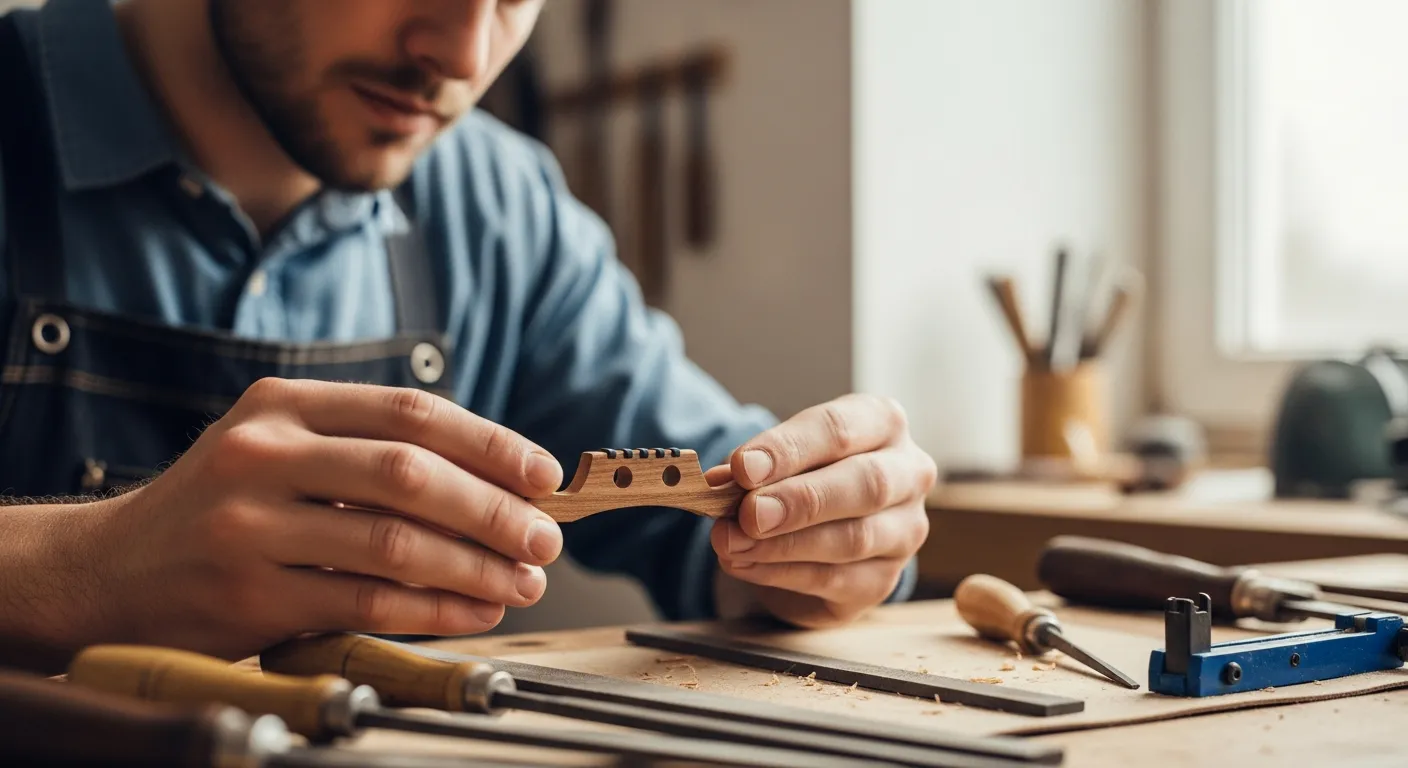
Osage orange is also known for its resilience and adaptability. It can thrive in a variety of soil types and climates, making it a relatively low-maintenance tree. Its hardiness has contributed to its widespread use in windbreaks and erosion control projects.
The wood’s density, typically around 55-60 pounds per cubic foot, is a key factor in its strength and durability. This high density also contributes to its excellent acoustic properties, making it a suitable material for musical instrument components.
The heartwood of osage orange is more durable than the sapwood, making it the preferred choice for applications requiring longevity. Heartwood is the inner, older wood of the tree, while sapwood is the outer, younger wood.
Why Osage Orange is Suitable for Instrument Bridges
The unique properties of osage orange make it an appealing choice for instrument bridges. Its high density and hardness translate to excellent sound transmission, allowing the bridge to efficiently transfer string vibrations to the instrument’s soundboard.
This efficient transfer can result in a louder, more resonant sound with enhanced clarity and projection. The inherent stiffness of osage orange also contributes to a brighter tonal character, which can be particularly desirable for instruments seeking a crisp and articulate sound.
Furthermore, osage orange’s exceptional durability ensures that the bridge can withstand the constant tension and vibration of the strings over an extended period. This resistance to wear and deformation helps maintain the instrument’s setup and intonation, reducing the need for frequent adjustments or replacements.
The dimensional stability of osage orange, meaning its resistance to changes in size and shape due to moisture fluctuations, is another significant advantage. This stability helps prevent warping or cracking, ensuring the bridge maintains its precise shape and contact with the soundboard, preserving optimal sound quality.
The bridge is a crucial component for transferring the energy from the strings to the soundboard. A well-made bridge of Osage Orange will act as an excellent conduit for this energy.
Osage Orange is naturally resistant to rot and decay, which is important for an instrument that may be exposed to varying humidity levels. This resistance contributes to the longevity of the bridge and the overall instrument.
The bright tonal qualities of Osage Orange can enhance the clarity and articulation of an instrument, particularly in the higher frequencies. This can be especially beneficial for instruments used in genres where clarity is paramount.
The hardness of Osage Orange helps to prevent the strings from digging into the bridge over time. This maintains the string spacing and intonation of the instrument.
Working with Osage Orange: Challenges and Solutions
Despite its desirable qualities, working with osage orange presents some challenges for luthiers. Its extreme hardness can make it difficult to cut, shape, and drill, requiring specialized tools and techniques.
The wood’s density can also cause excessive wear on cutting edges, necessitating frequent sharpening or replacement of tools. Here are some common challenges and how to overcome them:
| Challenge | Solution | Additional Notes |
|---|---|---|
| Extreme Hardness | Use sharp, high-quality tools; take shallow cuts | Carbide-tipped tools are highly recommended |
| Tool Wear | Sharpen tools frequently; use lubrication | Wax or oil-based lubricants can reduce friction |
| Splintering | Use backing blocks; score cut lines | Prevents tear-out on exit cuts |
| Dulling of Bits | Use slow speeds; peck-drill | Allows heat to dissipate and prevents binding |
| Finishing Issues | Seal the wood properly; use compatible finishes | Prevents uneven absorption and blotching |
To mitigate these challenges, luthiers often employ techniques such as using sharp, high-quality tools, taking shallow cuts, and employing lubrication to reduce friction. Pre-drilling pilot holes and using backing blocks can also help prevent splintering and ensure clean cuts, especially when working on delicate bridge components.
Dust collection is crucial when working with osage orange, as the fine particles can be irritating to the skin and respiratory system. A well-ventilated workspace and the use of a dust mask are highly recommended.
Clamping can be tricky due to the wood’s hardness, so it’s important to use clamps with sufficient pressure and protective pads to avoid damaging the wood. Distributing the clamping force evenly is essential to prevent indentations.
When bending osage orange, steaming or soaking the wood can help to soften it and reduce the risk of cracking. However, it’s important to monitor the moisture content carefully to avoid over-saturation.
The wood’s vibrant color can sometimes bleed into surrounding materials, so it’s important to use caution when gluing or finishing it. Applying a sealant or barrier coat can help to prevent color transfer.
Finishing Techniques to Protect Osage Orange
Proper finishing is essential to protect osage orange instrument bridges from moisture, UV damage, and general wear. Because of the wood’s density, it’s important to choose a finish that will properly adhere and penetrate the surface.
One popular option is to use a penetrating oil finish, such as tung oil or linseed oil, which soaks into the wood fibers and provides a natural, protective barrier. These oils enhance the wood’s natural color and grain while offering good resistance to moisture and scratches.
Another approach is to apply a varnish or lacquer finish, which creates a hard, durable coating on the surface of the wood. Varnish and lacquer finishes offer excellent protection against abrasion, chemicals, and UV radiation, helping to preserve the bridge’s appearance and structural integrity.
Regardless of the chosen finish, it’s crucial to properly prepare the wood surface by sanding it smooth and removing any dust or debris. Applying multiple thin coats of finish, allowing each coat to dry thoroughly before applying the next, will result in a more durable and even finish.
Shellac is another viable option, providing a hard, glossy finish that enhances the wood’s natural color. It’s relatively easy to apply and repair, making it a popular choice for many luthiers.
Consider using a UV-resistant finish to prevent the wood from fading or darkening over time. This is especially important if the instrument will be exposed to direct sunlight.
Before applying any finish, test it on a small, inconspicuous area of the wood to ensure compatibility and desired appearance. This will help avoid any unwanted surprises on the finished product.
Allow the finish to fully cure before stringing up the instrument to prevent damage to the finish. Proper curing time ensures the finish reaches its maximum hardness and durability.
Osage Orange’s Tonal Properties in Bridges
The tonal properties of osage orange bridges are often described as bright, clear, and articulate. Its high density and stiffness contribute to a strong fundamental tone with well-defined overtones, resulting in a focused and responsive sound.
Compared to bridges made from softer woods like spruce or mahogany, osage orange bridges tend to produce a more pronounced attack and sustain. This characteristic can be particularly beneficial for instruments that require clarity and projection, such as banjos, mandolins, and guitars used in ensemble settings.
The bright tonal character of osage orange can also help to compensate for instruments that are naturally darker or more mellow in tone. By adding a touch of brightness and clarity, an osage orange bridge can enhance the instrument’s overall balance and versatility.
However, it’s important to note that the tonal impact of a bridge is influenced by various factors, including the instrument’s construction, strings, and playing style. Experimentation and careful consideration are essential to determine whether osage orange is the right choice for a particular instrument and player.
The density of Osage Orange can contribute to a louder and more projecting sound. This makes it a good choice for instruments that need to be heard in a group setting.
The stiffness of the wood helps to transmit higher frequencies more efficiently. This results in a brighter and more articulate sound.
Osage Orange bridges can enhance the responsiveness of an instrument, making it easier to play fast passages. This is due to the efficient transfer of energy from the strings to the soundboard.
The tonal properties of Osage Orange can vary depending on the specific cut and grain orientation of the wood. Experimentation is key to finding the best piece for a particular instrument.
Osage Orange Alternatives for Instrument Bridges
While osage orange offers unique advantages for instrument bridges, several other wood species can also be used effectively. Ebony is a classic choice for bridges, prized for its density, hardness, and dark, elegant appearance.
Rosewood, another popular option, provides a warm, balanced tone with good sustain and projection. Maple is a versatile wood that offers a brighter, more neutral tone, making it suitable for a wide range of instruments and playing styles.
- Ebony: Dense, hard, dark appearance, excellent for clarity
- Rosewood: Warm, balanced tone, good sustain and projection
- Maple: Brighter, neutral tone, versatile for various instruments
- Walnut: Warm, resonant tone, often used for acoustic guitars
- Katalox: Very dense, hard, similar to ebony, good for bright tone
Ultimately, the best wood for an instrument bridge depends on the desired tonal characteristics, aesthetic preferences, and budget considerations. Each wood species offers a unique combination of properties that can influence the instrument’s sound and playability.
Boxwood is another traditional choice, known for its fine grain and stability. It offers a balanced tonal response and is often used in classical instruments.
Pearwood is a softer wood that provides a warmer, more mellow tone. It’s often used in baroque instruments to achieve a specific sound.
Synthetic materials, such as carbon fiber, are also becoming increasingly popular for instrument bridges. These materials offer excellent stability, durability, and consistent tonal properties.
The choice of bridge material should be carefully considered in relation to the overall design and construction of the instrument. A well-chosen bridge can significantly enhance the instrument’s sound and playability.
Osage Orange’s Unique Aesthetic Appeal
Beyond its tonal and structural properties, osage orange offers a distinct aesthetic appeal that sets it apart from other tonewoods. Its vibrant yellow to orange color, which deepens over time to a rich golden brown, adds a touch of warmth and visual interest to any instrument.
The wood’s tight, consistent grain pattern also contributes to its beauty, providing a clean and elegant look. The unique color and grain of osage orange can complement a variety of instrument styles and finishes, making it a versatile choice for luthiers seeking to create visually stunning instruments.
Compared to more common bridge materials like ebony or rosewood, osage orange offers a refreshing alternative that can help an instrument stand out from the crowd. Its distinctive appearance can also be a selling point for customers who appreciate the use of unique and sustainable materials.
Furthermore, the natural color of osage orange can be enhanced with various finishing techniques, such as staining or tinting, to achieve a wide range of custom looks. This versatility allows luthiers to tailor the appearance of the bridge to match the overall aesthetic of the instrument, creating a cohesive and visually appealing design.
The wood’s color can be further enhanced with oil finishes, which bring out the natural beauty of the grain. A clear finish allows the wood’s vibrant color to shine through.
The unique grain patterns of Osage Orange can add character and visual interest to an instrument bridge. No two pieces of wood are exactly alike, ensuring a unique aesthetic for each instrument.
The color of Osage Orange can complement a variety of instrument styles and finishes, from traditional to modern. Its warm tones can add a touch of elegance to any instrument.
The aesthetic appeal of Osage Orange can be a selling point for customers who appreciate unique and visually striking instruments. It can help an instrument stand out from the crowd.
The Sustainability of Osage Orange as a Tonewood
In an era of increasing environmental awareness, the sustainability of tonewoods is a growing concern for luthiers and musicians alike. Osage orange offers a sustainable alternative to some of the more commonly used, but often over-harvested, tonewoods like ebony and rosewood.
Osage orange is a fast-growing and abundant tree species in North America, with a wide distribution and a high tolerance for various soil conditions. Its ability to thrive in diverse environments makes it a readily available and renewable resource, reducing the pressure on more vulnerable tree species.
Additionally, osage orange is often sourced from managed forests or reclaimed from old fence rows and hedgerows, further minimizing its environmental impact. By utilizing osage orange for instrument bridges, luthiers can contribute to the conservation of valuable forest ecosystems and promote sustainable practices within the music industry.
Choosing osage orange also aligns with the growing demand for locally sourced materials, reducing the carbon footprint associated with long-distance transportation. This commitment to sustainability can be a significant selling point for environmentally conscious customers, enhancing the appeal of instruments crafted with osage orange bridges.
Using Osage Orange can help to reduce the demand for exotic and endangered tonewoods. This helps to protect vulnerable ecosystems and promote responsible forestry practices.
Osage Orange is often sourced from trees that are removed for other purposes, such as land clearing or urban development. This helps to utilize wood that would otherwise be wasted.
Choosing locally sourced Osage Orange can reduce the carbon footprint associated with transportation. This is a more environmentally friendly option than importing wood from overseas.
The sustainability of Osage Orange makes it an attractive option for luthiers who are committed to environmental responsibility. It allows them to create beautiful and high-quality instruments while minimizing their impact on the planet.
Tips for Sourcing High-Quality Osage Orange
Securing top-notch osage orange is paramount for crafting exceptional instrument bridges. Seek out reputable timber suppliers or lumberyards that specialize in hardwoods.
Inquire about the wood’s origin and harvesting practices to ensure it comes from sustainable sources. Look for wood that is well-seasoned and free from defects such as knots, cracks, or warping.
Kiln-dried wood is generally preferred, as it has a lower moisture content and is less likely to warp or crack over time. Inspect the wood closely for any signs of insect damage or fungal growth, which can compromise its structural integrity.
Consider purchasing wood that is slightly oversized to allow for trimming and shaping during the bridge-making process. Establishing a relationship with a trusted timber supplier can ensure a consistent supply of high-quality osage orange for future projects.
Check the grain orientation to ensure it’s suitable for bridge construction. Straight, tight grain is generally preferred for optimal strength and stability.
Look for wood that is free from excessive sapwood, as sapwood is less durable and more prone to decay. Heartwood is the preferred choice for instrument bridges.
Consider the color of the wood, as the color can vary depending on the tree and growing conditions. Choose a color that complements the overall aesthetic of the instrument.
Ask the supplier about their drying process, as proper drying is essential for preventing warping and cracking. Kiln-dried wood is generally more stable than air-dried wood.
Conclusion
Osage orange presents a compelling option for luthiers seeking a durable, tonally bright, and visually distinctive material for instrument bridges. Its exceptional hardness, density, and stability make it well-suited for transferring string vibrations efficiently and withstanding the rigors of constant use.
While working with osage orange can pose some challenges due to its hardness, these can be overcome with the right tools and techniques. Its unique aesthetic appeal and sustainable sourcing further enhance its desirability, making it a worthy contender for consideration in your next instrument building project.
Ultimately, the decision to use Osage Orange for an instrument bridge depends on the specific needs and preferences of the luthier and the musician. Its unique properties make it a valuable addition to the palette of materials available for crafting high-quality instruments.
By carefully considering the advantages and challenges of working with Osage Orange, luthiers can make informed decisions about its suitability for their projects. This will ensure that the resulting instruments are both beautiful and sonically pleasing.