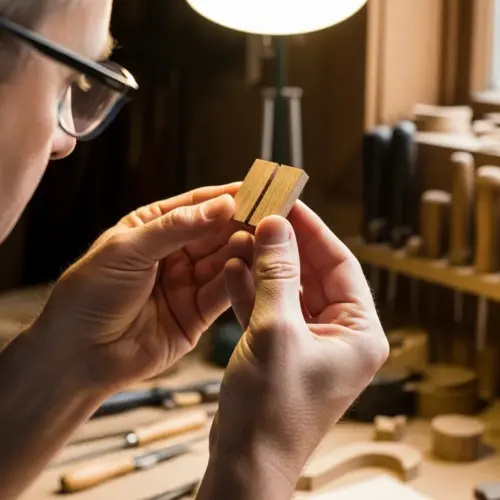


The right tonewood can make or break a guitar. One wood that’s gaining popularity for fretboards is goncalo alves, also known as tigerwood. It’s a beautiful and durable option for luthiers and guitarists alike.
Let’s explore the properties of goncalo alves and why it might be the perfect choice for your next guitar project. We will examine its origin, tonal characteristics, durability, and workability.
We’ll also compare it to other popular fretboard materials. Finally, we will consider the aesthetic appeal of a goncalo alves guitar fretboard.
Goncalo Alves: Origin, Appearance, and Hardness
Goncalo alves is a hardwood that primarily grows in Brazil and other South American countries. It’s known for its striking appearance, which features a range of colors from light tan to reddish-brown, often with dark, contrasting stripes.
These stripes give the wood its nickname, tigerwood, due to its resemblance to a tiger’s coat. The wood’s grain can be straight or interlocked, adding to its visual interest.
Goncalo alves is also a very hard and dense wood. On the Janka hardness scale, it typically scores between 2,160 and 2,820 lbf, making it significantly harder than woods like maple or rosewood.
This hardness contributes to its durability and resistance to wear, making it an excellent choice for applications where it will see a lot of use. Its density also plays a role in its tonal properties, which we’ll discuss next.
The specific regions within South America where Goncalo Alves thrives include the Amazon rainforest and surrounding areas. The trees themselves can grow to impressive heights, often reaching 100 feet or more.
The diameter of the trunk can also be quite substantial, allowing for the production of large pieces of lumber suitable for guitar making. The unique growing conditions in these regions contribute to the wood’s distinctive characteristics.
The color variation in Goncalo Alves is not always consistent and can depend on several factors, including the age of the tree and the specific growing location. Some pieces may exhibit a more uniform tan color, while others will display a dramatic contrast between light and dark stripes.
This variability is part of what makes Goncalo Alves so appealing, as each fretboard will have its own unique character. Luthiers often carefully select pieces of Goncalo Alves to achieve a specific look for their instruments.
The interlocked grain pattern, while visually appealing, can sometimes make Goncalo Alves more challenging to work with. It requires sharp tools and careful techniques to avoid tear-out during cutting and shaping.
However, the resulting strength and stability of the wood are well worth the extra effort. The interlocked grain also contributes to the wood’s resistance to splitting and cracking.
The Janka hardness scale is a standard measure of the resistance of wood to indentation. A higher Janka rating indicates a harder wood that is more resistant to wear and tear.
Goncalo Alves’s high Janka rating makes it an excellent choice for fretboards, which are subjected to constant friction from the strings. This hardness also contributes to the wood’s bright and articulate tonal qualities.
The density of Goncalo Alves also plays a role in its tonal properties. Denser woods tend to transmit sound waves more efficiently, resulting in a brighter and more resonant tone.
This density, combined with the wood’s hardness, makes Goncalo Alves a popular choice for instruments where clarity and sustain are desired.
Tonal Characteristics of Goncalo Alves as a Fretboard Material
The tonal characteristics of a fretboard material play a significant role in the overall sound of a guitar. Goncalo alves is known for its bright and articulate sound, with a clear, bell-like quality.
It tends to enhance the higher frequencies, adding clarity and definition to the notes. This can be particularly beneficial for instruments where you want a crisp and precise sound.
The hardness and density of goncalo alves also contribute to its sustain. Notes tend to ring out longer compared to softer fretboard materials.
Some players describe the goncalo alves sound as being similar to ebony, but with a slightly warmer character. It offers a good balance between brightness and warmth, making it a versatile choice for various musical styles.
The bright and articulate sound of Goncalo Alves can be particularly well-suited for certain musical genres. For example, it can be an excellent choice for jazz guitar, where clarity and definition are essential for complex chord voicings and solos.
It can also be a good choice for fingerstyle guitar, where the player relies on the natural tone of the instrument to create a nuanced and expressive sound. The enhanced clarity can help each note stand out, even in intricate passages.
The bell-like quality of Goncalo Alves can add a unique shimmer to the sound of a guitar. This characteristic is often described as being similar to the sound of a piano, with a clear and resonant tone.
This can be particularly appealing for players who want their guitar to have a distinctive and memorable sound. The bell-like quality can also help the guitar cut through the mix in a band setting.
The enhanced sustain of Goncalo Alves can be a valuable asset for guitarists who play lead lines or solos. The longer sustain allows notes to ring out and blend together, creating a smoother and more fluid sound.
This can be particularly useful for playing legato passages or for creating a sense of atmosphere and ambience. The sustain also helps to emphasize the natural harmonics of the guitar.
The comparison to ebony is often made because both woods are known for their brightness and clarity. However, Goncalo Alves tends to have a slightly warmer and more complex tonal character than ebony.
This can make it a more versatile choice for players who want a balance between brightness and warmth. The warmer character can also help to tame some of the harshness that can sometimes be associated with brighter woods.
The versatility of Goncalo Alves makes it a suitable choice for a wide range of musical styles. It can be used in acoustic guitars, electric guitars, and even bass guitars.
Its balanced tonal characteristics make it adaptable to different playing styles and genres. Whether you’re playing rock, blues, jazz, or classical music, Goncalo Alves can provide a solid foundation for your sound.
Goncalo Alves’s Durability and Resistance to Wear
One of the primary reasons luthiers choose goncalo alves for fretboards is its exceptional durability. The wood’s high density and hardness make it incredibly resistant to wear and tear from constant playing.
This is especially important for fretboards, which are subjected to a lot of friction from the strings and the player’s fingers. A goncalo alves guitar fretboard will withstand years of use without showing significant signs of wear.
It’s also less prone to developing grooves or pits under the strings, which can affect playability and intonation. This resistance to wear translates to a longer lifespan for the fretboard and the instrument as a whole.
Additionally, goncalo alves is relatively stable, meaning it’s less likely to warp or crack due to changes in humidity or temperature. This stability is crucial for maintaining the guitar’s setup and playability over time.
The resistance to wear and tear is particularly important for players who use heavier gauge strings or who play with a lot of force. These playing styles can put extra stress on the fretboard, leading to premature wear and tear.
Goncalo Alves’s hardness helps to protect the fretboard from damage and ensures that it will maintain its playability for many years. This can save players money in the long run by reducing the need for frequent fretboard replacements or repairs.
The prevention of grooves and pits under the strings is crucial for maintaining accurate intonation. When grooves develop, the strings can sink into the fretboard, causing them to vibrate at a slightly different length.
This can lead to notes that are out of tune, especially in the higher registers of the guitar. Goncalo Alves’s resistance to grooving helps to ensure that the strings vibrate freely and accurately, resulting in better intonation.
The stability of Goncalo Alves is also a significant advantage in terms of maintaining the guitar’s setup. Changes in humidity and temperature can cause wood to expand and contract, which can affect the neck relief and string height.
This can lead to buzzing frets, difficulty playing, and even damage to the instrument. Goncalo Alves’s stability helps to minimize these effects, ensuring that the guitar remains playable and in good condition regardless of the environmental conditions.
The longer lifespan of a Goncalo Alves fretboard can also contribute to the overall value of the instrument. A well-maintained guitar with a durable fretboard will hold its value better over time.
This can be a significant consideration for players who view their guitars as investments. The longevity of the fretboard also reduces the environmental impact of guitar ownership by reducing the need for replacements.
Goncalo Alves’s resistance to warping and cracking is also important for maintaining the structural integrity of the guitar. A warped or cracked fretboard can compromise the stability of the neck and affect the overall sound of the instrument.
By choosing Goncalo Alves, luthiers can ensure that their guitars will remain structurally sound and playable for many years to come. This is particularly important for high-end instruments that are designed to last a lifetime.
Goncalo Alves Properties
Goncalo Alves boasts several key properties that make it a desirable tonewood. Its hardness, density, and stability all contribute to its suitability for musical instruments.
These properties also affect the wood’s workability and finishing characteristics. Let’s take a closer look at some of these properties in a table.
| Property | Value | Importance |
|---|---|---|
| Janka Hardness | 2,160 – 2,820 lbf | High resistance to wear |
| Density | 770-890 kg/m³ | Contributes to sustain and brightness |
| Stability | Good | Resists warping and cracking |
| Grain | Straight to interlocked | Affects appearance and workability |
The Janka hardness rating is a crucial indicator of a wood’s ability to withstand everyday use. For fretboards, a higher Janka rating translates to fewer dents and scratches from the strings.
This is especially important for players who use heavier gauge strings or have a more aggressive playing style. The higher the number, the less likely the fretboard is to show signs of wear over time.
Density is a key factor in determining how well a wood transmits sound. A denser wood like Goncalo Alves will generally produce a brighter and more resonant tone.
This is because the sound waves travel more efficiently through the dense material. The density also contributes to the sustain of the notes, allowing them to ring out longer.
Stability refers to a wood’s ability to resist changes in shape or size due to fluctuations in humidity and temperature. A stable wood is less likely to warp, crack, or twist, which can affect the playability of the instrument.
Goncalo Alves’s good stability ensures that the fretboard will remain straight and true, even in varying environmental conditions. This is particularly important for maintaining proper intonation and action.
The grain pattern of Goncalo Alves can range from straight to interlocked, which affects both its appearance and its workability. Straight-grained wood is generally easier to work with, as it cuts and sands more smoothly.
Interlocked grain, on the other hand, can be more challenging to work with, but it also adds to the wood’s visual appeal and strength. The interlocked grain pattern can create a unique and eye-catching look on the fretboard.
Working with Goncalo Alves: Sanding and Finishing
While goncalo alves offers many advantages, it can be a bit challenging to work with due to its hardness and density. Sanding goncalo alves requires patience and the use of appropriate abrasives.
It’s important to start with coarser grits to remove any imperfections and gradually move to finer grits to achieve a smooth surface. Due to the wood’s density, it’s also necessary to avoid excessive heat buildup during sanding, which can cause burning or unevenness.
When it comes to finishing, goncalo alves typically takes finishes well. However, its natural oils can sometimes interfere with the adhesion of certain finishes, so it’s essential to properly prepare the surface before applying any coatings.
A common approach is to wipe the wood down with a solvent like acetone or naphtha to remove surface oils. Then, you can apply a variety of finishes, including lacquer, polyurethane, or oil-based finishes, depending on the desired look and feel.
The hardness of Goncalo Alves means that it can be difficult to shape and contour. Sharp tools and a steady hand are essential for achieving precise results.
It’s also important to use the correct cutting techniques to avoid tear-out, especially when working with interlocked grain. Taking shallow cuts and using backing blocks can help to prevent splintering and ensure a clean cut.
Sanding Goncalo Alves can be a time-consuming process, but it’s essential for achieving a smooth and even surface. Using a random orbital sander can help to speed up the process and prevent swirl marks.
It’s also important to regularly clean the sandpaper to prevent clogging and ensure efficient sanding. Starting with a grit of around 120 and working up to 400 or 600 will typically produce a good result.
The natural oils in Goncalo Alves can sometimes cause problems with finish adhesion. These oils can prevent the finish from properly bonding to the wood, leading to peeling or flaking.
Wiping the wood down with a solvent like acetone or naphtha will help to remove these oils and create a clean surface for the finish to adhere to. It’s also important to allow the solvent to fully evaporate before applying the finish.
Lacquer is a popular choice for finishing Goncalo Alves because it provides a durable and glossy finish. It’s also relatively easy to apply and can be buffed to a high shine.
However, lacquer can be susceptible to scratches and dings, so it’s important to handle the instrument with care. Multiple coats of lacquer are typically required to achieve a good level of protection.
Polyurethane is another popular choice for finishing Goncalo Alves because it provides a very durable and water-resistant finish. It’s also less susceptible to scratches and dings than lacquer.
However, polyurethane can be more difficult to apply evenly and can sometimes look plasticky. It’s important to use a high-quality polyurethane and apply it in thin coats to avoid runs and drips.
Oil-based finishes, such as tung oil or linseed oil, can also be used to finish Goncalo Alves. These finishes penetrate the wood and enhance its natural beauty.
They also provide a more natural feel than lacquer or polyurethane. However, oil-based finishes are less durable and require more frequent maintenance.
Goncalo Alves vs. Other Fretboard Materials
Goncalo alves is often compared to other popular fretboard materials like rosewood, ebony, and maple. Each of these woods has its own unique characteristics that influence the sound and feel of a guitar.
Rosewood, for example, is known for its warm and balanced tone, while ebony is prized for its brightness and sustain. Maple is typically used on guitars with a brighter, snappier sound.
Goncalo alves offers a compelling alternative to these traditional choices. It provides a balance of brightness and warmth, with a clear and articulate tone that sits somewhere between ebony and rosewood.
Its hardness and durability are comparable to ebony, making it a long-lasting and reliable option. However, goncalo alves often boasts a more visually striking appearance than either rosewood or ebony, adding to its appeal.
Rosewood is often described as having a “softer” feel under the fingers compared to Goncalo Alves. This is due to its slightly lower density and hardness.
Some players prefer this softer feel, as it can make bending strings and playing vibrato easier. However, rosewood is also more prone to wear and tear than Goncalo Alves.
Ebony is known for its very smooth and glassy feel. This can make it a popular choice for players who prefer a fast and effortless playing experience.
Ebony is also very dense and hard, which contributes to its bright and clear tone. However, ebony can be more expensive and harder to source than Goncalo Alves.
Maple is often used on guitars with a bolt-on neck construction. It is known for its bright and snappy tone, which can be well-suited for rock and pop music.
Maple is also a relatively inexpensive and readily available wood. However, maple is not as durable as Goncalo Alves and can be more prone to scratches and dents.
Compared to rosewood, Goncalo Alves offers a more focused and articulate tone. Rosewood can sometimes sound a bit muddy or indistinct, especially in the lower registers.
Goncalo Alves’s clarity and definition can help to improve the overall sound of the instrument, making it easier to hear individual notes and chords.
Compared to ebony, Goncalo Alves offers a slightly warmer and more complex tonal character. Ebony can sometimes sound a bit sterile or harsh, especially in the higher registers.
Goncalo Alves’s warmth and complexity can help to add depth and richness to the sound of the instrument.
The visual appearance of Goncalo Alves is another key factor that sets it apart from other fretboard materials. Its striking stripes and color variations make it a unique and eye-catching choice.
While rosewood, ebony, and maple can also be visually appealing, they typically do not offer the same level of dramatic contrast and character as Goncalo Alves.
When to Choose Goncalo Alves
Goncalo alves makes a great choice for certain players and musical styles. It’s not always the best choice for every instrument, so let’s look at when it shines.
Consider these scenarios when deciding if goncalo alves fits your needs. These include desired tonal qualities and aesthetic preferences.
- Bright, articulate tone
- Enhanced clarity and definition
- Excellent sustain
- Striking visual appearance
- High durability and resistance to wear
If you’re looking for a fretboard material that will add brightness and clarity to your guitar’s tone, Goncalo Alves is an excellent choice. Its ability to enhance the higher frequencies makes it ideal for genres like jazz, funk, and fusion.
Players who want their notes to have a crisp and defined attack will appreciate the articulate sound of Goncalo Alves. This can be particularly beneficial for complex chord voicings and fast-paced solos.
The excellent sustain of Goncalo Alves can be a valuable asset for lead guitarists. Its ability to allow notes to ring out longer creates a smoother and more fluid sound, perfect for legato passages and soaring melodies.
If you’re looking for a fretboard that will make a statement, Goncalo Alves’s striking visual appearance is hard to beat. Its unique stripes and color variations add a touch of elegance and sophistication to any instrument.
Players who value durability and longevity will appreciate the high resistance to wear of Goncalo Alves. Its hardness and density make it incredibly resistant to scratches, dents, and grooves, ensuring that it will maintain its playability for years to come.
Consider Goncalo Alves if you want a fretboard that offers a balance between brightness and warmth. Its tonal characteristics sit somewhere between ebony and rosewood, making it a versatile choice for a wide range of musical styles.
If you play a lot of fingerstyle guitar, Goncalo Alves can be a great choice. Its clarity and definition help each note stand out, even in intricate passages.
Goncalo Alves can also be a good choice for bass guitars. Its brightness and sustain can help to add clarity and punch to the low end.
Consider Goncalo Alves if you want a fretboard that is both beautiful and functional. Its striking appearance and excellent tonal characteristics make it a standout choice for discerning players.
If you’re building a custom guitar, Goncalo Alves can be a great way to add a unique and personal touch to your instrument. Its natural variations ensure that no two fretboards will look exactly alike.
The Aesthetic Appeal of Goncalo Alves Fretboards
Beyond its tonal and durability characteristics, goncalo alves is also prized for its aesthetic appeal. The wood’s striking grain patterns and color variations make it a visually stunning choice for fretboards.
The dark stripes and contrasting colors can add a touch of elegance and sophistication to any instrument. Many luthiers appreciate the unique and individual character of each piece of goncalo alves, as no two fretboards will look exactly alike.
This natural variation adds to the overall appeal of the instrument, making it a one-of-a-kind creation. The wood’s natural luster and chatoyancy also contribute to its beauty, creating a visually dynamic surface that catches the light.
Whether you’re looking for a subtle and understated look or a bold and eye-catching statement, goncalo alves can deliver. Its versatility and natural beauty make it a favorite among both luthiers and guitarists who appreciate the finer details of instrument design.
The visual impact of a Goncalo Alves fretboard can be further enhanced by the choice of inlays. Simple dot inlays can complement the wood’s natural beauty without overpowering it.
More elaborate inlays, such as custom designs or intricate patterns, can create a stunning visual focal point. The contrast between the inlays and the wood can add depth and dimension to the fretboard.
The wood’s natural luster and chatoyancy can be further enhanced by the application of a clear finish. A glossy finish will bring out the wood’s natural beauty and create a visually dynamic surface that catches the light.
A matte finish, on the other hand, will provide a more subtle and understated look. The choice of finish will depend on the desired aesthetic and the overall design of the instrument.
The unique grain patterns and color variations of Goncalo Alves make it a popular choice for custom guitar builds. Luthiers often carefully select pieces of Goncalo Alves to achieve a specific look for their instruments.
Some may prefer pieces with bold and dramatic stripes, while others may prefer pieces with a more subtle and understated grain pattern. The possibilities are endless, and the result is always a one-of-a-kind creation.
The aesthetic appeal of a Goncalo Alves fretboard can also contribute to the overall perceived value of the instrument. A visually stunning fretboard can make a guitar feel more luxurious and high-end.
This can be a significant consideration for players who view their guitars as investments. A beautiful and well-crafted instrument will hold its value better over time.
The natural beauty of Goncalo Alves can also inspire creativity and enhance the playing experience. A visually appealing instrument can make you want to pick it up and play it more often.
This can lead to improved skills and a greater appreciation for music. The aesthetic appeal of a guitar is an important factor in the overall enjoyment of playing.
Goncalo Alves Guitar Fretboard Maintenance
Even though goncalo alves is durable, proper maintenance will keep it in top shape. Regular cleaning and conditioning will extend the life of your fretboard.
A clean fretboard not only looks better but also plays better. Dirt and grime can build up over time, affecting the feel and intonation of the instrument.
To clean your goncalo alves fretboard, start by wiping it down with a soft, dry cloth after each playing session. This will remove any surface dirt or oils that may have accumulated.
Periodically, you can use a specialized fretboard cleaner or conditioner to further clean and moisturize the wood. Apply a small amount of cleaner to a clean cloth and gently wipe down the fretboard, being careful not to saturate the wood.
The frequency of cleaning and conditioning will depend on how often you play your guitar and the environmental conditions in which it is stored. In general, it’s a good idea to clean your fretboard every few weeks and condition it every few months.
When choosing a fretboard cleaner or conditioner, be sure to select a product that is specifically designed for use on wood. Avoid using harsh chemicals or solvents, as these can damage the finish and dry out the wood.
A good quality fretboard cleaner will remove dirt, grime, and oils without stripping the wood of its natural moisture. A good quality fretboard conditioner will replenish the wood’s moisture and help to prevent it from drying out and cracking.
When applying fretboard cleaner or conditioner, be sure to use a clean, lint-free cloth. Avoid using paper towels, as these can leave behind small fibers that can get stuck in the wood’s grain.
Apply the cleaner or conditioner sparingly, and be sure to wipe off any excess with a clean cloth. Avoid saturating the wood, as this can cause it to swell and warp.
In addition to cleaning and conditioning, it’s also important to protect your Goncalo Alves fretboard from extreme temperatures and humidity. Avoid storing your guitar in direct sunlight or near a heat source, as this can cause the wood to dry out and crack.
If you live in a dry climate, consider using a humidifier to maintain a consistent humidity level in your home. This will help to prevent the wood from drying out and cracking.
Proper maintenance will not only extend the life of your Goncalo Alves fretboard but also improve its playability. A clean and well-conditioned fretboard will feel smoother and more comfortable under your fingers.
This can make it easier to play fast and complex passages, and it can also reduce finger fatigue. Taking care of your fretboard is an investment in your playing experience.
If you’re not comfortable cleaning and conditioning your fretboard yourself, you can always take your guitar to a professional luthier. A luthier can provide a thorough cleaning and conditioning and can also address any other maintenance issues that may be present.
Regular maintenance is essential for keeping your Goncalo Alves fretboard in top condition. By following these simple tips, you can ensure that your fretboard will remain beautiful and playable for many years to come.
Conclusion
Goncalo alves is a superb choice if you want a durable and beautiful fretboard. Its unique tonal properties and striking appearance make it a standout option for luthiers and guitarists.
From its bright and articulate sound to its resistance to wear, goncalo alves offers a