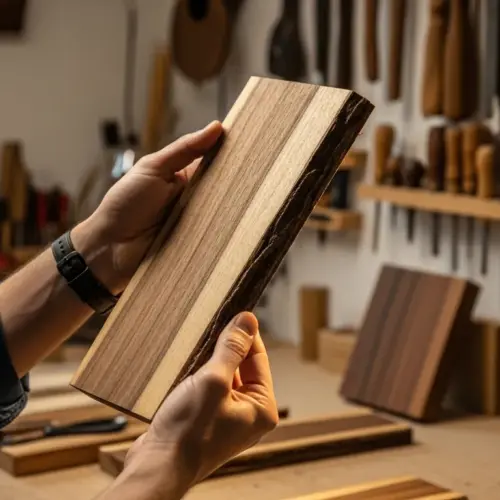


The world of guitar building is rich with choices. Selecting the right tonewood is a crucial step in crafting an instrument with the desired sound and character. While familiar woods like mahogany, rosewood, and maple often take center stage, there’s a growing interest in exploring alternative species, and locust tonewood guitar is gaining attention.
This article will examine the potential of locust wood for guitar construction. We’ll explore its tonal properties, workability, durability, and how it compares to other hardwoods commonly used in luthierie.
Whether you’re a seasoned luthier or an aspiring builder, this exploration of locust tonewood promises to broaden your understanding of the materials available. It also helps you in making informed decisions for your next project.
What is Locust and Why Consider It for Guitars?
Locust refers to several species of trees in the genera Robinia and Gleditsia, native to North America. Black locust (Robinia pseudoacacia) is the most common and widely distributed species, known for its exceptional hardness and rot resistance.
These locust wood properties make it a potentially valuable tonewood for guitar building. Tonewoods are specific wood species chosen for their acoustic properties, influencing the instrument’s sound.
Traditionally, luthiers have relied on a relatively small number of wood species. However, as supplies of these woods become more limited and expensive, builders are looking at other options.
Locust offers several potential advantages. Its density and hardness suggest it could produce a bright, clear tone, while its availability and sustainability may make it an attractive alternative to more endangered species.
Black locust, in particular, has a long history of use in applications requiring strength and durability. It has been used for fence posts, railroad ties, and even shipbuilding, showcasing its inherent resilience.

The tree itself is also known for its nitrogen-fixing capabilities. This means it can improve soil quality, making it a valuable species for reforestation and land reclamation projects.
Beyond its practical uses, locust possesses an attractive grain pattern that can add visual appeal to a guitar. The wood can range in color from a light yellow to a darker brown, offering a range of aesthetic possibilities.
Considering locust as a tonewood is not just about finding a substitute for traditional species. It’s about exploring the unique characteristics of a readily available and sustainable resource.
The Tonal Characteristics of Locust in Guitar Building
The tonal qualities of a wood are determined by its density, stiffness, and damping characteristics. Locust wood properties suggest a bright and articulate sound profile.
Its high density contributes to a strong fundamental tone with clear note separation. This can be particularly desirable for fingerstyle players or those who prefer a crisp, focused sound.
The stiffness of locust can enhance projection and sustain. This means the guitar’s voice will carry well and notes will ring out longer.
However, the precise tonal characteristics of a locust tonewood guitar will vary depending on the specific species used, the cut of the wood, and the instrument’s overall design. Experimentation is key to fully understanding its potential.
Compared to woods like mahogany, which tend to produce a warmer, more mellow tone, locust leans towards a brighter and more responsive sound. This can be beneficial for players who want a guitar that cuts through the mix and has a clear, defined voice.
The damping characteristics of locust, which refer to its ability to absorb vibrations, also play a role in its tonal profile. A lower damping coefficient generally results in a brighter, more resonant sound, while a higher damping coefficient produces a warmer, more subdued tone.
Some luthiers have compared the tonal qualities of locust to those of maple, another dense and stiff hardwood. However, locust may offer a slightly warmer and more complex tone than maple, with a richer harmonic content.
Ultimately, the best way to assess the tonal characteristics of locust is to hear it in action. As more guitars are built with this wood, a clearer picture of its sonic potential will emerge.
Workability and Finishing Considerations for Locust
Locust is a very hard and dense wood, which can present some challenges during the building process. Its hardness can make it more difficult to bend, shape, and carve compared to softer woods like mahogany or cedar.
Sharp tools and careful technique are essential to avoid tear-out or splintering. Pre-bending sides with heat and moisture is often necessary to prevent cracking.
| Property | Black Locust | Mahogany | Rosewood |
|---|---|---|---|
| Density (kg/m³) | 770 | 545 | 830 |
| Janka Hardness (lbf) | 1648 | 830 | 1780 |
| Modulus of Rupture (MPa) | 120 | 96 | 110 |
| Modulus of Elasticity (GPa) | 12.4 | 10.8 | 13.8 |
Finishing locust can also require some extra steps. Due to its open grain structure, filling the pores is recommended to achieve a smooth, glass-like surface.
Both oil-based and lacquer finishes work well with locust, but it’s important to test the finish on a small area first to ensure compatibility. Some luthiers recommend using a sanding sealer to prevent the finish from being absorbed unevenly.
The density of locust also means it can be harder to sand. Progressing through grits carefully and using power tools with appropriate speed settings is crucial.
When bending locust, a bending iron or a side bender is highly recommended. Traditional methods of bending wood may not be sufficient due to the wood’s resistance.
Consider using specialized glues designed for hardwoods when joining locust components. This will ensure a strong and lasting bond, which is critical for the instrument’s structural integrity.
Despite these challenges, the effort required to work with locust is often rewarded by its exceptional durability and unique tonal characteristics. The finished product can be a truly remarkable instrument.
The Durability and Longevity of Locust Tonewood
One of the most appealing characteristics of locust, particularly black locust tonewood, is its exceptional durability. It is naturally resistant to rot, decay, and insect damage, making it a very stable and long-lasting tonewood.
This inherent resistance eliminates the need for chemical treatments. This makes locust a more environmentally friendly choice compared to some other wood species.
A locust guitar can withstand a wide range of environmental conditions without warping or cracking. This is particularly important for instruments that are frequently transported or played in varying climates.
With proper care, a locust guitar can last for generations. This makes it a worthwhile investment for serious musicians and collectors.
The durability of locust also extends to its resistance to wear and tear from playing. It can withstand the constant friction of picks and fingers without showing signs of damage.
This makes it an ideal choice for guitars that are played frequently or used in demanding performance settings. A locust guitar will maintain its appearance and structural integrity for many years to come.
The long-term stability of locust also ensures that the guitar’s setup will remain consistent over time. This means less frequent adjustments and a more reliable playing experience.
Ultimately, the durability of locust tonewood provides peace of mind for guitar owners. They can be confident that their instrument will withstand the test of time and continue to provide years of enjoyment.
Comparing Locust to Other Hardwoods
To better understand the potential of locust for guitar building, it’s helpful to compare it to other commonly used hardwoods. Mahogany, maple, and rosewood each have distinct tonal and physical properties that make them suitable for different applications.
Mahogany is known for its warm, balanced tone and relatively light weight. Maple is prized for its bright, clear sound and attractive figuring, while rosewood offers a rich, complex tone with strong overtones.
- Mahogany: Warm, balanced, lightweight
- Maple: Bright, clear, figured appearance
- Rosewood: Rich, complex, strong overtones
- Locust: Dense, hard, rot-resistant
- Koa: Similar to mahogany, but brighter
Locust shares some similarities with maple in terms of its brightness and clarity, but it is generally denser and harder. It could be considered a substitute for koa, which is similar to mahogany but with a brighter sound.
Compared to rosewood, locust has a less complex tonal palette. Rosewood is known for its rich overtones and sustain, while locust offers a more focused and articulate sound.
When compared to mahogany, locust provides a brighter and more projective tone. Mahogany is warmer and has a more mellow sound, making it suitable for different musical styles.
Each of these hardwoods offers unique advantages for guitar building. The choice of wood depends on the desired tonal characteristics and the player’s preferences.
Ultimately, locust stands out for its combination of brightness, clarity, and exceptional durability. It offers a unique alternative to traditional tonewoods.
Sourcing and Preparing Locust for Luthierie
Sourcing locust for luthierie requires careful consideration. Because it’s not a traditional tonewood, finding suppliers who specifically cater to guitar builders can be difficult.
However, many lumberyards that specialize in hardwoods may carry locust. You may also find smaller sawmills that can provide custom cuts.
When selecting locust, look for quartersawn wood with straight grain and minimal knots or imperfections. Quartersawn wood is more stable and less prone to warping than flatsawn wood.
Proper drying is crucial to ensure the wood is stable and suitable for instrument building. Kiln-drying is the most common method, but air-drying can also be effective if done properly.
When sourcing, consider the age of the tree and the location where it grew. These factors can influence the wood’s density, color, and grain pattern.
It’s also important to inquire about the harvesting practices used to obtain the locust. Sustainable harvesting ensures that the resource is managed responsibly.
Once you have sourced the locust, proper preparation is essential. This includes acclimating the wood to your workshop environment to prevent warping or cracking.
Careful milling and thicknessing are also necessary to ensure that the wood is dimensionally accurate and ready for use in guitar construction.
Locust Guitar Sound: What to Expect
The sound of a locust guitar is often described as being bright and focused, with a clear fundamental tone. Players may find that it has a strong projection and good sustain, making it suitable for a variety of playing styles.
Many luthiers have experimented with using locust for different parts of the guitar, such as the top, back, and sides. Some builders have also used locust for necks, citing its stability and resistance to warping.
A locust top may produce a brighter, more articulate sound compared to a spruce top. Locust back and sides can add clarity and focus to the overall tone, while a locust neck can contribute to a stable and responsive feel.
Ultimately, the best way to understand the sound of a locust tonewood guitar is to play one. As more builders experiment with this wood, more examples will become available.
Players who appreciate a crisp and defined tone will likely be drawn to locust guitars. Its clarity and projection make it well-suited for fingerstyle playing and solo performances.
The strong fundamental tone of locust also ensures that each note is clearly heard, even in complex chords or fast passages. This can be particularly beneficial for players who want their music to be articulate and precise.
While locust may not have the same warmth and complexity as some other tonewoods, its brightness and clarity can be a refreshing alternative. It offers a unique sonic palette that can inspire creativity and innovation.
As more luthiers and players explore the potential of locust, its sonic characteristics will become more widely understood and appreciated. It is a tonewood with a promising future in the world of guitar building.
Black Locust Tonewood and Sustainable Luthierie
The increasing demand for tonewoods has put pressure on many traditional species, leading to concerns about deforestation and unsustainable harvesting practices. Black locust tonewood can be a more sustainable option.
Black locust is a fast-growing tree that is relatively abundant in many parts of North America. It can be harvested sustainably without causing significant environmental damage.
Using locust can help to reduce the reliance on more endangered species. It also supports responsible forest management practices.
Choosing locust tonewood is one way that luthiers can contribute to a more sustainable future for the craft. More and more builders are incorporating sustainable practices.
Sustainable luthierie involves making informed choices about the materials used in guitar construction. This includes selecting woods that are harvested responsibly and minimizing waste during the building process.
By using locust, luthiers can reduce their environmental footprint and promote the conservation of valuable forest resources. It is a step towards a more ethical and sustainable approach to guitar building.
Consumers are also becoming more aware of the environmental impact of their purchases. By choosing a locust guitar, they can support sustainable practices and make a positive contribution to the environment.
The use of black locust tonewood is a testament to the growing commitment to sustainability within the luthierie community. It is a trend that is likely to continue as awareness of environmental issues increases.
Experimenting with Locust: Tips for Luthiers
For luthiers interested in working with locust, experimentation is key. Because it’s a relatively uncommon tonewood, there is less established knowledge compared to traditional species.
Start by building a small instrument, such as a ukulele or a parlor guitar, to get a feel for the wood’s properties. Experiment with different bracing patterns and thicknesses to fine-tune the sound.
Consider using locust in combination with other tonewoods to create unique tonal combinations. For example, a locust top paired with mahogany back and sides could offer a balance of brightness and warmth.
Document your findings and share your experiences with other luthiers. By sharing information, we can all learn more about the potential of locust and other alternative tonewoods.
When experimenting with locust, pay close attention to its response to different finishes. Some finishes may enhance its natural beauty and tonal qualities, while others may detract from them.
Consider using different types of bracing patterns to optimize the sound of a locust top. Experiment with X-bracing, fan bracing, or other innovative designs to find the best combination.
Don’t be afraid to try unconventional techniques or approaches when working with locust. Its unique properties may require a different mindset and a willingness to push the boundaries of traditional luthierie.
By embracing experimentation and innovation, luthiers can unlock the full potential of locust and create instruments that are both beautiful and sonically exceptional.
Conclusion
Locust tonewood offers a unique combination of tonal properties, durability, and sustainability. While it may present some challenges in terms of workability, its potential for producing bright, clear, and long-lasting instruments makes it an intriguing option for luthiers.
As the demand for tonewoods continues to grow and concerns about sustainability increase, exploring alternative species like locust becomes increasingly important. By embracing innovation and experimentation, luthiers can continue to create exceptional instruments while also contributing to a more responsible future for the craft.
Whether you’re a seasoned builder or just starting out, consider giving locust a try on your next project. You may be surprised by the results.
The future of luthierie depends on our ability to adapt and innovate. By exploring new materials and techniques, we can ensure that the art of guitar building continues to thrive for generations to come.
Locust tonewood represents a promising step in that direction. Its unique combination of qualities makes it a valuable addition to the luthier’s palette.
So, embrace the challenge, experiment with locust, and discover the possibilities. You may just create the next great guitar.