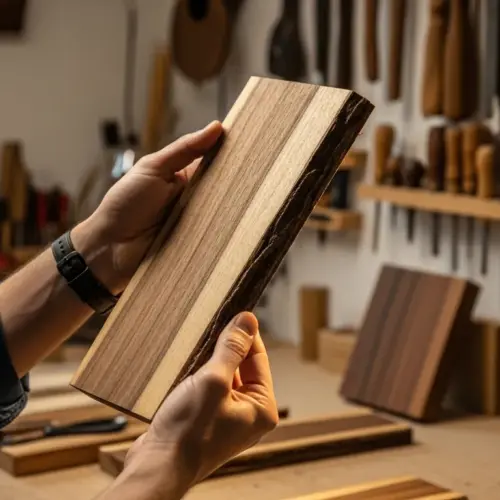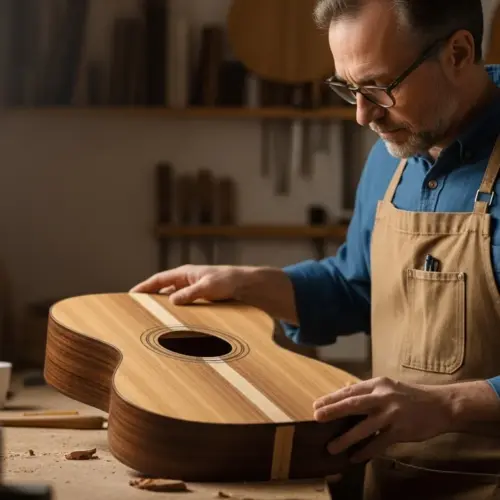

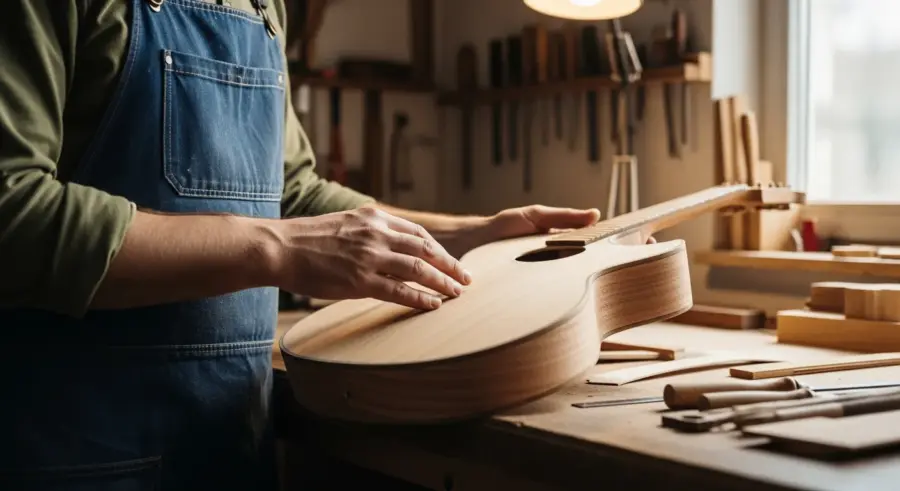
Basswood tonewood guitar bodies are popular among many guitar players, and for good reason. It’s a lightweight wood with a neutral tone, making it a versatile choice for various musical styles. If you’re looking to understand why basswood is so prevalent in guitar construction, this article will provide a comprehensive overview of its characteristics, tonal properties, and applications.
We’ll explore the advantages of using basswood in guitar construction, how it affects tone and sustain, and what makes it a good choice for both beginners and experienced players. This guide will also cover workability, finishing techniques, and comparisons with other common tonewoods like alder and poplar, ultimately helping you make an informed decision about whether a basswood tonewood guitar is right for you.
Whether you’re a luthier or a guitarist seeking to upgrade your instrument, understanding the nuances of basswood is essential. Let’s examine the properties of basswood and its role in shaping the sound of your guitar.
The Advantages of Using Basswood in Guitar Construction
Basswood offers several advantages that make it a popular choice for guitar bodies. One of its most notable features is its light weight, which makes guitars more comfortable to play for extended periods, especially during long gigs or practice sessions.
This can be particularly beneficial for musicians who experience back or shoulder strain from heavier instruments. Another advantage is its affordability compared to other premium tonewoods like mahogany or maple, making it an attractive option for budget-conscious guitar manufacturers and players.
Basswood is also known for its closed grain structure, which contributes to a smooth and even finish, enhancing the guitar’s aesthetic appeal. Its consistent density across the wood also ensures predictable tonal characteristics, allowing for greater control over the final sound of the instrument.
Furthermore, basswood is relatively easy to work with, making it a favorite among luthiers for its machinability and ease of shaping. These qualities contribute to efficient production processes and consistent results in guitar manufacturing.
The lightweight nature of basswood reduces the overall weight of the guitar. This is a significant benefit for guitarists who perform regularly, as it minimizes fatigue and allows for greater freedom of movement on stage.
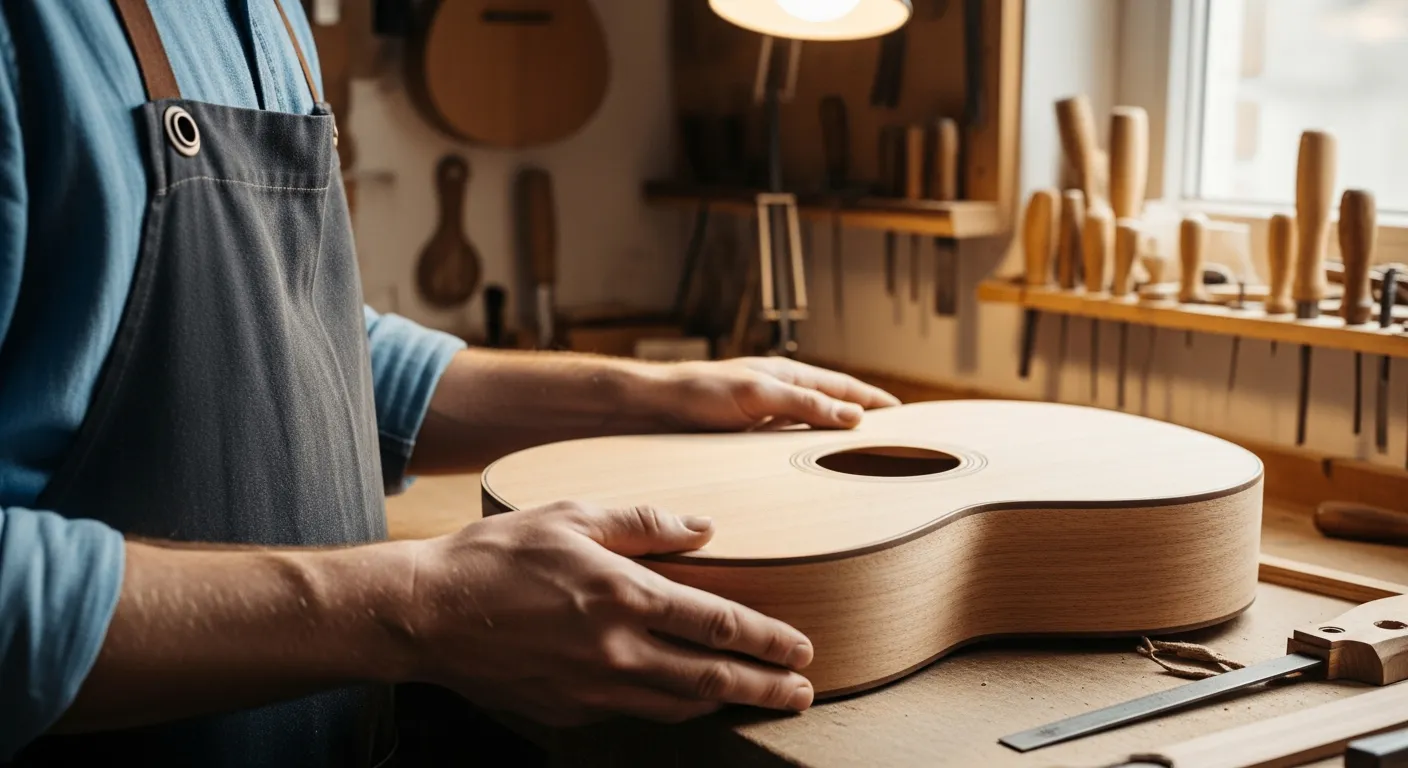
The reduced weight doesn’t compromise the guitar’s structural integrity. Basswood is strong enough to withstand the stresses of regular playing and transportation, making it a reliable choice for touring musicians.
Economically, basswood allows manufacturers to produce guitars at a lower cost. This affordability translates to more accessible instruments for beginner and intermediate players, expanding the market and encouraging musical participation.
Its closed grain structure is ideal for achieving a flawless finish. This allows for vibrant colors and intricate designs to be applied without the risk of uneven absorption or texture.
The consistent density of basswood ensures that each guitar produced has similar tonal qualities. This predictability is crucial for maintaining quality control and brand consistency in guitar manufacturing.
Luthiers appreciate basswood because it’s easy to shape and carve. This allows for greater creativity in guitar design, enabling the creation of unique body shapes and contours.
The workability of basswood also reduces the time and effort required to produce a guitar. This efficiency helps to lower production costs and streamline the manufacturing process.
Basswood’s consistent nature also makes it ideal for CNC machining. This ensures precise cuts and consistent results across multiple guitars, which is essential for mass production.
How Basswood Affects Guitar Tone and Sustain
Basswood is often described as having a neutral tonal character, meaning it doesn’t emphasize any particular frequency range. This neutrality makes it a versatile foundation for different guitar styles and pickup configurations.
The basswood guitar body provides a balanced response across the spectrum, allowing the pickups and other components to shape the final tone. This characteristic is particularly useful for players who use a variety of effects or rely on their amplifier to sculpt their sound.
In terms of sustain, basswood typically offers moderate sustain compared to denser woods like mahogany or maple. The lighter density absorbs some of the string’s vibrations, resulting in a slightly shorter sustain.
However, this can be advantageous in certain musical contexts, providing a controlled and articulate sound that is well-suited for fast playing and complex chord voicings. The overall tonal profile of a basswood guitar can be further enhanced by pairing it with different neck woods and hardware.
The neutrality of basswood allows the guitar’s pickups to truly define the instrument’s voice. This makes it an excellent choice for guitarists who want to experiment with different pickup types and sounds.
Players who use a lot of effects pedals will appreciate basswood’s balanced response. The wood doesn’t color the sound, allowing the effects to be heard clearly and accurately.
The moderate sustain of basswood can be beneficial for genres like metal and shred. The notes decay quickly, allowing for fast and precise playing without muddiness.
Basswood’s tonal characteristics make it a good choice for recording. Its balanced response ensures that the guitar sits well in a mix without overpowering other instruments.
The lighter density of basswood contributes to a more focused and articulate sound. This is especially useful for complex chords and intricate melodies.
Pairing basswood with a maple neck can add brightness and snap to the guitar’s tone. This combination is popular among players who want a versatile and responsive instrument.
Using a rosewood fretboard on a basswood guitar can add warmth and sustain. This combination is often preferred by blues and rock players.
The hardware used on a basswood guitar can also affect its tone and sustain. Heavier bridges and tailpieces can increase sustain, while lighter hardware can enhance articulation.
Workability and Finishing Techniques for Basswood
Basswood is known for its excellent workability, making it a favorite among luthiers. Its soft and consistent texture allows for easy cutting, shaping, and routing, which simplifies the construction process.
This is especially beneficial for intricate designs and custom guitar builds. However, because basswood is relatively soft, it’s important to use sharp tools and careful techniques to avoid tear-out or damage during shaping.
| Technique | Description | Considerations |
|---|---|---|
| Sanding | Sands easily due to its soft nature. | Use progressively finer grits to achieve a smooth surface. |
| Routing | Routes cleanly with sharp bits. | Avoid excessive pressure to prevent chipping. |
| Drilling | Drills easily without splitting. | Use brad-point bits for clean holes. |
| Finishing | Accepts finishes well due to its closed grain. | Apply multiple thin coats for best results. |
When it comes to finishing, basswood’s closed grain structure makes it an ideal canvas for a variety of finishes. It accepts paint, stain, and clear coats evenly, resulting in a smooth and professional-looking final product.
However, because basswood can absorb finishes quickly, it’s recommended to use a sealer or primer to prevent excessive absorption and ensure even color distribution. Proper preparation and finishing techniques can greatly enhance the visual appeal and durability of a basswood guitar body.
The ease of workability reduces the time required for guitar construction. This allows luthiers to produce more guitars in a shorter period, increasing efficiency.
Intricate designs, such as carved tops and custom contours, are easier to achieve with basswood. The wood’s softness allows for greater precision and detail in shaping.
Sharp tools are essential for working with basswood to prevent tear-out. Dull tools can cause the wood to splinter and create an uneven surface.
Applying a sealer or primer is crucial for achieving an even finish on basswood. This prevents the wood from absorbing too much finish and creating a blotchy appearance.
Multiple thin coats of finish are better than one thick coat. This allows the finish to cure properly and prevents drips and runs.
Sanding between coats of finish is important for achieving a smooth and glossy surface. This removes any imperfections and creates a better bonding surface for the next coat.
Proper preparation is key to a successful finish. This includes sanding the wood smooth, cleaning it thoroughly, and applying a sealer or primer.
The finishing process can greatly enhance the visual appeal of a basswood guitar. A well-applied finish can bring out the wood’s natural beauty and protect it from damage.
Basswood’s Common Applications in Guitar Building
Basswood is commonly used in the construction of solid-body electric guitars, particularly those designed for high-gain and fast playing styles. Its neutral tonal character allows the pickups and electronics to dictate the overall sound, making it a versatile choice for various genres.
Many popular guitar brands use basswood in their mid-range and entry-level models due to its affordability and consistent quality. These guitars often feature high-output pickups and tremolo systems, catering to rock, metal, and shred guitarists.
In addition to solid-body guitars, basswood is sometimes used in semi-hollow and chambered guitar designs. In these applications, it contributes to a lightweight and resonant instrument with a balanced tonal response.
The combination of basswood with other tonewoods can create unique sonic characteristics, blending warmth and sustain with clarity and articulation. Basswood’s versatility also extends to bass guitar construction, where its lightweight properties and balanced tone are valued by bassists.
High-gain amplifiers often pair well with basswood guitars. The wood’s neutrality prevents the sound from becoming muddy or undefined.
Tremolo systems benefit from the consistent density of basswood. This ensures that the tremolo functions smoothly and accurately.
Semi-hollow guitars made with basswood can offer a unique blend of sustain and resonance. This makes them suitable for a wide range of musical styles.
Chambered basswood guitars are often lighter than solid-body guitars. This can improve comfort and playability, especially for long gigs.
Basswood’s affordability makes it a popular choice for student guitars. This allows beginners to access quality instruments at a reasonable price.
Many professional guitarists use basswood guitars for their versatility and reliability. The wood’s consistent quality ensures that the guitars perform well in any situation.
Basswood is also used in the construction of guitar necks. Its stability and workability make it a good choice for this application.
Some luthiers use basswood for guitar tops. This can add a unique tonal character to the instrument.
Comparing Basswood to Alder and Poplar
When considering tonewood options for a guitar body, basswood is often compared to alder and poplar due to their similar tonal and physical properties. Alder is another popular choice for electric guitar bodies, known for its balanced tone with a slight emphasis on the midrange frequencies.
Compared to basswood, alder tends to have a slightly more complex and resonant sound, making it a favorite among blues, rock, and funk players. Poplar, like basswood, is a lightweight and affordable tonewood with a neutral tonal character.
- Basswood: Neutral tone, lightweight, smooth finish
- Alder: Balanced tone with midrange emphasis, resonant
- Poplar: Affordable, neutral tone, can have visual inconsistencies
- Mahogany: Warm tone, good sustain, heavier
- Maple: Bright tone, excellent sustain, dense
However, poplar can sometimes have visual inconsistencies in its grain pattern, which may require more careful finishing to achieve a uniform appearance. The choice between these tonewoods often comes down to personal preference and the desired tonal characteristics of the guitar.
Players seeking a neutral and versatile platform may prefer basswood, while those looking for a slightly warmer and more resonant sound may opt for alder. Poplar can be a cost-effective alternative, but it’s important to inspect the wood for any visual imperfections before construction.
Alder’s midrange emphasis can help guitars cut through a mix. This makes it a popular choice for live performances.
Poplar’s affordability makes it a good option for budget-conscious builders. However, the visual inconsistencies can require more effort to finish properly.
Mahogany offers a warm and sustain-rich tone. It is often used in high-end guitars for its luxurious sound and appearance.
Maple is known for its bright and articulate tone. It is often used for guitar necks and tops to add clarity and definition.
The choice of tonewood can significantly impact a guitar’s overall sound. It’s important to consider the desired tonal characteristics when selecting a tonewood.
Personal preference plays a significant role in tonewood selection. Some players prefer the warmth of mahogany, while others prefer the brightness of maple.
Experimenting with different tonewoods can help players discover their preferred sound. Trying out different guitars is a great way to explore the tonal characteristics of various woods.
The guitar’s pickups and electronics also play a crucial role in shaping the sound. The tonewood provides a foundation, but the pickups and electronics determine the final tone.
Selecting Quality Basswood for Luthierie
When selecting basswood for luthierie, it’s important to consider several factors to ensure you’re using high-quality wood. Look for basswood that is straight-grained and free from knots or other defects, as these can affect the structural integrity and tonal properties of the guitar.
The wood should also be properly dried and seasoned to prevent warping or cracking over time. Kiln-dried basswood is often preferred, as this process ensures consistent moisture content throughout the wood.
When possible, inspect the basswood in person to assess its density and resonance. Tap the wood and listen for a clear, even tone, which indicates good vibrational characteristics.
Avoid basswood that feels excessively soft or spongy, as this may indicate poor quality or improper drying. Purchasing from a reputable supplier that specializes in tonewoods is a good way to ensure you’re getting a reliable and consistent product for your guitar building project.
Straight grain ensures consistent tonal properties throughout the wood. Knots and defects can disrupt the wood’s vibration and affect the guitar’s sound.
Proper drying and seasoning are crucial for preventing warping and cracking. This ensures that the guitar remains stable over time.
Kiln-dried wood has a consistent moisture content. This helps to prevent dimensional changes and ensures that the guitar stays in tune.
Tapping the wood can reveal its resonance. A clear, even tone indicates that the wood has good vibrational characteristics.
Soft or spongy wood may be of poor quality. This can affect the guitar’s tone and structural integrity.
Reputable suppliers specialize in tonewoods. They can provide high-quality wood that is suitable for guitar building.
Inspecting the wood in person allows you to assess its quality. This is the best way to ensure that you are getting the right wood for your project.
Consider the source of the wood. Sustainably harvested wood is a responsible choice for guitar building.
Basswood Guitar Sound: Is it Right for You?
Choosing a basswood tonewood guitar comes down to understanding its sonic characteristics and how they align with your playing style. Basswood’s neutral tone provides a blank canvas, allowing your pickups and amp to define your sound.
If you play a wide range of genres or rely heavily on effects, a basswood guitar can be an excellent choice. Its lightweight construction also makes it comfortable for long practice sessions and performances.
However, if you prefer a more pronounced tonal coloration from the wood itself, you might consider other options like alder or mahogany. Ultimately, the best way to determine if a basswood guitar is right for you is to play one and listen to how it responds to your playing style and gear.
Experiment with different pickup configurations and amp settings to explore the full range of tonal possibilities that basswood offers. Consider also the aesthetic appeal of basswood, as its smooth grain and even finish make it a great choice for custom paint jobs and unique designs.
Consider your playing style when choosing a tonewood. Different tonewoods are better suited for different playing styles.
Think about the genres of music you play most often. Some tonewoods are better suited for certain genres than others.
Experiment with different pickup configurations. Basswood’s neutrality allows the pickups to shine.
Try different amp settings to explore the full range of tonal possibilities. Basswood is a versatile tonewood that can be used in many different ways.
Consider the aesthetic appeal of basswood. Its smooth grain and even finish make it a great choice for custom paint jobs.
Play a basswood guitar before making a decision. This is the best way to determine if it is right for you.
Listen to how the guitar responds to your playing style. Does it feel comfortable and sound good?
Consider the overall cost of the guitar. Basswood guitars are often more affordable than guitars made from other tonewoods.
Basswood Guitar Body: Common Misconceptions
There are several misconceptions about basswood that are worth addressing. One common misconception is that basswood is inherently inferior to other tonewoods like mahogany or maple.
While it’s true that basswood has a different tonal character, it’s not necessarily worse; it’s simply different. Its neutrality can be a strength, providing a versatile platform for various musical styles and pickup configurations.
Another misconception is that basswood guitars lack sustain. While basswood may not sustain as long as denser woods, it still offers adequate sustain for most playing situations.
The sustain can also be enhanced by using high-quality hardware and a well-constructed neck joint. Some players also believe that basswood is too soft and prone to damage, but with proper care and handling, a basswood guitar can be just as durable as one made from other tonewoods.
Basswood’s neutrality is a strength, not a weakness. It allows the pickups to shape the sound of the guitar.
Sustain can be enhanced with high-quality hardware. A well-constructed neck joint also contributes to sustain.
Basswood is durable with proper care and handling. It is not as prone to damage as some people believe.
The choice of tonewood is a matter of personal preference. There is no one “best” tonewood for all players.
Basswood is a versatile tonewood that can be used in many different genres of music. It is not limited to high-gain styles.
Many professional guitarists use basswood guitars. This demonstrates that it is a viable option for serious musicians.
Don’t let misconceptions prevent you from trying a basswood guitar. You might be surprised by its versatility and performance.
Consider the overall construction and components of the guitar. The tonewood is just one factor that contributes to the overall sound and playability.
Basswood and Pickups: A Perfect Match?
Basswood’s neutral tonal characteristics make it an excellent pairing for a wide variety of pickups. Because it doesn’t emphasize any particular frequency range, basswood allows the pickups to shine and define the guitar’s overall sound.
This is particularly beneficial for players who experiment with different pickup types and configurations. High-output humbuckers, for example, can sound aggressive and powerful in a basswood guitar, making it well-suited for rock and metal.
Single-coil pickups, on the other hand, can sound clear and articulate, making it ideal for blues, funk, and pop. The versatility of basswood also extends to active pickups, which can deliver a wide range of tones with enhanced clarity and sustain.
Ultimately, the choice of pickups for a basswood guitar depends on the player’s personal preferences and the desired musical style. However, the neutral tonal foundation of basswood ensures that the pickups will perform optimally and deliver their intended sound.
Basswood provides a blank canvas for pickups. This allows the pickups to truly shine and define the guitar’s sound.
Experimenting with different pickup types is easy with basswood. The neutral tone allows you to hear the true character of each pickup.
High-output humbuckers sound aggressive and powerful in basswood. This makes it a great choice for rock and metal players.
Single-coil pickups sound clear and articulate in basswood. This is ideal for blues, funk, and pop players.
Active pickups deliver a wide range of tones with enhanced clarity and sustain. Basswood’s neutrality allows these pickups to perform optimally.
Consider your personal preferences when choosing pickups. The right pickups can make a basswood guitar sound amazing.
Think about the musical style you play most often. Choose pickups that are well-suited for that style.
The combination of basswood and the right pickups can create a perfect match. This can result in a versatile and great-sounding guitar.
Conclusion
In conclusion, basswood is a versatile and affordable tonewood that offers a unique set of advantages for guitar construction. Its lightweight properties, neutral tone, and ease of workability make it a popular choice among luthiers and guitar players alike.
Whether you’re a beginner looking for a comfortable and budget-friendly instrument or an experienced player seeking a versatile platform for your pickups and effects, a basswood tonewood guitar is worth considering. By understanding its characteristics and applications, you can make an informed decision and find the perfect basswood guitar to suit your needs and playing style.
Basswood’s lightweight properties make it comfortable to play. This is especially important for long practice sessions and performances.
The neutral tone of basswood allows for versatility. It can be used in many different genres of music.
Basswood’s ease of workability makes it a popular choice among luthiers. This allows for efficient and consistent guitar construction.
Consider a basswood guitar if you’re looking for a versatile and affordable instrument. It might be the perfect choice for you.
Understand the characteristics and applications of basswood. This will help you make an informed decision.
Find the perfect basswood guitar to suit your needs and playing style. There are many different options available.
Explore the tonal possibilities of basswood. You might be surprised by its versatility and performance.