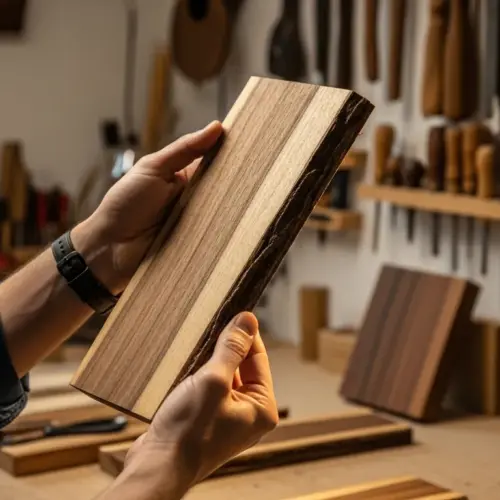


Sycamore, often overlooked in the world of tonewoods, presents a unique set of characteristics that can make it a compelling choice for guitar making. This guide explores the nuances of using sycamore tonewood guitar construction, examining its properties, sound profile, and suitability for various instruments.
Whether you’re a seasoned luthier or an aspiring builder, understanding the potential of sycamore can expand your tonal palette and offer a distinctive voice for your creations. Let’s see how sycamore wood properties can be used to make great guitars.
We will cover everything from its workability and finishing to how it compares to other popular tonewoods, so you can make an informed decision about whether sycamore is the right choice for your next project. We will also touch on sourcing and grading.
What Makes Sycamore a Unique Tonewood?
Sycamore, belonging to the Platanus genus, is a readily available hardwood with several distinguishing features that set it apart from other tonewoods. Its availability and sustainable growth contribute to its appeal, especially in an era of increasing environmental consciousness.
The tree is fast-growing and regenerates quickly, making it a more ecologically sound choice compared to some of the slower-growing, more exotic tonewoods. Sycamore’s unique cellular structure also plays a role in its tonal characteristics.
The wood is relatively dense, but not excessively so, which allows it to vibrate freely and produce a balanced sound. Its visual appearance, often featuring striking grain patterns like quilting or flame, also adds to its allure for luthiers seeking aesthetically pleasing materials.
The wood itself is usually a light creamy color, sometimes with a hint of tan or brown, which provides a neutral base for finishing and allows the natural grain patterns to stand out. Sycamore’s hardness and stability are also important factors in its suitability as a tonewood.
Unlike some other tonewoods that are becoming increasingly scarce, sycamore is abundant in many regions, making it a more accessible and affordable option for builders. This abundance also contributes to its appeal from a sustainability perspective.
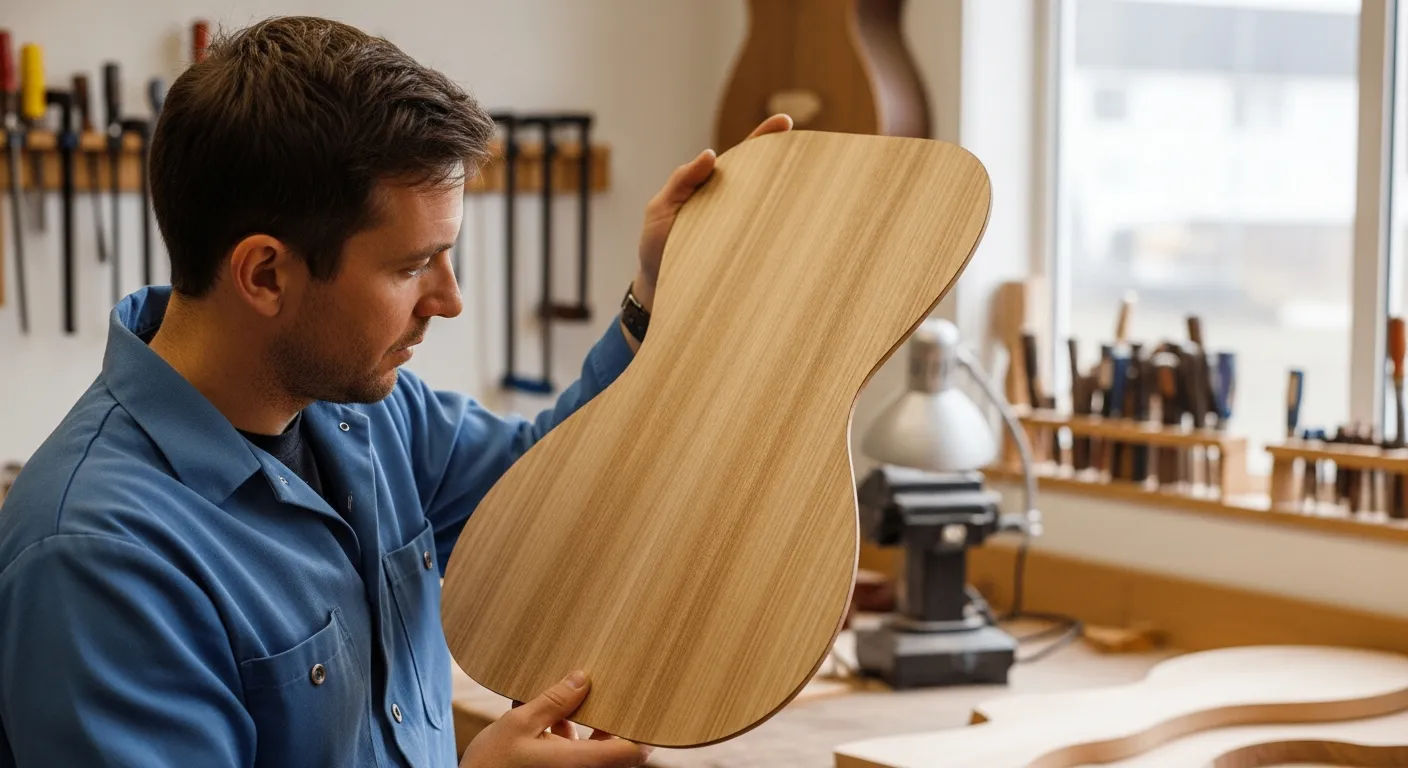
The relatively low cost of sycamore can make it an attractive choice for beginner luthiers or those working on a budget. It allows for experimentation without the financial risk associated with more expensive tonewoods.
Furthermore, sycamore’s consistent density and grain structure contribute to its predictable behavior during the building process. This predictability can be a significant advantage for luthiers seeking consistent results.
The wood’s ability to be easily shaped and joined also makes it a versatile option for various guitar-making techniques. Its workability extends to both hand tools and power tools, making it suitable for a wide range of workshops.
The Sound Profile of Sycamore in Guitars
The sound of a sycamore guitar can be described as balanced and clear, with a slightly brighter tone compared to some of the warmer tonewoods like mahogany. It doesn’t have the pronounced mid-range punch of mahogany or the shimmering overtones of rosewood, but instead offers a more neutral sonic palette.
This neutrality can be both a strength and a weakness, depending on the desired sound. For musicians seeking a versatile instrument that can handle a wide range of musical styles, sycamore’s balanced tone can be ideal.
However, players looking for a very specific tonal color may find sycamore lacking in character compared to other, more distinctive tonewoods. The clarity of sycamore also makes it well-suited for fingerstyle playing, where individual notes need to be clearly defined.
Its responsiveness to the player’s touch allows for nuanced expression, making it a good choice for intricate and delicate playing styles. When used in the construction of acoustic guitars, sycamore tends to emphasize the fundamental tones of the strings.
The balanced nature of sycamore means that it doesn’t overly emphasize any particular frequency range. This can be beneficial for players who want a guitar that accurately reflects their playing style and technique.
It allows the natural voice of the instrument to shine through without being colored by the tonewood. Sycamore’s clarity also makes it a good choice for recording, as it produces a clean and uncolored signal.
This can be particularly useful in studio settings where engineers want to have maximum control over the final sound. Furthermore, sycamore’s brightness can help to cut through a mix, making it a suitable choice for live performances.
The clear and articulate sound of sycamore guitars is well-suited for solo performances, where every note needs to be heard distinctly. Its versatility makes it a good option for guitarists who play in a variety of musical genres.
Workability and Finishing of Sycamore Tonewood
Sycamore is generally considered to be a relatively easy wood to work with, making it a favorite among both experienced and novice luthiers. It machines well, meaning it can be easily cut, shaped, and sanded without excessive tear-out or splintering.
However, some care is needed when working with highly figured pieces, as the grain can be irregular and prone to chipping if not handled carefully. Sycamore also glues well, creating strong and reliable joints, which is essential in guitar construction.
| Property | Description | Considerations for Luthiers |
|---|---|---|
| Machining | Machines well with minimal tear-out | Use sharp tools and take light passes to avoid chipping |
| Gluing | Glues easily and creates strong joints | Ensure surfaces are clean and properly prepared for optimal adhesion |
| Sanding | Sands smoothly with a consistent surface | Use progressively finer grits to achieve a flawless finish |
| Finishing | Accepts a wide range of finishes | Experiment with different finishes to enhance the wood’s natural beauty |
Sycamore’s ability to accept a wide range of finishes is another advantage. It can be stained, lacquered, varnished, or oiled to achieve different looks, allowing luthiers to customize the appearance of their instruments to their liking.
The ease of working with sycamore can significantly reduce the amount of time and effort required to build a guitar. This can be particularly beneficial for luthiers who are working on multiple projects simultaneously.
The smooth surface that sycamore produces after sanding makes it an ideal canvas for applying finishes. This allows for a flawless and professional-looking result.
The wood’s ability to be easily bent also makes it a good choice for constructing curved guitar parts, such as sides and backs. This flexibility allows for greater design freedom and creativity.
Sycamore’s consistent density and grain structure contribute to its predictable behavior during the finishing process. This predictability can help to avoid common finishing problems, such as blotching or uneven color.
Comparing Sycamore to Other Tonewoods
When considering sycamore for guitar making, it’s important to understand how it stacks up against other popular tonewoods. Mahogany, for example, is known for its warm, rich tone with a strong mid-range presence.
Compared to mahogany, sycamore is brighter and more neutral, with less emphasis on the mid frequencies. Rosewood, on the other hand, is prized for its complex overtones and sustain.
Sycamore lacks the shimmering high-end of rosewood, offering a more fundamental tone. Maple is another common tonewood, known for its bright, clear sound and excellent projection.
Sycamore is similar to maple in terms of brightness, but tends to be slightly warmer and less reflective. Each tonewood brings its own unique sonic characteristics to the table, and the choice ultimately depends on the desired sound and playing style.
Compared to the darker and more resonant woods like koa or walnut, sycamore provides a lighter and more focused tone. This can be advantageous for players who prefer a more articulate and defined sound.
While spruce is often used for guitar tops due to its excellent projection and responsiveness, sycamore can be a good alternative for backs and sides. It provides a balanced complement to spruce tops, adding clarity and warmth to the overall sound.
Compared to the more exotic tonewoods like ziricote or cocobolo, sycamore is a more readily available and affordable option. This makes it a more accessible choice for luthiers who are looking for a sustainable and cost-effective alternative.
Ultimately, the choice between sycamore and other tonewoods depends on the individual preferences of the luthier and the player. It’s important to experiment with different combinations of tonewoods to find the perfect sound for each instrument.
Common Uses of Sycamore in Guitar Construction
Sycamore can be used in various parts of a guitar, each contributing to the instrument’s overall sound and aesthetics. It is often used for the back and sides of acoustic guitars, where it provides a balanced and clear tone.
Some luthiers also use sycamore for guitar necks, where its stability and workability make it a practical choice. In electric guitars, sycamore can be used for the body, offering a lightweight and resonant alternative to heavier woods like mahogany or ash.
- Acoustic guitar backs and sides
- Electric guitar bodies
- Guitar necks
- Laminate tops
- Bracing
Additionally, sycamore can be used for internal bracing, contributing to the structural integrity and tonal balance of the instrument. Its versatility makes it a valuable material for luthiers seeking to experiment with different tonal combinations.
When used for acoustic guitar backs and sides, sycamore can help to create a balanced and articulate sound. It complements spruce tops well, adding clarity and warmth to the overall tone.
In electric guitar bodies, sycamore’s lightweight nature can make it a comfortable choice for players who prefer lighter instruments. It also provides a resonant platform for pickups, allowing them to capture the nuances of the player’s technique.
Sycamore necks are known for their stability and resistance to warping, making them a reliable choice for guitar necks. They also provide a smooth and comfortable playing surface.
The use of sycamore for bracing can help to fine-tune the tonal characteristics of an acoustic guitar. By carefully shaping and positioning the braces, luthiers can optimize the instrument’s resonance and projection.
Sourcing and Grading Sycamore Tonewood
Sourcing high-quality sycamore tonewood requires careful attention to detail. Look for reputable suppliers who specialize in tonewoods and can provide information about the wood’s origin, drying process, and grading.
Kiln-dried sycamore is generally preferred, as it ensures the wood is properly stabilized and less prone to warping or cracking. When grading sycamore tonewood, several factors come into play, including grain orientation, figure, and absence of defects.
Straight, tight grain is desirable for structural stability, especially in necks and bracing. Figure, such as quilting or flame, is primarily an aesthetic consideration, but can also affect the wood’s resonance.
Avoid pieces with knots, cracks, or excessive runout, as these can compromise the wood’s integrity and tonal properties. Inspect each piece carefully before purchasing to ensure it meets your specific needs and expectations.
When sourcing sycamore, it’s important to consider the source of the wood and whether it comes from sustainably managed forests. This helps to ensure that the wood is harvested in an environmentally responsible manner.
Reputable tonewood suppliers will typically provide information about the wood’s origin and sustainability practices. Look for suppliers who are certified by organizations like the Forest Stewardship Council (FSC).
When grading sycamore, pay close attention to the grain orientation and figure. Straight, tight grain is generally preferred for structural stability, while figure can add to the aesthetic appeal of the wood.
Avoid pieces with excessive knots, cracks, or other defects that could compromise the wood’s integrity. It’s also important to check the moisture content of the wood to ensure that it is properly dried and stabilized.
Enhancing Sycamore’s Natural Beauty: Finishing Techniques
Finishing sycamore tonewood is an art that can dramatically enhance its natural beauty and protect it from environmental factors. Because sycamore has a relatively plain appearance in its raw state, the finishing process is crucial for bringing out its character.
One popular technique is to use a stain to add color and depth to the wood, highlighting the grain patterns and creating a more visually appealing surface. Sunburst finishes, which involve gradually fading from a darker color on the edges to a lighter color in the center, can be particularly effective on sycamore.
These finishes add a vintage or classic look to the instrument. Another option is to use a clear finish, such as lacquer or varnish, which allows the natural color and grain of the sycamore to shine through.
This approach is often preferred for highly figured pieces, as it showcases the wood’s unique patterns without obscuring them. The choice of finish will depend on the desired aesthetic and the specific characteristics of the wood.
When applying a stain to sycamore, it’s important to use a high-quality product that is specifically designed for use on wood. This will help to ensure that the stain penetrates the wood evenly and provides a consistent color.
Before applying a finish, it’s important to properly prepare the surface of the wood by sanding it smooth. This will help to create a smooth and even surface for the finish to adhere to.
When applying a clear finish, it’s important to use multiple thin coats rather than one thick coat. This will help to prevent runs and drips and create a more durable finish.
After applying the finish, it’s important to allow it to dry completely before handling the instrument. This will help to prevent damage to the finish and ensure that it is properly cured.
Sycamore in the Hands of Master Luthiers: Case Studies
Several renowned luthiers have experimented with sycamore in their instruments, showcasing its potential in the hands of skilled craftsmen. These case studies provide valuable insights into how sycamore can be used to achieve specific tonal and aesthetic goals.
One example is luthier John Greven, who has used sycamore in several of his custom-built guitars, praising its balanced tone and responsiveness. Another luthier, Linda Manzer, has incorporated sycamore into her archtop guitars, where its clarity and projection contribute to a focused and articulate sound.
These examples demonstrate that sycamore can be a versatile and rewarding tonewood when used thoughtfully and creatively. By studying the work of these master luthiers, aspiring builders can gain a deeper understanding of sycamore’s potential and how to harness its unique qualities in their own instruments.
Their experiences offer valuable lessons in voicing, bracing, and finishing, helping to unlock the full potential of this often-overlooked tonewood. The results can be very rewarding.
These luthiers often combine sycamore with other tonewoods to achieve specific tonal characteristics. By pairing sycamore with a warmer wood like mahogany, they can create a balanced and versatile instrument.
Their expertise in bracing patterns and soundhole placement also plays a crucial role in shaping the sound of their sycamore guitars. They carefully consider these factors to optimize the instrument’s resonance and projection.
These master luthiers often experiment with different finishing techniques to enhance the natural beauty of sycamore. They may use stains, dyes, or other treatments to bring out the wood’s unique grain patterns and figure.
By studying their techniques and approaches, aspiring luthiers can learn how to unlock the full potential of sycamore and create instruments that are both beautiful and sonically pleasing.
The Environmental Benefits of Using Sycamore
In an era of increasing environmental awareness, the sustainability of tonewoods is becoming an important consideration for luthiers and musicians alike. Sycamore offers several environmental benefits compared to some of the more exotic and slow-growing tonewoods.
It is a fast-growing tree that regenerates quickly, making it a renewable resource. Sycamore is also widely available in many parts of the world, reducing the need for long-distance transportation and minimizing its carbon footprint.
By choosing sycamore, luthiers can reduce their reliance on endangered or over-harvested tonewoods, contributing to the conservation of forests and biodiversity. Additionally, sycamore can be sourced from sustainably managed forests, ensuring that it is harvested in an environmentally responsible manner.
This makes it an ethical choice for luthiers who are committed to sustainable practices. Using sycamore can be a small but meaningful step towards a more environmentally friendly approach to guitar making.
The fast growth rate of sycamore allows for quicker replenishment of harvested trees, ensuring a continuous supply of wood. This reduces the pressure on slower-growing species and helps to maintain forest ecosystems.
The wide availability of sycamore in various regions minimizes the need for transporting wood over long distances. This reduces the carbon emissions associated with transportation and supports local economies.
By choosing sycamore from sustainably managed forests, luthiers can support responsible forestry practices. These practices ensure that forests are managed in a way that protects biodiversity, water quality, and soil health.
Using sycamore can be a positive step towards promoting environmental sustainability in the music industry. It encourages luthiers and musicians to consider the environmental impact of their choices and to support responsible sourcing practices.
Conclusion
Sycamore tonewood offers a unique combination of tonal balance, workability, and sustainability, making it a compelling choice for guitar makers. Its clear and neutral sound profile provides a versatile foundation for a wide range of musical styles.
While it may not have the pronounced character of some other tonewoods, its balanced tone and responsiveness make it well-suited for fingerstyle playing and nuanced expression. Sycamore’s ease of use and ability to accept a variety of finishes also make it a practical choice for luthiers of all skill levels.
Furthermore, its sustainability and widespread availability make it an environmentally responsible option. By exploring the potential of sycamore, luthiers can expand their tonal palette and contribute to a more sustainable future for guitar making.
So, consider sycamore tonewood for your next guitar project, and discover the unique voice it can bring to your music, as the sycamore guitar sound is really something special. It might just surprise you.
The versatility of sycamore makes it a valuable addition to any luthier’s toolbox. Its unique combination of properties allows for a wide range of tonal and aesthetic possibilities.
By embracing sycamore, luthiers can contribute to a more diverse and sustainable future for guitar making. It’s a tonewood that deserves greater recognition and appreciation.
Experiment with different bracing patterns and finishing techniques to unlock the full potential of sycamore. You may be surprised by the unique and beautiful sounds you can create.
Consider sycamore as a viable and responsible alternative to more exotic and endangered tonewoods. It’s a choice that benefits both the instrument and the environment.