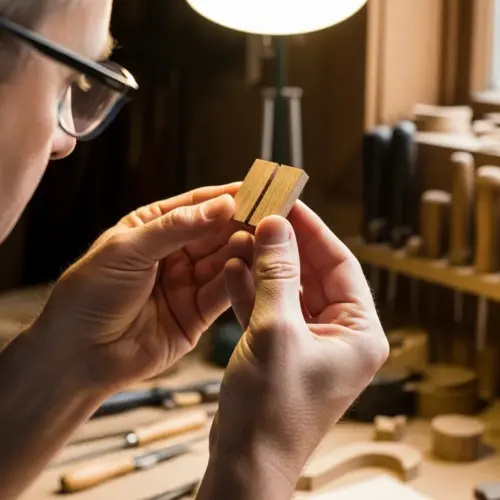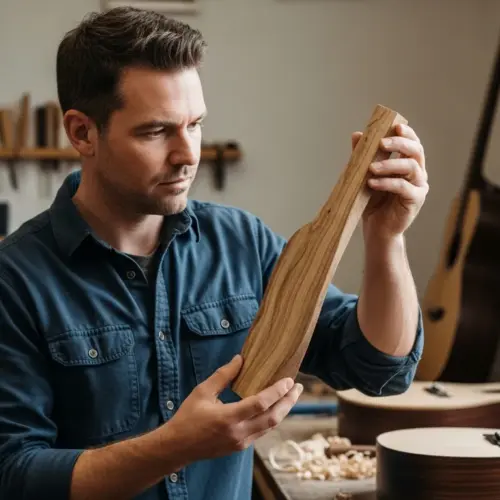

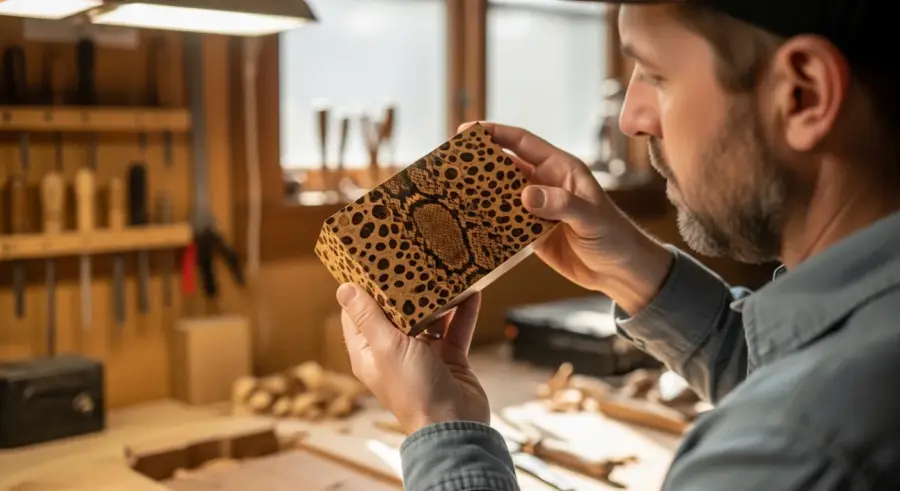
Snakewood is one of the most visually striking timbers a luthier can use. Its dramatic, snake-like patterns make it ideal for adding unique touches to acoustic guitars.
However, working with snakewood presents unique challenges due to its density and rarity. Let’s explore the allure of snakewood guitar accents, including sourcing, working properties, and finishing techniques.
We’ll also discuss sustainable sourcing and alternatives if you’re seeking a similar aesthetic. If you’re looking to elevate your instrument with exotic flair, read on to learn how to use snakewood guitar accents effectively.
Understanding Snakewood: Rarity and Appearance
Snakewood, scientifically known as Brosimum guianense, is a tropical hardwood renowned for its distinctive markings. These markings resemble the patterns found on snakeskin, hence the name.
The wood’s base color ranges from reddish-brown to a deep chocolate hue, contrasted by irregular dark spots or bands. This striking visual effect makes it a highly sought-after material for decorative purposes, including snakewood guitar accents.
One of the primary reasons for snakewood’s high value is its relative scarcity. It grows in limited regions of South America, primarily in Suriname, Guyana, and French Guiana.
The trees are not particularly large, and only the heartwood displays the characteristic snakewood pattern. This means that usable pieces are often small and command a premium price, impacting snakewood sourcing.
Adding to the rarity, the specific conditions required for the development of the snake-like patterns are not fully understood. This makes consistent harvesting and cultivation challenging, contributing to its exclusivity.
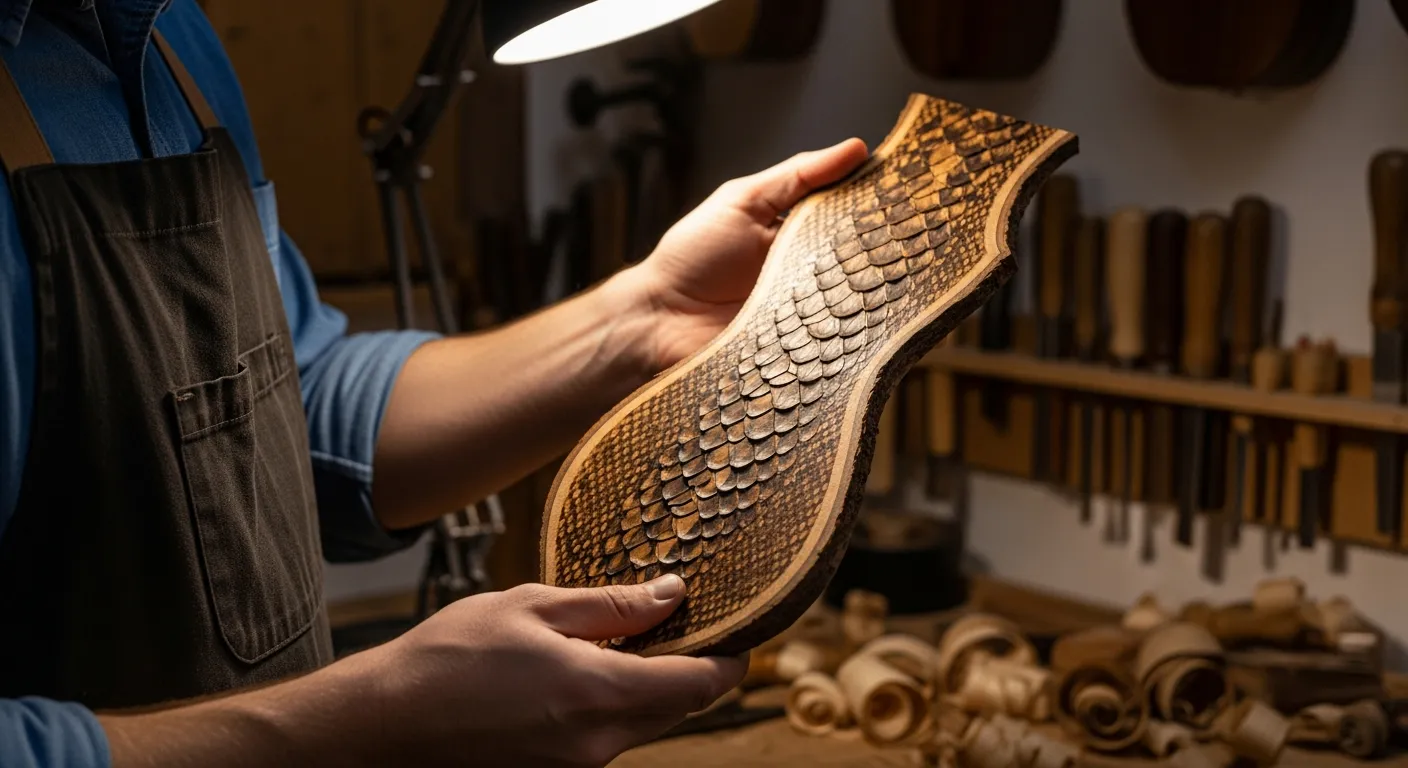
Due to its slow growth and specific habitat, snakewood is not as readily available as other exotic timbers. The combination of limited supply and high demand solidifies its position as a luxury material in the luthierie world.
The unique appearance of snakewood is also influenced by mineral content in the soil where it grows. These minerals can subtly alter the color and intensity of the snake-like markings.
Experienced woodworkers can often identify the region of origin based on the specific characteristics of the snakewood pattern. This adds another layer of intrigue to this already fascinating material.
While the snake-like pattern is the most recognizable feature, snakewood also exhibits a fine, even texture. This texture contributes to its smooth surface and makes it ideal for polishing and finishing.
The interplay between the bold patterns and the fine texture creates a visually dynamic effect. This dynamic visual is why snakewood is so appealing for high-end musical instruments.
It’s important to note that not all snakewood is created equal. The density and intensity of the snake-like patterns can vary significantly between different pieces.
Luthiers often carefully select snakewood pieces based on their specific aesthetic preferences and the desired effect for the instrument. The selection process is a crucial step in creating a visually stunning instrument.
Snakewood’s Unique Properties and Workability
Beyond its captivating appearance, snakewood possesses physical properties that influence its use in crafting instruments. Its density is a significant factor, contributing to its hardness and stability.
Snakewood has a high density, often exceeding 1.0 g/cm³, making it one of the densest woods available. This density translates to exceptional strength and resistance to wear, vital for applications like fingerboards or bridges.
However, the same density that provides strength also presents challenges during woodworking. Snakewood can be difficult to cut and shape, requiring sharp tools and careful techniques.
The interlocked grain can cause tear-out during planing or routing, so slow, controlled passes are essential. Seasoning snakewood properly is crucial to minimize warping or cracking.
Kiln-drying is often preferred, but it must be done slowly and carefully to avoid damaging the wood’s structure. Hand tools, such as chisels and planes, can be effective if kept razor-sharp.
The wood’s high oil content can also affect gluing and finishing. Surfaces should be thoroughly cleaned before applying adhesives or coatings to ensure proper bonding and adhesion.
Due to its hardness, snakewood can be challenging to bend, making it less suitable for applications requiring significant curvature. Steam bending can be employed, but it requires careful control and experience.
The high density also affects its acoustic properties, contributing to a bright and clear tone. This can be desirable for certain instruments or playing styles.
When working with snakewood, it’s essential to wear appropriate safety gear, including a dust mask and eye protection. The fine dust produced during sanding and cutting can be irritating to the respiratory system and eyes.
Pre-drilling pilot holes is recommended before driving screws or nails into snakewood. This helps prevent splitting and ensures a secure hold.
The wood’s natural oils can also dull cutting tools quickly. Frequent sharpening is necessary to maintain optimal cutting performance and prevent tear-out.
Despite the challenges, the unique beauty and durability of snakewood make it a worthwhile material for skilled luthiers. The extra effort required to work with it is rewarded with a stunning and long-lasting instrument.
Snakewood for Rosettes, Headplates, and Binding
Snakewood’s visual appeal makes it perfect for accent pieces on acoustic guitars. Rosettes, headplates, and binding are some of the most common applications.
Its striking patterns add a touch of luxury and uniqueness to any instrument. These snakewood guitar accents can transform an ordinary guitar into a work of art.
| Component | Description | Benefits of Snakewood |
|---|---|---|
| Rosettes | Decorative rings around the soundhole | Adds visual flair, complements other tonewoods |
| Headplates | Veneer on the headstock | Enhances the headstock’s appearance, provides a luxurious touch |
| Binding | Decorative edging around the body and neck | Offers a striking contrast, protects edges |
| Fingerboard | The playing surface of the neck | Adds unique visual appeal, provides a smooth playing surface |
For rosettes, thin rings of snakewood can be inlaid into the top around the soundhole. The contrast between the snakewood and the top wood creates an eye-catching focal point.
Snakewood rosettes can be combined with other materials, such as abalone or mother-of-pearl, for an even more elaborate design. This allows luthiers to create truly unique and personalized instruments.
When using snakewood for headplates, it’s important to consider the thickness and stability of the veneer. A thin, well-seasoned piece will minimize the risk of warping or cracking.
Snakewood binding can be used to create a striking visual border around the body and neck of the guitar. The dark, patterned wood provides a beautiful contrast against lighter-colored tonewoods.
When using snakewood for binding, it’s important to ensure that the edges are smooth and well-fitted. This will prevent discomfort for the player and ensure the long-term durability of the instrument.
While snakewood fingerboards are less common, they can offer a unique playing experience. The smooth, dense surface provides excellent note clarity and sustain.
However, the hardness of snakewood may not be suitable for all players. Some may find it less comfortable than softer woods like rosewood or ebony.
Detailed Snakewood Guitar Accent Examples
Headplates made from snakewood veneer add a touch of sophistication to the headstock. The distinctive patterns immediately draw the eye, setting the instrument apart.
Snakewood binding can be used to edge the body and neck, providing both protection and visual appeal. The dark, patterned wood offers a striking contrast against lighter-colored tonewoods.
While less common, snakewood can also be used for fingerboards, though its hardness may not be ideal for all players. Its smooth surface and unique appearance make it an intriguing option for those seeking something different.
When incorporating snakewood into these components, careful attention to detail is essential. Precise cuts, tight joints, and smooth finishes are necessary to showcase the wood’s beauty and ensure long-term durability.
Consider a headstock with a snakewood veneer featuring a bookmatched pattern. This creates a symmetrical and visually appealing design that highlights the wood’s natural beauty.
For binding, a thin strip of snakewood can be inlaid between layers of lighter-colored wood. This creates a subtle but elegant accent that adds depth and dimension to the instrument.
A snakewood rosette can be designed with intricate geometric patterns. These patterns can be laser-cut or hand-carved for a truly custom look.
Imagine a guitar with a snakewood fingerboard and matching snakewood bridge. This creates a cohesive and visually stunning design that showcases the wood’s unique character.
Snakewood can also be used for smaller accents, such as tuner buttons or strap buttons. These small details can add a touch of luxury and sophistication to the instrument.
Experiment with different combinations of snakewood and other tonewoods to create unique and visually striking designs. The possibilities are endless when it comes to incorporating snakewood into your instruments.
The Challenges of Sourcing Snakewood Sustainably
Given snakewood’s rarity, sustainable sourcing is a significant concern. Overharvesting can lead to deforestation and habitat loss, impacting the long-term availability of this precious resource.
Ethical sourcing practices are crucial to ensure that snakewood is harvested responsibly. Look for suppliers who can provide documentation of sustainable harvesting and forest management.
Certifications like the Forest Stewardship Council (FSC) can help identify responsibly sourced wood. However, FSC-certified snakewood is rare, so thorough due diligence is still necessary.
Consider purchasing snakewood from suppliers who work directly with local communities in South America. These partnerships can help ensure that harvesting practices benefit both the environment and the local economy.
Another approach is to explore reclaimed or salvaged snakewood. This wood may come from old furniture or other sources, reducing the demand for newly harvested material.
By making informed choices and supporting sustainable practices, luthiers can help preserve snakewood for future generations. This ensures that its beauty can continue to grace instruments for years to come.
Support organizations that are working to protect snakewood forests and promote sustainable harvesting practices. Your contributions can help ensure the long-term availability of this valuable resource.
Be wary of suppliers who offer snakewood at suspiciously low prices. This may be an indication that the wood was not harvested sustainably or legally.
Ask your suppliers about their harvesting practices and their commitment to sustainability. A reputable supplier will be transparent about their sourcing and willing to answer your questions.
Consider using smaller pieces of snakewood for accents rather than larger pieces for entire components. This can help reduce the overall demand for the wood and minimize its environmental impact.
Educate yourself and others about the importance of sustainable sourcing. By raising awareness, you can help promote responsible practices throughout the luthierie industry.
Explore alternative woods that offer a similar aesthetic to snakewood but are more readily available and sustainably harvested. This can help reduce the pressure on snakewood populations.
Finishing Techniques for Snakewood to Enhance Its Beauty
Proper finishing is essential to bring out the best in snakewood. The right techniques can enhance its natural colors and patterns, creating a stunning visual effect.
However, snakewood’s density and oil content can make finishing challenging. Careful preparation and the right products are crucial for achieving a flawless result.
Start by thoroughly sanding the wood to a smooth surface. Progress through increasingly finer grits of sandpaper, ending with 400-grit or higher.
Before applying any finish, clean the wood with a solvent to remove any oils or residue. This will improve the adhesion of the finish and prevent clouding or discoloration.
Oil-based finishes, such as tung oil or linseed oil, can be effective in enhancing snakewood’s natural colors. These finishes penetrate the wood, bringing out the depth and richness of the grain.
However, oil-based finishes may require multiple coats and can take a long time to cure. Alternatively, lacquer or varnish can provide a durable, glossy finish.
- Sanding thoroughly
- Cleaning with solvent
- Applying a sealer coat
- Using oil-based finishes
- Applying multiple thin coats
These finishes create a protective layer that resists scratches and moisture. Regardless of the finish you choose, apply thin, even coats and allow each coat to dry completely before applying the next.
Consider using a sanding sealer before applying the final finish. This helps to fill the pores of the wood and create a smoother surface for the finish to adhere to.
When applying lacquer or varnish, use a spray gun for a more even and consistent finish. This will minimize the risk of brush marks or streaks.
Buff the finish with a soft cloth or polishing compound to achieve a high-gloss shine. This will enhance the wood’s natural beauty and create a durable, protective layer.
Experiment with different finishing techniques to find what works best for you and your desired aesthetic. There are many different ways to enhance the beauty of snakewood.
Be sure to follow the manufacturer’s instructions for all finishing products. This will ensure that you achieve the best possible results and avoid any potential problems.
Always work in a well-ventilated area when applying finishes. This will help to protect your health and prevent the buildup of harmful fumes.
Snakewood Alternatives for Exotic Accents
If snakewood is unavailable or too costly, several alternatives offer a similar exotic look. These woods may not have the exact same patterns, but they can still add a unique touch to your instrument.
Consider these snakewood alternatives when planning your next project. These woods may offer a similar aesthetic while being easier to source or more affordable.
Zebrawood, also known as zebrano, features bold stripes that resemble zebra markings. It is a readily available African hardwood that offers a striking contrast similar to snakewood.
Lacewood, with its distinctive flecked pattern, can also provide an interesting visual texture. It is typically lighter in color than snakewood but can be stained to achieve a darker hue.
Figured maple, such as curly or quilted maple, offers a more subtle but equally captivating appearance. The wavy or three-dimensional patterns add depth and character to the wood.
Another option is to use dyed or stabilized wood. These processes can enhance the natural colors and patterns of less exotic woods, creating a custom look.
By exploring these alternatives, luthiers can achieve the desired aesthetic without relying solely on snakewood. This promotes sustainability and opens up new creative possibilities.
Katalox, also known as Mexican ebony, is a dense and dark wood that can be used as a substitute for ebony or snakewood. It offers a similar level of durability and a rich, dark color.
Bubinga is a reddish-brown African hardwood that is often used for guitar backs and sides. It has a beautiful grain pattern and can be stained to achieve a darker hue, making it a suitable alternative to snakewood.
Wenge is a dark brown African hardwood with prominent grain lines. It can be used for fingerboards, bridges, and other components, offering a unique and visually appealing alternative to snakewood.
Consider using composite materials, such as Richlite or Micarta, as alternatives to wood. These materials are durable, stable, and can be manufactured to mimic the appearance of wood.
Remember to consider the acoustic properties of any alternative wood you choose. The wood’s density, hardness, and grain pattern can all affect the sound of the instrument.
Snakewood Durability: What To Expect
Snakewood is known for its impressive durability, but understanding its limitations is crucial. While it’s a strong wood, it’s not impervious to damage.
Its high density makes it resistant to dents and scratches, but it can still be susceptible to cracking if not properly cared for. Consistent humidity levels are key to preventing such issues.
Snakewood’s resistance to wear and tear makes it a good choice for components that experience frequent contact. This includes fingerboards and bridges, but regular maintenance is still necessary.
Applying a quality finish can further enhance its durability, protecting it from moisture and UV damage. Regular cleaning and polishing will also help maintain its appearance and structural integrity.
Avoid exposing snakewood to extreme temperatures or humidity fluctuations. These conditions can cause the wood to expand and contract, leading to cracks or warping.
With proper care and maintenance, snakewood can last for generations. Its durability ensures that your instrument will maintain its beauty and functionality for years to come.
When using snakewood for fingerboards, be sure to keep the surface clean and free of debris. This will help prevent scratches and wear.
If you notice any cracks or damage to the snakewood, have it repaired by a qualified luthier as soon as possible. This will prevent the damage from worsening and ensure the long-term stability of the instrument.
Store your instrument in a case when not in use to protect it from dust, scratches, and environmental damage. A well-padded case will also help to absorb shocks and prevent damage during transport.
Consider using a humidifier in your home or studio to maintain consistent humidity levels. This is especially important in dry climates or during the winter months.
Regularly inspect your instrument for any signs of damage or wear. Early detection can help prevent minor problems from becoming major issues.
Conclusion
Snakewood offers a unique and captivating aesthetic for acoustic guitars. Its distinctive patterns make it a prized material for luthiers seeking to add a touch of luxury and exclusivity.
While working with snakewood presents challenges, the results are well worth the effort. By understanding its properties, sourcing it sustainably, and employing proper finishing techniques, you can create stunning snakewood guitar accents.
Consider the snakewood properties carefully to determine if it’s right for your project. With mindful sourcing and skilled craftsmanship, snakewood can truly elevate the beauty of any instrument.
Remember that sustainable sourcing is paramount when working with rare and exotic woods like snakewood. By making responsible choices, you can help protect this valuable resource for future generations.
Experiment with different applications of snakewood to discover its full potential. From rosettes to headplates to binding, there are many ways to incorporate this beautiful wood into your instruments.
Don’t be afraid to try new finishing techniques to enhance the wood’s natural beauty. With careful preparation and the right products, you can achieve a flawless and long-lasting finish.