
Finishing Purpleheart to Preserve Its Color
Finishing purpleheart requires special attention to preserve its vibrant color. The wood’s natural tendency to darken over time can be mitigated with the right techniques. Selecting the appropriate finish and application method is crucial for maintaining its aesthetic appeal.
Protecting the color is paramount to maintaining the guitar’s unique visual appeal. The finish acts as a barrier against environmental factors that can cause darkening.
One of the most important steps is to protect the wood from UV light. UV radiation accelerates the darkening process, causing the purple hue to fade over time. Applying a finish with UV inhibitors can significantly slow down this process.
UV inhibitors act as a sunscreen for the wood, shielding it from harmful radiation. This will help to preserve the vibrant purple color for years to come.
Clear finishes, such as lacquer or polyurethane, are often preferred to showcase the wood’s natural color. However, some finishes can impart a slight amber tint, which can alter the appearance of the purple hue. Testing the finish on a small area is recommended before applying it to the entire instrument.
Always test the finish on a scrap piece of purpleheart to ensure it doesn’t alter the color. This will prevent any unwanted surprises on the finished instrument.
The application method also plays a role in the final appearance. Spraying the finish provides a more even and consistent coating compared to brushing or wiping. This can help to enhance the wood’s natural luster and minimize any imperfections.
Spraying allows for a thin and even coat, which enhances the wood’s natural beauty. It also minimizes the risk of brush strokes or unevenness.
Purpleheart’s Strength and Stability for Instrument Building
Purpleheart is known for its exceptional strength and stability, making it a reliable choice for instrument building. Its high density and interlocked grain contribute to its resistance to warping and cracking. This is particularly important for the neck and body of an electric guitar.
These qualities ensure that the instrument will withstand the rigors of playing and transportation. It provides peace of mind knowing that your guitar is built to last.
The wood’s stability ensures that the instrument maintains its shape and intonation over time. This is crucial for consistent playability and performance. A stable neck, for example, will be less prone to bending or twisting, which can affect the guitar’s action and tuning.
A stable neck is essential for maintaining accurate intonation and comfortable playability. It ensures that the notes are in tune across the entire fretboard.
Purpleheart’s resistance to wear and tear also makes it a durable option for high-stress areas, such as the fretboard or bridge. Its hardness helps to prevent dents and scratches, ensuring that the instrument retains its aesthetic appeal for years to come. This is desirable in a purpleheart electric guitar body.
A durable fretboard will resist wear from the strings and your fingers. This will keep your guitar looking and playing its best for a long time.
However, it’s important to note that purpleheart can be susceptible to movement under extreme changes in humidity. Proper acclimatization and sealing of the wood are essential to minimize this risk. Storing the instrument in a controlled environment can also help to maintain its stability.
Acclimatizing the wood to your local climate before building is crucial. This will help to minimize any movement after the guitar is assembled.
Purpleheart vs. Other Tonewoods for Electric Guitars
When considering tonewoods for an electric guitar, it’s helpful to compare purpleheart to other popular options. Each wood has its own unique characteristics that contribute to the instrument’s overall sound and feel. Understanding these differences can help you make an informed decision.
Comparing different tonewoods will help you to understand the nuances of each. This will allow you to choose the wood that best suits your playing style and tonal preferences.
Mahogany, for example, is known for its warm and resonant tone. It offers a balanced sound with good sustain and a smooth midrange. Compared to purpleheart, mahogany is softer and easier to work with, but it may not offer the same level of clarity or articulation.
Mahogany’s warmth makes it ideal for blues and rock music. Its smooth midrange provides a comfortable and familiar sound.
- Mahogany: Warm, resonant, balanced
- Alder: Bright, clear, balanced
- Ash: Bright, articulate, strong attack
- Maple: Bright, crisp, focused
- Basswood: Neutral, lightweight, balanced
Each of these woods offers a different tonal flavor. Experimenting with different combinations can lead to unique and inspiring results.
Maple, on the other hand, is known for its bright and crisp tone. It provides a focused sound with excellent clarity and sustain. Compared to purpleheart, maple can be more prone to warping, especially in the neck. This is less desirable than a purpleheart electric guitar body.
Maple’s brightness makes it ideal for shred and metal music. Its clarity allows for fast and articulate playing.
Ultimately, the choice of tonewood depends on the player’s preferences and the desired sound. Purpleheart offers a unique combination of brightness, sustain, and durability that may appeal to players seeking a distinctive tone.
Consider your playing style and the type of music you play when choosing a tonewood. This will help you to select the wood that best complements your musical expression.
Considerations for a Purpleheart Electric Guitar Body Build
Before embarking on a purpleheart electric guitar body build, several factors should be taken into consideration. These considerations will help to ensure a successful and satisfying project. Planning and preparation are key to achieving the desired results.
Thorough planning will save you time, money, and frustration in the long run. It’s an investment that will pay off in the end.
First, assess your skill level and experience with woodworking. Purpleheart’s hardness and density can make it challenging to work with, especially for beginners. If you’re new to instrument building, consider starting with a softer wood before tackling purpleheart.
Starting with a softer wood will allow you to develop your skills and confidence before tackling purpleheart. It’s a gradual process that will lead to better results.
Next, consider the overall design and aesthetic of the instrument. Purpleheart’s distinctive color and grain pattern can be a focal point of the guitar’s appearance. Think about how the wood will complement the other components, such as the pickups, hardware, and finish.
The design should complement the wood’s natural beauty. Consider how the shape, finish, and hardware will enhance the overall aesthetic.
Also, factor in the cost of the materials and tools. Purpleheart is generally more expensive than common tonewoods like alder or poplar. You may also need to invest in specialized tools, such as carbide-tipped saw blades and high-speed steel drill bits.
Budgeting is essential for any project. Be sure to factor in the cost of materials, tools, and any unexpected expenses.
Examples of Purpleheart Electric Guitars
While not as common as guitars made from more traditional tonewoods, there are notable examples of purpleheart electric guitars. These instruments showcase the wood’s unique aesthetic and tonal properties. Examining these examples can provide inspiration and insight for your own build.
Studying existing examples can provide valuable insights into design and construction techniques. It’s a great way to learn from the experiences of others.
Several custom guitar builders have incorporated purpleheart into their designs. These builders often use purpleheart for the body, neck, or fretboard. The results are often visually stunning instruments with a distinctive sound.
Custom builders are often willing to experiment with unconventional materials. This can lead to innovative and inspiring designs.
Some larger manufacturers have also experimented with purpleheart. These guitars often feature a purpleheart top or a purpleheart neck. These instruments demonstrate the wood’s versatility and potential for mass production.
Even larger manufacturers are recognizing the potential of purpleheart. This is a testament to its unique qualities and growing popularity.
By researching these examples, you can gain a better understanding of how purpleheart can be used in electric guitar construction. You can also learn about the challenges and rewards of working with this exotic wood. It could be the inspiration for your own purpleheart electric guitar body.
Inspiration can come from many sources. Let these examples spark your creativity and guide you on your own journey.
Conclusion
Purpleheart offers a unique combination of visual appeal, tonal characteristics, and durability for electric guitar bodies. Its striking color and robust properties make it a compelling choice for players seeking a distinctive instrument. However, it is not without its challenges.
The unique blend of qualities makes purpleheart a standout choice. It’s a wood that demands attention and rewards those who dare to work with it.
Working with purpleheart requires careful attention to detail and the use of appropriate tools and techniques. The wood’s hardness and density can present difficulties, but the rewards are well worth the effort. It’s a worthy challenge to build a purpleheart electric guitar body.
The challenges are an opportunity to learn and grow as a builder. The satisfaction of overcoming these challenges is immense.
By understanding purpleheart’s unique attributes and addressing its challenges, you can create a stunning and sonically pleasing instrument. Its distinctive sound and appearance will set your guitar apart from the rest. It is sure to be a conversation starter.
Your guitar will be a reflection of your skill and creativity. It will be a unique instrument that you can be proud of for years to come.
If you’re looking for a tonewood that combines beauty, strength, and a unique tonal signature, purpleheart is definitely worth considering. Weigh your options and start your next build project today. It could be the perfect choice for your next electric guitar body.
Take the leap and explore the possibilities of purpleheart. You may be surprised at what you can create.
The quest for the perfect tonewood for an electric guitar body is a journey filled with choices. Each wood brings its own sonic flavor and aesthetic appeal to the instrument.
For guitar builders seeking a unique visual and tonal character, purpleheart emerges as a compelling option. Its vibrant hue and dense nature offer a departure from more traditional choices.
This exotic wood, known for its striking color and robust properties, can be a fantastic choice for crafting a distinctive purpleheart electric guitar body. The sheer visual impact of the wood alone makes it a desirable option for those wanting to stand out.
Let’s investigate the characteristics that make purpleheart a fascinating candidate for your next build, focusing on its properties and how they translate into an instrument’s sound and playability. We’ll dissect the nuances of its density, hardness, and grain structure.
We will also explore the challenges and rewards of working with this dense and vibrant timber. From selecting the right tools to mastering finishing techniques, we’ll cover the essential aspects of crafting with purpleheart.
By understanding purpleheart’s unique attributes, you can determine if it’s the right wood to bring your sonic vision to life. This knowledge will empower you to make an informed decision about your next build.
It could be the answer to your search for a unique purpleheart electric guitar body. The possibilities are endless when you combine skill and the right materials.
Purpleheart: Origin, Color, and Density
Purpleheart, scientifically known as Peltogyne, is a genus of about 25 species of flowering plants in the family Fabaceae. These trees are native to the tropical regions of Central and South America, where they can grow to impressive heights.
These majestic trees thrive in the humid rainforests, contributing to the biodiversity of the region. Their impressive size and vibrant color make them a striking sight.
The wood is prized for its remarkable color, which starts as a dull brown upon cutting but transforms into a deep, vibrant purple upon exposure to air. This color change is due to the oxidation of compounds within the wood, a process that can be accelerated by heat or UV light.
The transformation is a fascinating chemical reaction, a testament to the wood’s unique composition. Watching the color deepen is a rewarding part of working with purpleheart.
Beyond its visual appeal, purpleheart is known for its density and hardness. It boasts a Janka hardness rating of around 1,860 lbf, significantly higher than many commonly used tonewoods like mahogany or alder. This hardness contributes to its durability and resistance to wear.
This high hardness rating makes it exceptionally resistant to dents and scratches. It also contributes to its bright and articulate tonal characteristics.
The density of purpleheart also plays a crucial role in its tonal properties, which we will discuss in more detail later. Its tight grain and consistent texture make it a visually appealing choice for instrument builders.
The tight grain contributes to its stability and resistance to warping. This is an important factor in ensuring the longevity of your instrument.
It can be a beautiful choice for crafting a purpleheart electric guitar body. The resulting instrument will be both visually stunning and sonically impressive.
Imagine the stage presence a guitar with a vibrant purpleheart body would command. It’s a statement piece that reflects the player’s individuality.
Tonal Characteristics of Purpleheart in Electric Guitar Bodies
The tonal properties of purpleheart are largely influenced by its density and hardness. These characteristics contribute to a bright and articulate sound with a pronounced sustain. The wood’s stiffness helps to transmit vibrations efficiently.
This efficient vibration transfer results in a clear and focused tone. It allows each note to ring out with exceptional clarity.
Guitars with purpleheart bodies tend to have a clear and focused tone. They offer a strong fundamental note with well-defined harmonics. This makes it a good choice for players who want clarity and precision in their sound.
The clarity and precision make it ideal for complex chords and intricate lead lines. Each note is distinctly audible, even in dense musical arrangements.
Purpleheart’s density also contributes to its sustain. Notes ring out longer compared to instruments made from softer woods. This can be particularly beneficial for lead guitarists and soloists who want their notes to linger.
The extended sustain allows for expressive bends and vibrato techniques. It adds a dimension of richness and depth to your playing.
However, some players find purpleheart to be overly bright or lacking in warmth. The wood’s inherent stiffness can sometimes result in a less forgiving or less “organic” sound compared to traditional tonewoods. Careful consideration should be given to pickup selection and amplifier settings to balance the tonal characteristics of a purpleheart electric guitar body.
Experimenting with different pickup combinations is crucial to finding the right balance. Warmer pickups can help to tame the brightness and add some much-needed low-end.
Consider using warmer sounding pickups or adjusting your amplifier settings. This will help to compensate for the wood’s inherent brightness.
Working with Purpleheart: Addressing Hardness and Grain
Working with purpleheart presents unique challenges due to its hardness and density. These properties, while beneficial for tone and durability, require careful attention during the building process. Proper tools and techniques are essential to avoid frustration and ensure a successful outcome.
Patience and precision are key when working with this dense and unforgiving wood. Rushing the process can lead to mistakes and wasted materials.
One of the primary considerations is the selection of appropriate cutting and shaping tools. High-quality, sharp tools are a must when working with purpleheart. Dull tools can lead to tear-out, splintering, and increased risk of injury.
Investing in quality tools will not only make the job easier but also safer. Sharp tools require less force, reducing the risk of accidents.
| Tool | Purpose | Considerations |
|---|---|---|
| Carbide-tipped saw blades | Cutting planks and shaping bodies | Resistant to wear, provides clean cuts |
| High-speed steel drill bits | Drilling holes for hardware and electronics | Sharpness is crucial to prevent burning |
| Router with sharp bits | Shaping edges and creating cavities | Use multiple shallow passes to avoid tear-out |
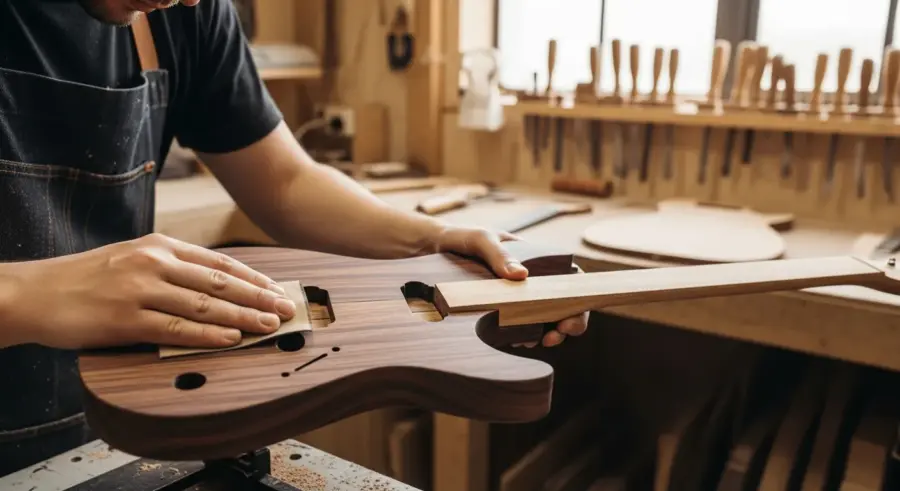
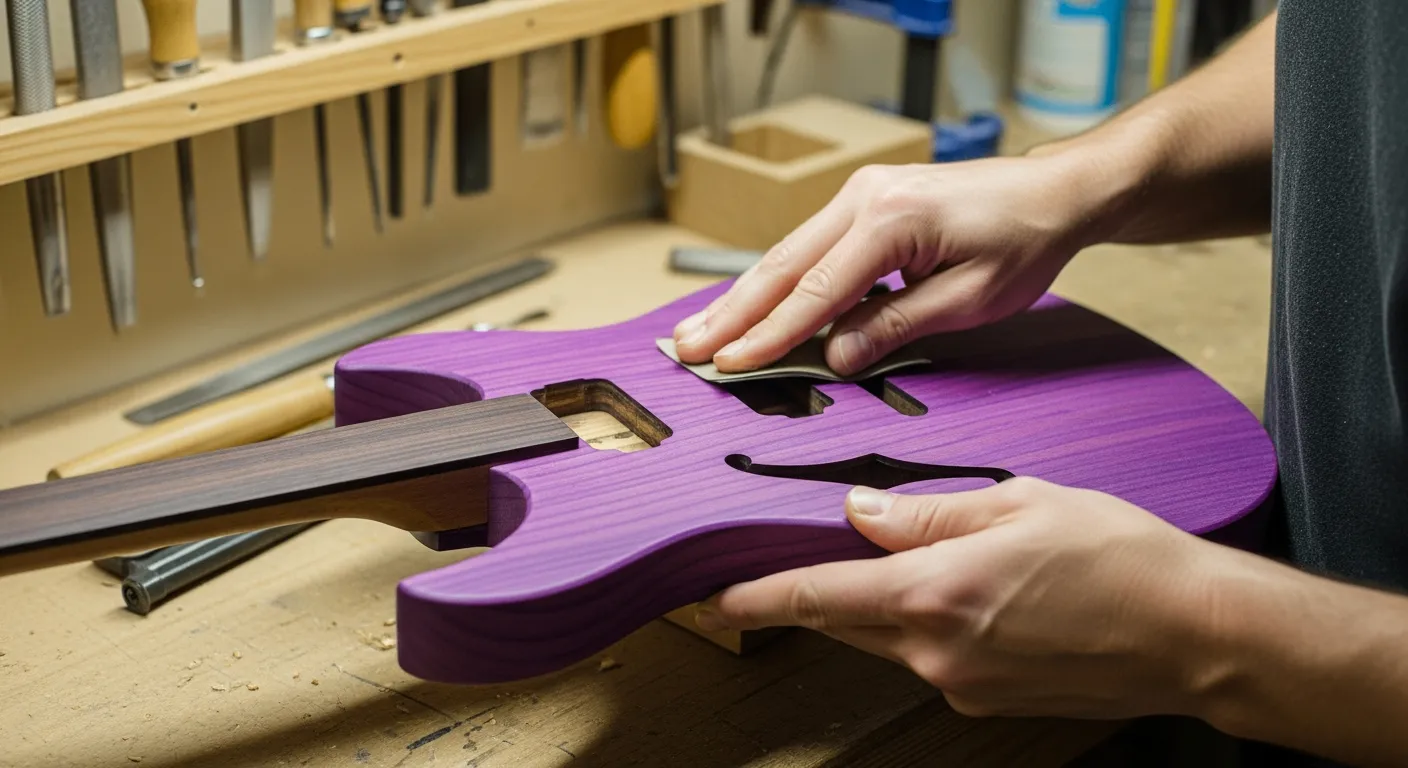
| Sandpaper with various grits | Smoothing surfaces and preparing for finishing | Start with coarse grits and gradually move to finer grits |
These tools are essential for achieving clean cuts, smooth surfaces, and precise shaping. They will help you overcome the challenges posed by purpleheart’s hardness.
When drilling, it is advisable to use slow speeds and apply consistent pressure. This helps to prevent the drill bit from overheating and burning the wood. It also reduces the risk of the bit wandering or breaking.
Using a drill press can help to maintain consistent pressure and prevent the bit from wandering. This will result in cleaner and more accurate holes.
Finishing Purpleheart to Preserve Its Color
Finishing purpleheart requires special attention to preserve its vibrant color. The wood’s natural tendency to darken over time can be mitigated with the right techniques. Selecting the appropriate finish and application method is crucial for maintaining its aesthetic appeal.
Protecting the color is paramount to maintaining the guitar’s unique visual appeal. The finish acts as a barrier against environmental factors that can cause darkening.
One of the most important steps is to protect the wood from UV light. UV radiation accelerates the darkening process, causing the purple hue to fade over time. Applying a finish with UV inhibitors can significantly slow down this process.
UV inhibitors act as a sunscreen for the wood, shielding it from harmful radiation. This will help to preserve the vibrant purple color for years to come.
Clear finishes, such as lacquer or polyurethane, are often preferred to showcase the wood’s natural color. However, some finishes can impart a slight amber tint, which can alter the appearance of the purple hue. Testing the finish on a small area is recommended before applying it to the entire instrument.
Always test the finish on a scrap piece of purpleheart to ensure it doesn’t alter the color. This will prevent any unwanted surprises on the finished instrument.
The application method also plays a role in the final appearance. Spraying the finish provides a more even and consistent coating compared to brushing or wiping. This can help to enhance the wood’s natural luster and minimize any imperfections.
Spraying allows for a thin and even coat, which enhances the wood’s natural beauty. It also minimizes the risk of brush strokes or unevenness.
Purpleheart’s Strength and Stability for Instrument Building
Purpleheart is known for its exceptional strength and stability, making it a reliable choice for instrument building. Its high density and interlocked grain contribute to its resistance to warping and cracking. This is particularly important for the neck and body of an electric guitar.
These qualities ensure that the instrument will withstand the rigors of playing and transportation. It provides peace of mind knowing that your guitar is built to last.
The wood’s stability ensures that the instrument maintains its shape and intonation over time. This is crucial for consistent playability and performance. A stable neck, for example, will be less prone to bending or twisting, which can affect the guitar’s action and tuning.
A stable neck is essential for maintaining accurate intonation and comfortable playability. It ensures that the notes are in tune across the entire fretboard.
Purpleheart’s resistance to wear and tear also makes it a durable option for high-stress areas, such as the fretboard or bridge. Its hardness helps to prevent dents and scratches, ensuring that the instrument retains its aesthetic appeal for years to come. This is desirable in a purpleheart electric guitar body.
A durable fretboard will resist wear from the strings and your fingers. This will keep your guitar looking and playing its best for a long time.
However, it’s important to note that purpleheart can be susceptible to movement under extreme changes in humidity. Proper acclimatization and sealing of the wood are essential to minimize this risk. Storing the instrument in a controlled environment can also help to maintain its stability.
Acclimatizing the wood to your local climate before building is crucial. This will help to minimize any movement after the guitar is assembled.
Purpleheart vs. Other Tonewoods for Electric Guitars
When considering tonewoods for an electric guitar, it’s helpful to compare purpleheart to other popular options. Each wood has its own unique characteristics that contribute to the instrument’s overall sound and feel. Understanding these differences can help you make an informed decision.
Comparing different tonewoods will help you to understand the nuances of each. This will allow you to choose the wood that best suits your playing style and tonal preferences.
Mahogany, for example, is known for its warm and resonant tone. It offers a balanced sound with good sustain and a smooth midrange. Compared to purpleheart, mahogany is softer and easier to work with, but it may not offer the same level of clarity or articulation.
Mahogany’s warmth makes it ideal for blues and rock music. Its smooth midrange provides a comfortable and familiar sound.
- Mahogany: Warm, resonant, balanced
- Alder: Bright, clear, balanced
- Ash: Bright, articulate, strong attack
- Maple: Bright, crisp, focused
- Basswood: Neutral, lightweight, balanced
Each of these woods offers a different tonal flavor. Experimenting with different combinations can lead to unique and inspiring results.
Maple, on the other hand, is known for its bright and crisp tone. It provides a focused sound with excellent clarity and sustain. Compared to purpleheart, maple can be more prone to warping, especially in the neck. This is less desirable than a purpleheart electric guitar body.
Maple’s brightness makes it ideal for shred and metal music. Its clarity allows for fast and articulate playing.
Ultimately, the choice of tonewood depends on the player’s preferences and the desired sound. Purpleheart offers a unique combination of brightness, sustain, and durability that may appeal to players seeking a distinctive tone.
Consider your playing style and the type of music you play when choosing a tonewood. This will help you to select the wood that best complements your musical expression.
Considerations for a Purpleheart Electric Guitar Body Build
Before embarking on a purpleheart electric guitar body build, several factors should be taken into consideration. These considerations will help to ensure a successful and satisfying project. Planning and preparation are key to achieving the desired results.
Thorough planning will save you time, money, and frustration in the long run. It’s an investment that will pay off in the end.
First, assess your skill level and experience with woodworking. Purpleheart’s hardness and density can make it challenging to work with, especially for beginners. If you’re new to instrument building, consider starting with a softer wood before tackling purpleheart.
Starting with a softer wood will allow you to develop your skills and confidence before tackling purpleheart. It’s a gradual process that will lead to better results.
Next, consider the overall design and aesthetic of the instrument. Purpleheart’s distinctive color and grain pattern can be a focal point of the guitar’s appearance. Think about how the wood will complement the other components, such as the pickups, hardware, and finish.
The design should complement the wood’s natural beauty. Consider how the shape, finish, and hardware will enhance the overall aesthetic.
Also, factor in the cost of the materials and tools. Purpleheart is generally more expensive than common tonewoods like alder or poplar. You may also need to invest in specialized tools, such as carbide-tipped saw blades and high-speed steel drill bits.
Budgeting is essential for any project. Be sure to factor in the cost of materials, tools, and any unexpected expenses.
Examples of Purpleheart Electric Guitars
While not as common as guitars made from more traditional tonewoods, there are notable examples of purpleheart electric guitars. These instruments showcase the wood’s unique aesthetic and tonal properties. Examining these examples can provide inspiration and insight for your own build.
Studying existing examples can provide valuable insights into design and construction techniques. It’s a great way to learn from the experiences of others.
Several custom guitar builders have incorporated purpleheart into their designs. These builders often use purpleheart for the body, neck, or fretboard. The results are often visually stunning instruments with a distinctive sound.
Custom builders are often willing to experiment with unconventional materials. This can lead to innovative and inspiring designs.
Some larger manufacturers have also experimented with purpleheart. These guitars often feature a purpleheart top or a purpleheart neck. These instruments demonstrate the wood’s versatility and potential for mass production.
Even larger manufacturers are recognizing the potential of purpleheart. This is a testament to its unique qualities and growing popularity.
By researching these examples, you can gain a better understanding of how purpleheart can be used in electric guitar construction. You can also learn about the challenges and rewards of working with this exotic wood. It could be the inspiration for your own purpleheart electric guitar body.
Inspiration can come from many sources. Let these examples spark your creativity and guide you on your own journey.
Conclusion
Purpleheart offers a unique combination of visual appeal, tonal characteristics, and durability for electric guitar bodies. Its striking color and robust properties make it a compelling choice for players seeking a distinctive instrument. However, it is not without its challenges.
The unique blend of qualities makes purpleheart a standout choice. It’s a wood that demands attention and rewards those who dare to work with it.
Working with purpleheart requires careful attention to detail and the use of appropriate tools and techniques. The wood’s hardness and density can present difficulties, but the rewards are well worth the effort. It’s a worthy challenge to build a purpleheart electric guitar body.
The challenges are an opportunity to learn and grow as a builder. The satisfaction of overcoming these challenges is immense.
By understanding purpleheart’s unique attributes and addressing its challenges, you can create a stunning and sonically pleasing instrument. Its distinctive sound and appearance will set your guitar apart from the rest. It is sure to be a conversation starter.
Your guitar will be a reflection of your skill and creativity. It will be a unique instrument that you can be proud of for years to come.
If you’re looking for a tonewood that combines beauty, strength, and a unique tonal signature, purpleheart is definitely worth considering. Weigh your options and start your next build project today. It could be the perfect choice for your next electric guitar body.
Take the leap and explore the possibilities of purpleheart. You may be surprised at what you can create.