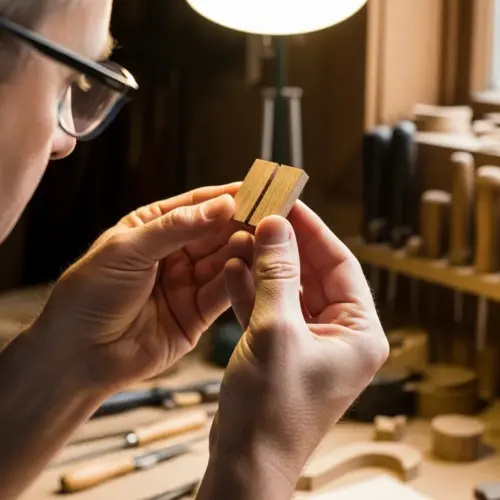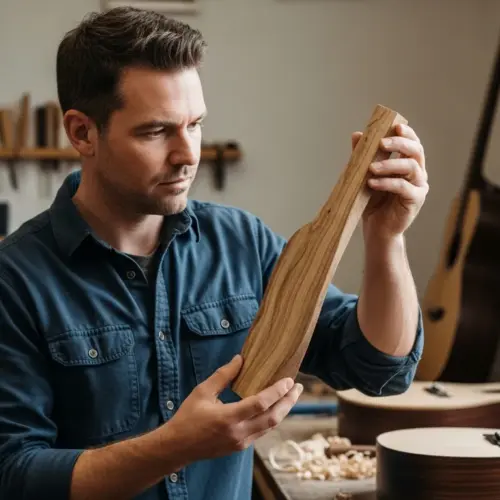

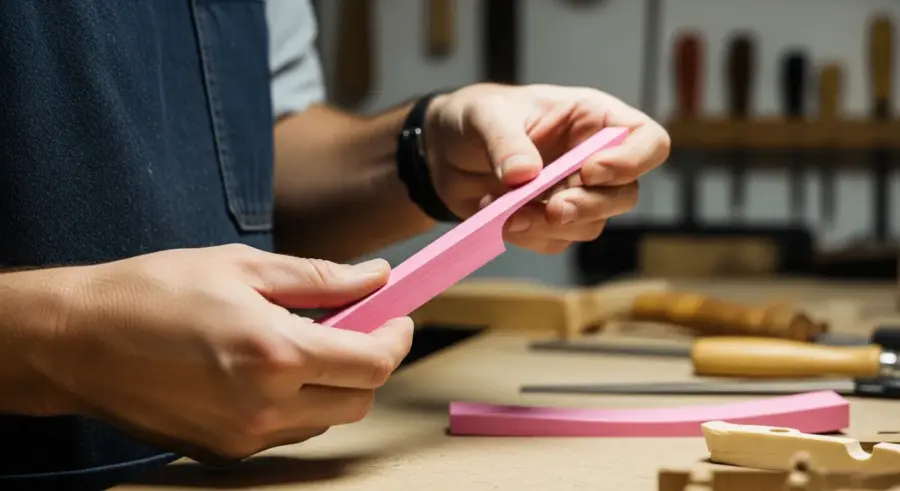
Pink ivory, also known as red ivory, is a striking wood prized for its vibrant color and unique properties. It is not typically used for the entire body of a guitar due to its density and cost, but it excels in smaller applications. This makes pink ivory guitar trim a sought-after feature for discerning luthiers and players.
Its eye-catching hue adds a touch of luxury and distinction to any instrument. Let’s explore the allure of pink ivory and how it can elevate the aesthetics of your guitar.
From its rarity and color variations to its suitability for binding, rosettes, and headstock veneers, we’ll cover everything you need to know. We will also discuss ethical sourcing and finishing techniques to maximize its beauty.
Understanding Pink Ivory: Rarity and Color
Pink ivory’s desirability stems from its scarcity and captivating color. It is primarily sourced from southern Africa, specifically Zimbabwe, Mozambique, and South Africa. The pink ivory rarity is due to slow growth and limited distribution.
The tree, Berchemia zeyheri, is not abundant, and only a small percentage of the wood harvested exhibits the intense pink color that makes it so valuable. Because of this, finding high-quality pink ivory can be a challenge, contributing to its premium pink ivory price.
The color of pink ivory can vary from a pale pink to a deep, almost crimson shade. The intensity of the color depends on several factors, including the tree’s age, the specific growing conditions, and the part of the tree from which the wood is harvested. Heartwood, found closer to the center of the tree, typically displays the most vibrant and consistent color.
Sapwood, the outer layer of the tree, tends to be lighter in color, often with streaks of white or yellow. This variation can be used creatively in lutherie, providing subtle contrasts and unique visual effects. Exposure to UV light can affect pink ivory, causing it to darken or fade over time.
The color of pink ivory can also be influenced by the soil composition where the tree grows. Trees grown in mineral-rich soils tend to produce wood with more intense coloration. This makes careful selection of pink ivory crucial for achieving the desired aesthetic in guitar making.
Furthermore, the drying process can impact the final color of the wood. Slow, controlled drying methods help to preserve the vibrant pink hue. Kiln drying, if not done carefully, can sometimes lead to discoloration or fading.
The rarity of deeply colored pink ivory also contributes to its high value. Luthiers often seek out pieces with consistent and intense color for high-end instruments. These pieces are often reserved for special projects or custom builds.
Understanding the factors that influence pink ivory’s color and rarity is essential for appreciating its value and using it effectively in guitar making. It allows luthiers to make informed choices about sourcing, processing, and finishing the wood to achieve the desired aesthetic results.
Pink Ivory’s Properties and Suitability for Small Components
Beyond its striking color, pink ivory possesses several physical properties that make it well-suited for use in lutherie, particularly for smaller components. It is a very dense and hard wood, which contributes to its durability and resistance to wear. This hardness makes it ideal for applications where the wood will be subject to friction or impact.
Pink ivory properties also include fine and even texture, which allows it to be polished to a high sheen. The close grain structure also makes it less prone to splintering or cracking, ensuring that it maintains its integrity over time. However, its density can also make it more challenging to work with compared to softer woods.
Due to its density, pink ivory requires sharp tools and careful techniques to avoid tear-out or chipping during cutting and shaping. Pre-drilling pilot holes is essential when using screws or nails to prevent splitting. The wood’s stability also makes it less susceptible to warping or movement due to changes in humidity or temperature.
This stability is particularly important for components like binding and purfling, which need to maintain a consistent shape and fit to ensure the instrument’s structural integrity. While pink ivory is not typically used for large components like guitar tops or backs due to its cost and weight, its properties make it an excellent choice for smaller decorative elements.
The high density of pink ivory also contributes to its tonal properties. While it doesn’t significantly impact the overall tone of the guitar when used in small components, it can add a subtle brightness or clarity. This is particularly noticeable in applications like bridge pins, where the material can influence the transfer of vibrations from the strings to the soundboard.
Furthermore, pink ivory’s resistance to wear makes it an excellent choice for components that are subject to frequent contact, such as tuner buttons. The wood’s hardness ensures that it will not easily scratch or dent, maintaining its aesthetic appeal over time. This durability is a key factor in its selection for high-end instruments.
However, luthiers must be mindful of pink ivory’s density when working with it. It can be more challenging to bend than softer woods, requiring careful steaming or heating techniques. Proper preparation and technique are essential to avoid cracking or splitting the wood during the bending process.
In summary, pink ivory’s unique combination of color, density, stability, and resistance to wear makes it an ideal choice for enhancing the aesthetic and functional qualities of guitars. Its properties make it particularly well-suited for smaller components where its beauty and durability can be fully appreciated.
Applications of Pink Ivory in Guitar Making
Pink ivory’s exceptional color and workability make it a favored choice for various decorative elements on guitars. Luthiers often use it to create eye-catching binding, purfling, and rosettes that enhance the instrument’s visual appeal. The vibrant pink hue provides a striking contrast against darker woods like ebony or rosewood.
Pink ivory guitar trim can also be used for headstock veneers, adding a touch of luxury to the guitar’s face. It can be used for small parts like tuner buttons, bridge pins, and heel caps. These small accents can significantly elevate the instrument’s overall aesthetic.
| Component | Description | Aesthetic Impact |
|---|---|---|
| Binding | Strip of pink ivory around the guitar’s edges | Adds a vibrant, contrasting border |
| Rosette | Decorative inlay around the soundhole | Enhances the visual appeal of the soundhole |
| Headstock Veneer | Thin layer of pink ivory on the headstock | Provides a luxurious and unique look |
| Tuner Buttons | Small pink ivory knobs on the tuning machines | Adds subtle elegance and color |
| Bridge Pins | Pink ivory pins that secure the strings to the bridge | Enhances the bridge’s aesthetic |
| Heel Cap | Cap at the base of the guitar’s neck heel | Adds a refined touch to the neck |
Beyond these common applications, pink ivory can also be used for fretboard inlays. Small dots or custom shapes of pink ivory can be inlaid into the fretboard to add a touch of color and visual interest. This can be particularly effective on fretboards made from darker woods like ebony or rosewood.
Another creative application is using pink ivory for custom-made pickguards. A pickguard made from pink ivory can be a striking addition to an acoustic guitar, providing both protection and aesthetic appeal. The vibrant color of the pickguard can complement the guitar’s top and other decorative elements.
Luthiers also use pink ivory to create custom knobs and switches for electric guitars. These small details can add a touch of elegance and individuality to the instrument. The smooth texture and vibrant color of pink ivory make it a pleasure to touch and use.
In addition to its aesthetic applications, pink ivory can also be used to enhance the structural integrity of certain guitar components. For example, small reinforcement blocks made from pink ivory can be used to strengthen the neck joint or the bridge plate. The wood’s high density and stability make it an effective material for these applications.
Using Pink Ivory for Binding, Rosettes, and Headstock Veneers
Binding is one of the most common applications for pink ivory in guitar making. A thin strip of pink ivory is carefully glued around the edges of the guitar’s top, back, and sides, creating a visually striking border. The bright pink color contrasts beautifully with the surrounding woods, adding depth and dimension to the instrument.
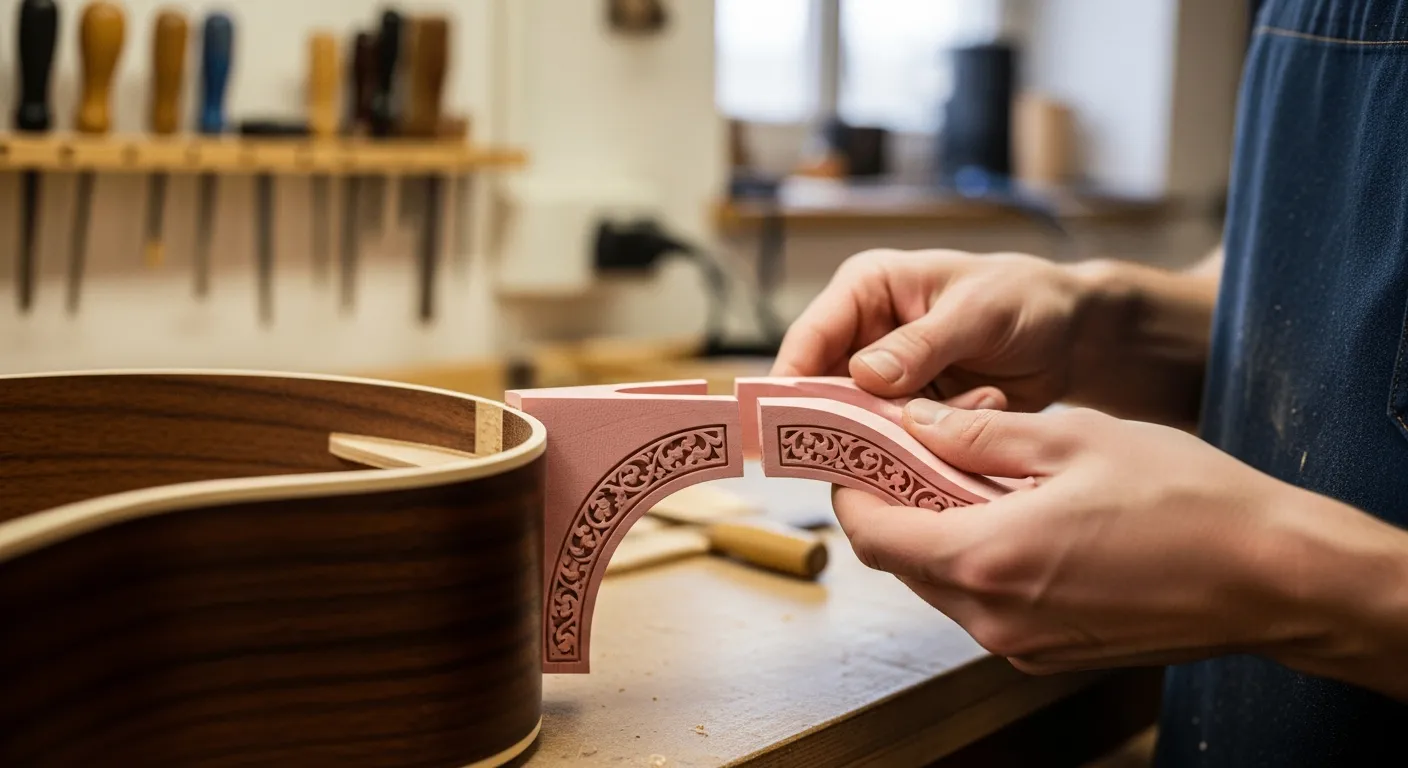
When using pink ivory for binding, luthiers often combine it with other decorative materials like black or white purfling to create more elaborate designs. Rosettes, the decorative inlays around the soundhole, are another area where pink ivory shines. Intricate patterns can be created by combining small pieces of pink ivory with other woods, shell, or synthetic materials.
The rosette serves as a focal point on the guitar’s top, drawing the eye and adding a touch of artistry. Headstock veneers made from pink ivory offer a unique and luxurious look. A thin sheet of pink ivory is carefully applied to the headstock’s face, providing a smooth and visually appealing surface. The pink ivory can be inlaid with logos, designs, or other decorative elements to further customize the guitar’s appearance.
When working with pink ivory for these applications, precision and attention to detail are crucial. The wood must be carefully cut, shaped, and sanded to ensure a perfect fit and seamless integration with the surrounding materials. A well-executed pink ivory binding, rosette, or headstock veneer can significantly enhance the guitar’s overall aesthetic and value.
For binding, the pink ivory strip is typically bent to conform to the guitar’s curves using heat. This process requires careful control to prevent cracking or splitting the wood. Luthiers often use specialized bending irons or forms to achieve the desired shape.
Creating rosettes with pink ivory involves intricate cutting and shaping of small pieces. These pieces are then carefully arranged and glued together to form a decorative pattern. The rosette can be further enhanced with other materials like abalone or mother-of-pearl.
Applying a pink ivory headstock veneer requires precise alignment and gluing techniques. The veneer must be perfectly flat and free of imperfections to ensure a smooth and visually appealing surface. The edges of the veneer are often trimmed flush with the headstock using a router or hand tools.
Regardless of the application, finishing pink ivory requires careful sanding and polishing to bring out its natural luster. A high-gloss finish can enhance the wood’s vibrant color and showcase its fine grain. Proper finishing techniques are essential to protect the wood and ensure its longevity.
The Ethical Considerations of Using Pink Ivory
As with any exotic wood, it is essential to consider the ethical implications of using pink ivory in lutherie. Sustainable sourcing is paramount to ensure that the wood is harvested responsibly and does not contribute to deforestation or habitat loss. Responsible suppliers should be able to provide documentation verifying the wood’s origin and confirming that it was harvested legally and sustainably.
Checking for certifications like those from the Forest Stewardship Council (FSC) can help ensure that the wood meets certain environmental and social standards. Supporting local communities is another important aspect of ethical sourcing. Purchasing pink ivory from suppliers who work directly with local communities in southern Africa can help support their livelihoods and promote sustainable forest management practices.
By ensuring fair wages and providing economic opportunities, these suppliers contribute to the long-term well-being of the communities that depend on the forests. Avoiding illegally harvested wood is crucial to prevent further damage to already threatened ecosystems. Illegal logging often involves unsustainable practices, such as clear-cutting and the destruction of valuable habitats.
Purchasing pink ivory from reputable suppliers who adhere to strict environmental and social standards helps to combat illegal logging and protect vulnerable forests. Considering alternatives is also a viable option for luthiers who are concerned about the ethical implications of using pink ivory. There are many beautiful and sustainable woods available that can provide similar aesthetic qualities.
Transparency in the supply chain is crucial for ensuring ethical sourcing. Luthiers should ask suppliers about their sourcing practices and request documentation to verify the wood’s origin. This information can help luthiers make informed decisions about their wood purchases.
Supporting organizations that promote sustainable forestry practices is another way to contribute to ethical sourcing. These organizations work to protect forests and promote responsible forest management. By supporting these organizations, luthiers can help ensure the long-term sustainability of the world’s forests.
Educating consumers about the importance of ethical sourcing is also essential. Luthiers can play a role in educating their customers about the ethical considerations of using exotic woods. By raising awareness, luthiers can help promote responsible consumption and support sustainable practices.
Ultimately, the ethical considerations of using pink ivory require a commitment to responsible sourcing, transparency, and support for sustainable practices. By making informed choices and supporting ethical suppliers, luthiers can help ensure that their craft does not contribute to deforestation or habitat loss.
Finishing Techniques to Enhance Pink Ivory’s Luster
Proper finishing techniques are essential to bring out the natural beauty and luster of pink ivory. The wood’s fine texture and close grain make it well-suited for a variety of finishes, from traditional lacquers to modern water-based coatings. The choice of finish will depend on the desired aesthetic and the specific properties of the wood.
Sanding is a crucial first step in the finishing process. Pink ivory should be sanded progressively with increasingly finer grits of sandpaper, starting with around 180-grit and working up to 400-grit or higher. This ensures a smooth, even surface that will accept the finish evenly. Applying a sealer helps to prevent the finish from soaking into the wood too quickly.
A sealer also helps to create a more uniform surface, improving the finish’s clarity and gloss. Several coats of finish are typically required to achieve the desired level of protection and luster. Each coat should be applied thinly and evenly, allowing it to dry completely before applying the next coat. Wet-sanding between coats can help to remove any imperfections and create an even smoother surface.
Polishing is the final step in the finishing process. A polishing compound is used to remove any swirl marks or imperfections from the finish, revealing a deep, lustrous shine. The pink ivory should be polished carefully with a soft cloth or polishing pad to avoid scratching or damaging the finish. A well-executed finish can significantly enhance the wood’s natural beauty and protect it from wear and tear.
- Start with proper sanding
- Apply a quality sealer
- Use thin, even coats of finish
- Wet-sand between coats
- Polish to a high sheen
The choice of finish can also affect the final color of the pink ivory. Some finishes can enhance the wood’s natural pink hue, while others can darken or alter it. It is important to test the finish on a small sample of the wood before applying it to the entire piece.
For a natural look, a clear finish is often preferred. This allows the wood’s natural color and grain to shine through. However, a tinted finish can be used to enhance the pink hue or add a subtle color variation.
The application of the finish is also crucial. Spraying the finish can provide a more even and consistent coat than brushing. However, brushing can be used to create a textured or distressed look.
Ultimately, the finishing techniques used on pink ivory should be tailored to the desired aesthetic and the specific properties of the wood. Proper preparation, careful application, and attention to detail are essential to achieving a beautiful and durable finish.
Pink Ivory Alternatives for Luxurious Accents
While pink ivory is prized for its unique color and properties, there are several alternative woods that can provide similar aesthetic qualities. These alternatives may be more readily available, more sustainable, or more affordable, making them attractive options for luthiers seeking to achieve a similar look. Padauk is a reddish-orange wood that originates from Africa and Asia.
It is known for its vibrant color, which can range from a bright orange to a deep reddish-brown. Padauk is a relatively hard and stable wood, making it suitable for use in binding, rosettes, and other decorative elements. However, it is important to note that padauk can darken over time with exposure to UV light.
Redheart is another option, sourced from Central and South America. This wood has a striking reddish-pink color that can be similar to pink ivory. Redheart is moderately hard and dense, making it suitable for use in a variety of lutherie applications. Like padauk, redheart can also darken over time.
Amboyna burl, derived from Southeast Asia, is a highly figured wood with a reddish-brown color and swirling grain patterns. While not as uniformly pink as pink ivory, amboyna burl can provide a luxurious and visually interesting alternative, particularly for headstock veneers or decorative inlays. Dyed or stained woods can also be used to achieve a pink hue.
Various dyes and stains are available that can impart a pink color to lighter-colored woods like maple or birch. This allows luthiers to create custom colors and achieve the desired aesthetic without relying on rare or exotic woods. When using dyed or stained woods, it is important to choose high-quality products that are colorfast and will not fade or bleed over time.
Another alternative is using synthetic materials like acrylic or resin. These materials can be easily colored to match the look of pink ivory. They are also durable and resistant to wear, making them suitable for use in binding, rosettes, and other decorative elements.
Verawood, also known as Argentine lignum vitae, is a dense and hard wood with a greenish-brown color that can be polished to a high sheen. While not pink, it offers a unique and luxurious look that can be a great alternative for certain applications.
Ultimately, the choice of alternative wood or material will depend on the desired aesthetic, the specific application, and the luthier’s personal preferences. By exploring these alternatives, luthiers can create beautiful and sustainable instruments without relying on rare or exotic woods.
Conclusion
Pink ivory is a captivating wood that can add a touch of luxury and distinction to any guitar. Its vibrant color, unique properties, and suitability for small components make it a favorite among luthiers and players alike. By understanding its rarity, ethical considerations, and proper finishing techniques, you can make informed decisions about using pink ivory in your own projects.
Whether you choose to use it for binding, rosettes, headstock veneers, or other decorative elements, pink ivory can elevate the aesthetics of your instrument and create a truly unique and eye-catching piece. Remember to source it responsibly and consider alternatives if ethical concerns arise.
The allure of pink ivory lies not only in its visual appeal but also in its connection to nature and the artistry of lutherie. When used responsibly and with skill, it can enhance the beauty and value of a guitar for generations to come.
As you explore the possibilities of pink ivory in your own guitar-making endeavors, remember to prioritize ethical sourcing, sustainable practices, and a deep appreciation for the wood’s unique qualities. By doing so, you can contribute to the preservation of this beautiful resource and create instruments that are both aesthetically pleasing and ethically sound.