
Bloodwood is a striking tonewood that offers a unique aesthetic for luthiers. Its deep red hue makes it a popular choice for adding eye-catching accents to guitars and other stringed instruments. If you’re looking to add a touch of bold color to your next build, bloodwood might be the perfect option.
This article will explore the properties, workability, and finishing techniques associated with bloodwood. We will also cover how to use it effectively for binding, purfling, and rosettes, as well as suggest some alternatives if you’re seeking a similar look.
Whether you’re an experienced luthier or just starting out, understanding bloodwood’s characteristics is key to achieving beautiful and durable results. Let’s examine how bloodwood can bring a vibrant touch to your guitar projects and how to best work with this vibrant timber.
Understanding Bloodwood: Color and Origin
Bloodwood, scientifically known as Brosimum rubescens, is a hardwood species native to South America. It’s most commonly found in Brazil, Guyana, and Suriname, where it thrives in tropical rainforest environments.
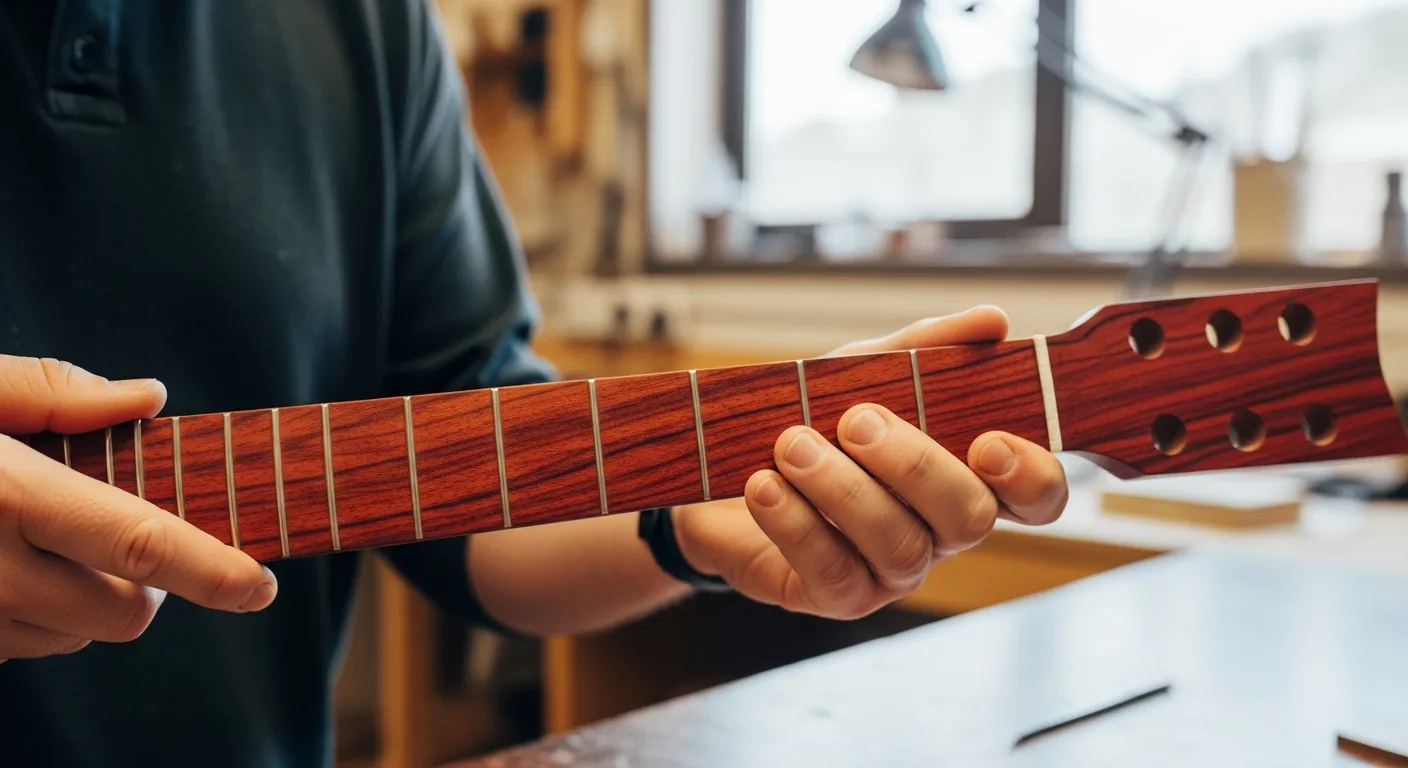
The name “bloodwood” comes from its most distinctive feature: its rich, red color. This vibrant hue can range from a deep, almost burgundy red to a brighter, more scarlet shade, depending on the specific tree and its growing conditions.
The color is consistent throughout the wood, not just on the surface. This means that even after cutting, sanding, and shaping, the red color remains strong and vibrant, making it ideal for decorative applications.
Bloodwood’s striking color is due to naturally occurring compounds within the wood. These compounds are stable and resistant to fading, ensuring that the wood retains its color for many years, even with exposure to light.
The trees themselves can grow to impressive heights, often reaching over 100 feet tall. Their straight, cylindrical trunks make them a valuable source of timber.
Harvesting bloodwood is typically done sustainably, with careful consideration given to the long-term health of the rainforest ecosystem. Responsible forestry practices help ensure that this beautiful wood remains available for future generations of luthiers and craftspeople.
The unique growing conditions in the South American rainforests contribute to bloodwood’s distinctive color and density. The combination of high humidity, abundant rainfall, and rich soil creates an environment that is ideal for the development of this remarkable timber.
Beyond its use in musical instruments, bloodwood is also used in furniture making, cabinetry, and other woodworking projects. Its beauty and durability make it a versatile material for a wide range of applications.
Bloodwood’s Properties and Suitability for Binding and Accents
Bloodwood is prized not only for its color, but also for its physical properties. It is a dense and hard wood, making it durable and resistant to wear and tear.
With a Janka hardness rating of around 2900 lbf (12900 N), bloodwood is significantly harder than many other commonly used tonewoods. For comparison, mahogany has a Janka rating of around 800 lbf, making bloodwood more than three times as hard.
This hardness makes it an excellent choice for applications where durability is important, such as binding, purfling, and headplate overlays. It can withstand the rigors of playing and handling, ensuring that these decorative elements remain intact for a long time.
Bloodwood’s density also contributes to its tonal properties. While it’s not typically used for the main soundboard or back of a guitar, its density can add brightness and clarity to the overall sound when used for accents and binding.
The high density of bloodwood also makes it resistant to dents and scratches. This is particularly important for areas of the guitar that are prone to contact with picks, fingers, or other objects.
In addition to its hardness and density, bloodwood is also relatively stable, meaning that it is less likely to warp or crack due to changes in humidity or temperature. This is an important consideration for any wood used in musical instrument construction.
Bloodwood’s straight grain also contributes to its strength and stability. The consistent grain pattern makes it easier to work with and reduces the risk of tearout during shaping and sanding.
Because of its inherent qualities, bloodwood adds a touch of sophistication and resilience to any instrument. Luthiers often choose it for its ability to enhance both the aesthetic and the structural integrity of their creations.
Finishing Techniques to Maintain Bloodwood’s Red Hue
One of the primary concerns when working with bloodwood is maintaining its vibrant red color. Certain finishing techniques can either enhance or diminish the wood’s natural hue.
The key to preserving bloodwood’s color lies in choosing the right type of finish and applying it correctly. Here’s a table summarizing the best practices for finishing bloodwood to maintain its red hue.
| Finish Type | Application Technique | Effect on Color |
|---|---|---|
| Water-based lacquer | Apply in thin, even coats; sand lightly between coats | Excellent color retention; may slightly darken over time |
| Oil-based varnish | Apply sparingly; allow ample drying time between coats | May enhance color initially, but can yellow over time |
| Shellac | Apply in thin coats using a French polish technique | Good color retention; adds a warm, vintage appearance |
| UV-resistant finish | Apply according to manufacturer’s instructions | Best protection against fading due to UV exposure |
Water-based lacquers are generally considered the best choice for preserving bloodwood’s color. They are clear, non-yellowing, and allow the wood’s natural color to shine through.
When applying any finish to bloodwood, it’s important to prepare the surface properly. This includes sanding the wood smooth and removing any dust or debris.
Applying a sanding sealer before the final finish can also help to prevent the finish from being absorbed too quickly into the wood. This will result in a more even and consistent finish.
It’s also important to avoid using finishes that contain harsh chemicals or solvents, as these can damage the wood and cause the color to fade. Always test the finish on a small, inconspicuous area of the wood before applying it to the entire surface.
UV-resistant finishes are particularly important for instruments that will be exposed to sunlight. These finishes contain additives that block harmful UV rays, which can cause the wood to fade and discolor over time.
Using Bloodwood for Binding, Purfling, and Rosettes
Bloodwood is ideally suited for adding visual flair to various parts of a stringed instrument. Its vibrant color and durability make it a standout choice for binding, purfling, and rosettes.
Binding is the decorative strip that runs along the edges of the guitar’s top and back. Bloodwood binding can create a striking contrast against lighter-colored tonewoods like spruce or maple, adding a touch of elegance and sophistication to the instrument.
Purfling is a thin decorative strip that runs alongside the binding. Using bloodwood for purfling can further accentuate the edges of the guitar and create a more intricate and detailed appearance.
Rosettes are the decorative inlays that surround the soundhole of an acoustic guitar. A bloodwood rosette can be a stunning focal point, drawing the eye to the center of the instrument and adding a touch of warmth and richness to the overall design.
When using bloodwood for binding, it’s important to carefully bend the wood to the desired shape. This can be done using a bending iron or a heat blanket.
For purfling, bloodwood can be used as a single strip or in combination with other woods to create a more complex pattern. The contrast between the red bloodwood and lighter woods can be particularly striking.
Creating a bloodwood rosette requires precision and patience. The wood can be cut into small pieces and arranged in a variety of patterns to create a unique and eye-catching design.
When gluing bloodwood binding, purfling, or rosettes to the instrument, it’s important to use a high-quality wood glue and clamp the pieces securely in place until the glue has fully cured. This will ensure a strong and durable bond.
Bloodwood’s Workability and Grain Characteristics
While bloodwood is a beautiful and durable tonewood, it can present some challenges in terms of workability. Its density and hardness can make it more difficult to cut, shape, and sand than softer woods.
However, with the right tools and techniques, bloodwood can be worked effectively to create stunning results. Here are some tips for working with bloodwood to achieve the best possible outcome.
- Use sharp tools
- Take light passes
- Avoid overheating
- Sand carefully
- Dust collection
Bloodwood’s grain is generally straight and tight, but can sometimes be interlocked or irregular. This can make it prone to tearout during planing or routing, so it’s important to pay close attention to the grain direction and adjust your techniques accordingly.
Sharp tools are essential for working with bloodwood. Dull tools will tear the wood fibers and create a rough surface.
Taking light passes when cutting or shaping bloodwood will help to prevent tearout and ensure a smooth, clean cut. Avoid forcing the tool, and let it do the work.
Overheating bloodwood can cause it to burn or scorch, so it’s important to avoid excessive friction when sanding or routing. Use a slow speed and take frequent breaks to allow the wood to cool down.
Sand bloodwood carefully, starting with a coarse grit sandpaper and gradually working your way up to a finer grit. This will help to remove any scratches or imperfections and create a smooth, even surface.
Bloodwood Alternatives for Red Accents
If bloodwood is not readily available or if you’re looking for a more sustainable alternative, there are several other wood species that offer a similar red hue. These alternatives can provide a comparable aesthetic for binding, purfling, and other decorative accents.
Here are a few bloodwood alternatives that offer similar color profiles. Each one has its own unique properties and workability characteristics that luthiers should consider.
Padauk is an African hardwood known for its vibrant orange-red color. It is slightly less dense than bloodwood but still offers good durability and workability.
Redheart, also known as Chakte Kok, is a Central American hardwood with a bright, cherry-red color. It is relatively easy to work with and takes finishes well, making it a popular choice for decorative applications.
Canarywood is a South American hardwood that can range in color from pale yellow to reddish-orange. While not as consistently red as bloodwood, some pieces of canarywood exhibit a beautiful reddish hue that can be used for accents.
Bubinga, also known as African rosewood, can sometimes have a reddish tint, although it is more commonly pinkish-brown. It is a dense and durable wood that can be used as a substitute for bloodwood in certain applications.
When choosing an alternative to bloodwood, it’s important to consider the specific application. Some woods are better suited for binding, while others are more appropriate for purfling or rosettes.
It’s also important to consider the sustainability of the wood you choose. Opt for woods that are sourced from responsibly managed forests to help protect the environment.
Each alternative wood has its own unique grain pattern and texture. This can affect the overall appearance of the instrument, so it’s important to choose a wood that complements the other tonewoods being used.
Experimenting with different wood species can be a great way to discover new and exciting aesthetic possibilities for your instruments. Don’t be afraid to try something new and see what you can create.
Bloodwood Finish: Enhancing the Natural Beauty
Selecting the right finish for bloodwood is crucial to enhance its inherent beauty and protect it from environmental factors. The ideal finish should not only accentuate the wood’s rich color but also provide a durable, long-lasting layer of protection.
A bloodwood finish protects the wood from moisture, UV rays, and physical damage, ensuring the longevity of the instrument. Various types of finishes can be used, each with its own set of advantages and disadvantages.
Oil-based finishes, such as linseed or tung oil, penetrate the wood to provide a natural look and feel. These finishes enhance the wood’s color and grain but may require more frequent maintenance.
Lacquer finishes, both nitrocellulose and acrylic, offer a durable, high-gloss finish that protects the wood from scratches and moisture. They are available in various sheen levels and can be buffed to achieve a smooth, glass-like surface.
Before applying any finish, it’s essential to properly prepare the wood surface. This involves sanding the wood smooth, removing any dust or debris, and applying a sanding sealer to prevent the finish from being absorbed too quickly.
When applying a finish, it’s important to follow the manufacturer’s instructions carefully. Apply thin, even coats and allow ample drying time between coats.
Consider the environment in which the instrument will be used. If it will be exposed to direct sunlight, choose a finish with UV protection to prevent fading and discoloration.
Experiment with different finishes to find the one that best enhances the natural beauty of the bloodwood. A well-chosen finish can transform a beautiful piece of wood into a stunning work of art.
Bloodwood Properties: Understanding the Wood’s Characteristics
Bloodwood’s unique properties make it a standout choice for luthiers seeking both aesthetic appeal and structural integrity. Understanding these properties is essential for effective use in instrument construction.
One of the key bloodwood properties is its density, which contributes to its hardness and durability. This makes it ideal for parts of the instrument that require strength and resistance to wear.
The wood’s consistent grain pattern allows for precise cutting and shaping, which is particularly important for detailed work like binding and purfling. Its stability also ensures that the wood will maintain its shape over time, minimizing the risk of warping or cracking.
The vibrant color of bloodwood is another important property that makes it highly desirable for decorative purposes. This natural color adds a touch of elegance and sophistication to any instrument, making it visually appealing.
Its resistance to decay and insect damage further enhances its suitability for long-lasting instruments. This ensures that the instrument will maintain its beauty and structural integrity for many years to come.
The wood’s ability to take a high polish allows for a smooth, glass-like finish that enhances its natural beauty. This creates a visually stunning instrument that is a joy to behold.
Bloodwood’s tonal properties, while not typically used for soundboards, contribute to the overall sound of the instrument when used for binding and accents. Its density can add brightness and clarity to the tone.
By understanding and utilizing bloodwood’s unique properties, luthiers can create instruments that are both beautiful and functional. This makes bloodwood a valuable asset in the world of instrument construction.
Conclusion
Bloodwood is a truly remarkable tonewood that offers a unique combination of beauty, durability, and tonal properties. Its vibrant red color makes it a standout choice for adding eye-catching accents to guitars and other stringed instruments.
While it can be more challenging to work with than some other woods, the results are well worth the effort. With the right tools, techniques, and finishing methods, bloodwood can be used to create stunning and long-lasting instruments.
Whether you’re a seasoned luthier or just starting out, consider incorporating bloodwood into your next project. Its unique aesthetic and durable nature will surely make your instrument stand out from the crowd.
Experiment with using bloodwood for guitar binding, purfling, and rosettes to add a touch of elegance and sophistication to your next build. The result will be a vibrant and beautiful bloodwood guitar binding that stands the test of time.
Remember to always prioritize sustainable sourcing practices when selecting bloodwood or any other tonewood. This will help to ensure that these beautiful materials remain available for future generations of luthiers.
With its striking color, exceptional durability, and unique tonal properties, bloodwood is a truly exceptional tonewood that deserves a place in every luthier’s repertoire. Embrace its beauty and unleash your creativity.
By mastering the techniques for working with bloodwood, you can create instruments that are not only visually stunning but also built to last a lifetime. The possibilities are endless.
So, go ahead and explore the world of bloodwood. Discover its unique properties and unleash your creativity to create instruments that are truly one-of-a-kind.