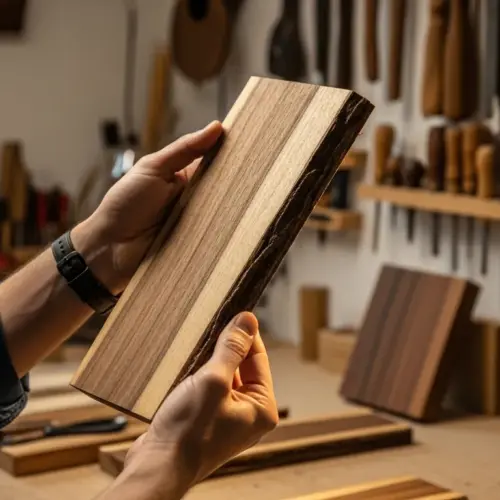

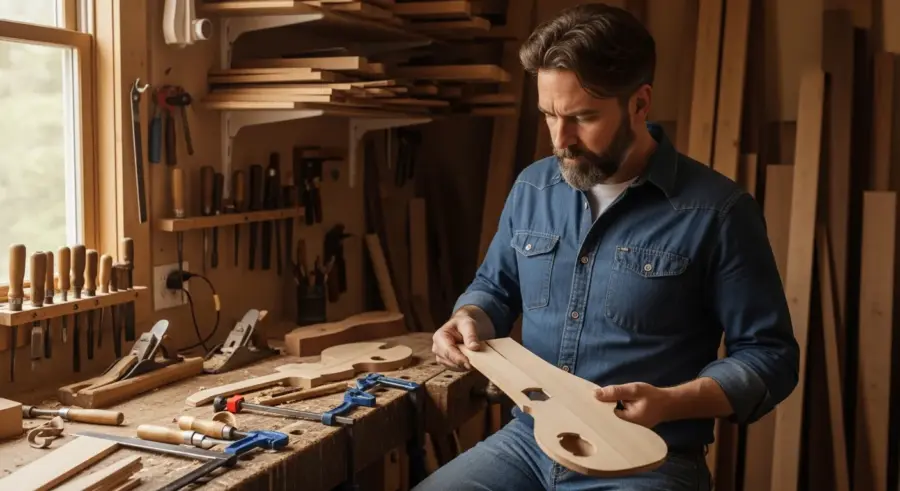
When it comes to guitar building, the choice of tonewood is paramount. It dictates not only the instrument’s aesthetic appeal but also its sonic characteristics. While exotic hardwoods often steal the spotlight, more affordable and readily available options like cottonwood tonewood guitar deserve consideration.
In this article, we’ll explore the use of cottonwood as a tonewood for guitars, examining its properties, workability, and suitability for different types of instruments. We’ll also compare it to other popular tonewoods and provide guidance on sourcing quality cottonwood for your next build.
So, is a cottonwood guitar body a viable option for budget-conscious builders? Let’s find out.
Why Cottonwood is a Budget-Friendly Tonewood Choice
Cottonwood, a member of the Populus genus, is a fast-growing tree found throughout North America. Its abundance translates to lower prices compared to slower-growing, imported hardwoods like mahogany or rosewood.
For beginner luthiers or those experimenting with new designs, cottonwood offers an accessible entry point without breaking the bank. This makes it an attractive option for crafting prototypes or guitars where cost is a primary concern.
Unlike some tonewoods that require specialized harvesting or processing, cottonwood is relatively easy to source and prepare. This further reduces costs and makes it a practical choice for small-scale luthiers or hobbyists.
The cost savings can be significant, allowing builders to allocate more resources to other components like pickups, hardware, or finishing materials. Ultimately, this can lead to a better overall instrument without exceeding a tight budget.
The lower cost of cottonwood also allows for experimentation with different body shapes and construction techniques without the fear of wasting expensive materials. It’s a great way to learn the craft and develop your skills as a luthier.

Furthermore, the readily available nature of cottonwood promotes sustainability in guitar building. Choosing locally sourced and fast-growing tonewoods helps reduce the environmental impact associated with importing exotic hardwoods.
Many builders are now focusing on using sustainable and readily available materials. Cottonwood perfectly fits this philosophy, providing an environmentally conscious alternative without sacrificing too much tonal quality.
Consider the overall cost of a project when selecting tonewoods. Cottonwood can be a game-changer for keeping expenses down while still creating a playable instrument.
The Acoustic Properties of Cottonwood in Guitars
Cottonwood is generally considered to have a neutral tonal character. It doesn’t emphasize any particular frequency range, making it a versatile option for various playing styles and musical genres.
Some luthiers describe the cottonwood guitar sound as having a balanced response with a slight emphasis on the midrange. This can result in a warm and articulate tone that sits well in a mix.
However, cottonwood is also known for being relatively soft and less dense than other tonewoods. This can affect its sustain and projection, potentially resulting in a less resonant and powerful sound compared to hardwoods like mahogany or maple.
The specific acoustic properties of cottonwood can vary depending on the species, density, and cut of the wood. Proper selection and preparation are crucial to maximizing its potential as a tonewood.
The neutral tonal character of cottonwood allows the pickups and other components to really shine through. It acts as a blank canvas, allowing the builder to shape the sound with careful selection of parts.
While it may not have the inherent sustain of mahogany, cottonwood can still produce a respectable amount of sustain with the right construction techniques. A well-fitted neck joint and a resonant bridge can help to improve sustain.
The midrange emphasis can be particularly useful for players who want a guitar that cuts through the mix without being too harsh or brittle. It can also be a good choice for recording, as it tends to sit well in a variety of musical styles.
Consider the type of music you play when evaluating cottonwood as a tonewood. Its balanced tone makes it suitable for a wide range of genres, but it may not be the best choice for players who need a very bright or heavily resonant sound.
The density of the wood also plays a significant role in the overall tone. Denser pieces of cottonwood will generally produce a brighter and more resonant sound, while softer pieces will have a warmer and more mellow tone.
Workability and Finishing Considerations for Cottonwood
Cottonwood is generally easy to work with using both hand and power tools. It cuts cleanly and takes screws well, making it suitable for a variety of construction techniques.
However, its softness can also make it prone to dents and scratches, so care must be taken during handling and assembly. Proper sanding and surface preparation are essential for achieving a smooth and durable finish.
| Property | Cottonwood | Alder | Basswood |
|---|---|---|---|
| Density | Low | Medium | Low |
| Workability | Easy | Easy | Very Easy |
| Grain | Open | Closed | Closed |
| Finish | Requires Sealer | Accepts Finish Well | Accepts Finish Well |
| Cost | Low | Moderate | Moderate |
Due to its open grain structure, cottonwood typically requires a grain filler or sealer before applying a finish. This helps to create a smooth and even surface, preventing the finish from sinking into the pores of the wood.
The ease of workability makes cottonwood a great choice for beginner luthiers who are still developing their skills. It’s forgiving and allows for mistakes without being too costly.
When sanding cottonwood, start with a coarser grit and gradually work your way up to finer grits. This will help to remove any imperfections and create a smooth surface for finishing.
Consider using a hard-drying finish to protect the soft wood from dents and scratches. Polyurethane and epoxy finishes are good options for providing a durable and long-lasting finish.
Experiment with different finishing techniques to achieve the desired look and feel. You can use stains, dyes, or toners to enhance the wood’s natural beauty or create a custom color.
Always wear proper safety gear when working with cottonwood, including a dust mask, eye protection, and hearing protection. This will help to protect you from the hazards of woodworking.
Cottonwood’s Role in Solid-Body Electric Guitars
While less common than alder or ash, cottonwood can be a viable option for solid-body electric guitars. Its neutral tonal characteristics make it a good platform for pickups to shape the overall sound.
Many builders find that cottonwood’s lighter weight can be an advantage, especially for players who prefer a more comfortable and ergonomic instrument. This can be particularly appealing for guitars with larger bodies or those intended for extended playing sessions.
The softness of cottonwood can also contribute to a warmer and more mellow tone, which can be desirable for certain musical styles. However, it’s important to consider that its lower density may result in less sustain compared to denser tonewoods.
To compensate for this, some builders pair cottonwood bodies with denser necks or hardware. This helps to improve sustain and add clarity to the overall sound.
The lighter weight of cottonwood can also reduce fatigue during long gigs or practice sessions. This makes it a good choice for players who prioritize comfort.
Consider using high-output pickups to compensate for the potentially lower sustain of cottonwood. This can help to create a more powerful and aggressive sound.
Experiment with different neck woods to find the perfect balance of tone and sustain. A maple neck can add brightness and clarity, while a mahogany neck can add warmth and sustain.
The neutral tonal character of cottonwood makes it a good choice for experimenting with different pickup configurations. You can use a variety of pickup types to create a unique and versatile sound.
Don’t be afraid to try different hardware options to fine-tune the guitar’s tone and sustain. A heavier bridge or tailpiece can add mass and improve sustain.
Comparing Cottonwood to Alder and Basswood
Alder and basswood are two of the most popular tonewoods for solid-body electric guitars. Comparing cottonwood to these established options can help to determine its suitability for different applications.
Alder is known for its balanced tone, moderate weight, and good resonance. It’s a versatile choice that works well for a wide range of musical styles. However, it’s generally more expensive than cottonwood.
- Alder offers more sustain
- Alder has a more pronounced grain
- Basswood is softer and lighter
- Basswood is more prone to dents
- Cottonwood is the most affordable
Basswood is prized for its light weight, soft texture, and smooth finish. It’s often used for guitars with bright or aggressive pickups, as it helps to tame harsh frequencies. Like cottonwood, it’s relatively affordable, but even softer.
Alder is a great all-around tonewood, but it may not be the best choice for players who want a very lightweight guitar. Cottonwood can be a good alternative for those who prioritize comfort.
Basswood is a good choice for guitars with bright pickups, but it may not be the best choice for players who want a lot of sustain or resonance. Cottonwood offers a slightly more balanced tone than basswood.
Consider the overall tonal goals for your guitar when choosing between cottonwood, alder, and basswood. Each tonewood has its own unique characteristics that can influence the final sound.
Think about the type of music you play and the sound you’re trying to achieve. This will help you to determine which tonewood is the best fit for your needs.
The cost difference between these tonewoods can also be a significant factor. Cottonwood is the most affordable option, while alder is generally the most expensive.
Acoustic Guitars and Cottonwood: Exploring the Possibilities
While less traditional, cottonwood can be used in the construction of acoustic guitars. Its lighter weight and neutral tonal characteristics offer some interesting possibilities for builders willing to experiment.
However, it’s important to acknowledge that cottonwood’s softness and lower density can present challenges. These factors can affect the instrument’s projection, sustain, and overall volume.
One potential application is using cottonwood for the back and sides of an acoustic guitar. Pairing it with a stiffer topwood like spruce or cedar can help to balance its tonal characteristics and improve its projection.
Some builders have also experimented with using cottonwood for the guitar’s top, bracing it carefully to maximize its responsiveness. This approach can result in a unique, warm, and mellow tone, but it requires a skilled and experienced luthier.
Consider using a thicker topwood to compensate for the softness of cottonwood. This can help to improve projection and sustain.
Experiment with different bracing patterns to maximize the responsiveness of the cottonwood top. A lighter bracing pattern can allow the top to vibrate more freely, while a heavier bracing pattern can add stiffness and improve projection.
The lighter weight of cottonwood can make it a good choice for smaller-bodied acoustic guitars. These guitars are often more comfortable to play and can be easier to transport.
Think about the type of music you play when considering cottonwood for an acoustic guitar. Its warm and mellow tone may be well-suited for fingerstyle playing or folk music.
Don’t be afraid to experiment with different tonewood combinations. Pairing cottonwood with other tonewoods can help to create a unique and balanced sound.
Sourcing and Grading Cottonwood Tonewood
When sourcing cottonwood for guitar building, it’s essential to select wood that is properly dried and free from defects. Look for quartersawn or rift-sawn pieces, as these are more stable and less prone to warping than flatsawn lumber.
Examine the wood closely for knots, cracks, and other imperfections that could compromise its structural integrity or acoustic properties. Pay attention to the grain pattern, ensuring that it is straight and consistent throughout the piece.
Consider purchasing cottonwood from a reputable supplier who specializes in tonewoods. These suppliers typically grade their wood based on its quality and suitability for musical instrument construction.
If you’re harvesting your own cottonwood, be sure to follow proper logging and milling practices. Allow the wood to air-dry slowly for several months, followed by kiln-drying to a moisture content of around 6-8%.
Quartersawn wood is more stable because the grain runs perpendicular to the surface. This makes it less likely to warp or twist over time.
Look for cottonwood that has a consistent color and grain pattern. This indicates that the wood is of good quality and has been properly dried.
Avoid cottonwood that has been exposed to moisture or sunlight for extended periods. This can cause the wood to warp or crack.
When inspecting cottonwood, pay close attention to the end grain. This will give you a good indication of the wood’s overall quality and stability.
Consider the source of the cottonwood. Wood that has been harvested from a sustainable forest is a more environmentally friendly choice.
Enhancing Cottonwood’s Tone: Hardware and Electronics
Given cottonwood’s relatively neutral tonal palette, the choice of hardware and electronics becomes even more crucial. These components can significantly shape the final sound of the instrument.
For electric guitars, consider using pickups with a strong output and distinct tonal characteristics. Humbuckers can add warmth and sustain, while single-coils can provide clarity and articulation.
Experiment with different potentiometer values and capacitor types to fine-tune the guitar’s tone controls. Higher value pots will allow more high frequencies to pass through, while different capacitor values will affect the range of the tone control.
The bridge and tailpiece can also influence the guitar’s sustain and resonance. A heavier bridge can add mass and improve sustain, while a lighter tailpiece can enhance the instrument’s responsiveness.
Consider using brass or steel hardware to add brightness and sustain to the guitar’s tone. These materials are more resonant than aluminum or plastic.
Experiment with different pickup wiring configurations to achieve the desired sound. Series wiring will produce a hotter and more aggressive tone, while parallel wiring will produce a cleaner and more articulate tone.
The choice of strings can also have a significant impact on the guitar’s tone. Lighter gauge strings will be easier to bend, while heavier gauge strings will produce a fuller and more powerful sound.
Think about the type of music you play when selecting hardware and electronics. This will help you to choose components that are well-suited for your playing style.
Don’t be afraid to experiment with different combinations of hardware and electronics. The best way to find the perfect sound is to try different things and see what works best for you.
The Future of Cottonwood in Luthierie
As luthiers continue to explore sustainable and affordable tonewood options, cottonwood’s potential may become more fully realized. Its versatility and workability make it an attractive choice for builders seeking to create unique and budget-friendly instruments.
Advancements in wood stabilization and finishing techniques could further enhance cottonwood’s properties as a tonewood. This could lead to instruments that rival the sound and performance of those made with more traditional materials.
Increased awareness of cottonwood’s environmental benefits could also drive its adoption in the luthierie community. As a fast-growing and readily available resource, it offers a more sustainable alternative to endangered or slow-growing hardwoods.
Ultimately, the future of cottonwood in luthierie depends on the willingness of builders to experiment and innovate. By embracing its unique qualities and exploring its full potential, luthiers can unlock new sonic possibilities and create instruments that are both beautiful and sustainable.
The development of new hybrid guitars that combine cottonwood with other tonewoods could also expand its use in luthierie. This could allow builders to create instruments with a wider range of tonal characteristics.
The growing popularity of DIY guitar building could also drive the adoption of cottonwood. Its affordability and workability make it an ideal choice for beginner luthiers.
The increasing demand for sustainable products is likely to further boost the appeal of cottonwood. As consumers become more aware of the environmental impact of their purchases, they will be more likely to choose instruments made from sustainable materials.
The future of cottonwood in luthierie is bright. With continued innovation and experimentation, it has the potential to become a more widely used and highly regarded tonewood.
Conclusion
Cottonwood tonewood guitar represents a viable and budget-friendly option for guitar building, particularly for solid-body electrics and experimental acoustic instruments. Its neutral tonal characteristics, ease of workability, and affordability make it an attractive choice for beginner luthiers and those seeking sustainable alternatives.
While it may not possess the same sustain and projection as denser hardwoods, careful selection, preparation, and the right hardware and electronics can help to maximize its potential. By embracing its unique qualities, builders can create instruments that are both affordable and sonically pleasing.
So, the next time you’re considering tonewood options for your guitar build, don’t overlook the humble cottonwood. It may just surprise you with its versatility and value.
Experiment with a cottonwood guitar body and discover the unique sonic possibilities it offers.
Consider the long-term benefits of using a sustainable tonewood like cottonwood. You’ll be contributing to a more environmentally responsible approach to guitar building.
Embrace the challenge of working with a less traditional tonewood. You may discover new and innovative ways to build guitars.
Share your experiences with cottonwood guitar building with others. This can help to promote its use and inspire other luthiers to experiment with it.
The future of guitar building is in the hands of innovative and forward-thinking luthiers. By embracing sustainable materials and exploring new possibilities, we can create instruments that are both beautiful and environmentally responsible.