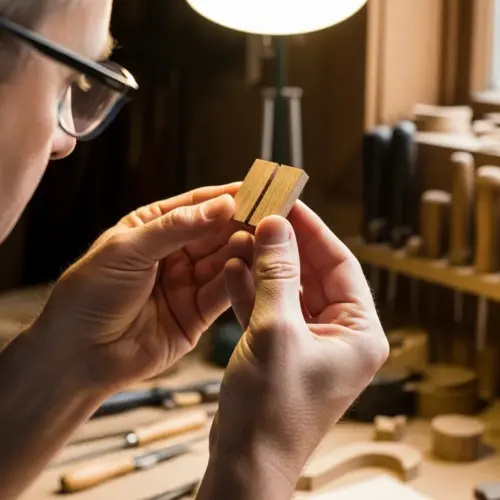


Tasmanian Blackwood is a prized tonewood that offers a unique blend of beauty, workability, and tonal properties. This makes it a favorite among luthiers, particularly for crafting ukuleles.
Its versatility allows it to be used for various parts of the instrument, from the top to the back and sides. If you’re considering a new ukulele or are a luthier seeking a reliable and attractive tonewood, the tasmanian blackwood ukulele might be the perfect choice.
In this article, we’ll explore the characteristics of tasmanian blackwood, its tonal qualities, and how it compares to other tonewoods. We will also cover its sustainability and the best practices for finishing it.
Tasmanian Blackwood: Appearance, Origin, and Density
Tasmanian Blackwood, scientifically known as Acacia melanoxylon, is native to southeastern Australia, particularly Tasmania. It is a fast-growing tree that can reach heights of up to 100 feet, though it’s more commonly found at around 60-80 feet in managed forests.
The wood itself is visually striking, with a heartwood that ranges from golden brown to a deep reddish-brown, often featuring darker streaks. This variation in color and grain makes each piece unique, adding to its appeal for luthiers who value aesthetic individuality.
The sapwood is typically paler, almost white, and is usually removed during the milling process to ensure consistent color in the final product. Tasmanian Blackwood’s density typically falls between 560 and 660 kg/m³, making it a medium-density hardwood.
This density contributes to its tonal properties, offering a balance of warmth and clarity that is highly desirable in musical instruments. Its workability is also enhanced by this density, allowing for clean cuts and smooth finishes.
The appearance of Tasmanian Blackwood can also vary depending on the specific growing conditions and the age of the tree. Some pieces may exhibit a quilted or fiddleback figure, adding to their visual appeal and value. These figured pieces are highly sought after by luthiers for their unique aesthetic qualities.
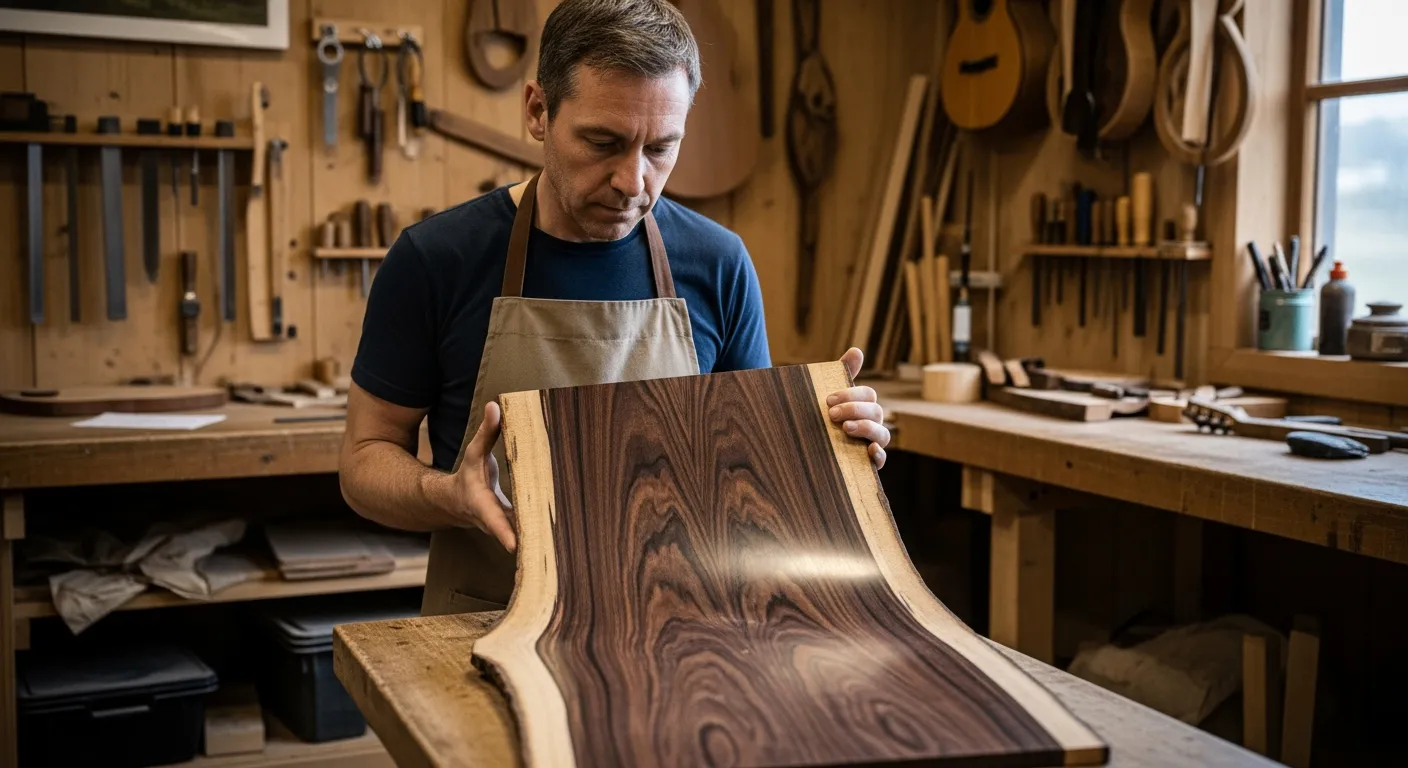
The origin of Tasmanian Blackwood in southeastern Australia contributes to its unique properties. The climate and soil conditions in this region influence the wood’s growth rate, density, and color. Sustainable forestry practices in Tasmania ensure the long-term availability of this valuable resource.
The density of Tasmanian Blackwood is a crucial factor in determining its suitability for musical instruments. A medium density hardwood like Tasmanian Blackwood provides a good balance of strength, stiffness, and tonal properties. This balance is essential for creating instruments that are both durable and resonant.
The density also affects the instrument’s sustain and projection. Denser woods tend to have longer sustain and greater projection, while less dense woods may have a warmer, more mellow tone. Tasmanian Blackwood’s medium density allows it to strike a balance between these two extremes.
Tonal Characteristics of Tasmanian Blackwood in Ukuleles
The tonal characteristics of tasmanian blackwood ukulele are often described as warm, balanced, and articulate. It offers a good blend of low-end warmth and high-end clarity, making it suitable for a wide range of playing styles.
Unlike some hardwoods that can sound overly bright or harsh, tasmanian blackwood provides a mellow tone with a pleasing sustain. This makes it particularly well-suited for ukuleles, where a balanced and sweet sound is often preferred.
Many players find that tasmanian blackwood ukuleles have a responsive and dynamic character. They react well to changes in playing intensity, allowing for expressive performances.
The wood’s ability to project sound clearly without sacrificing warmth makes it a versatile choice for both strumming and fingerpicking styles. Its tonal complexity also allows it to blend well in ensemble settings, providing a solid foundation without overpowering other instruments.
The warmth of Tasmanian Blackwood contributes to a rich and full sound, especially in the lower frequencies. This warmth is particularly noticeable when strumming chords, providing a pleasing and balanced harmonic content. The clarity of the wood ensures that individual notes are well-defined, making it suitable for fingerpicking melodies.
The balanced tonal properties of Tasmanian Blackwood make it a versatile choice for different ukulele sizes and tunings. Whether you’re playing a soprano, concert, tenor, or baritone ukulele, Tasmanian Blackwood can provide a consistent and pleasing sound. Its versatility extends to different playing styles as well.
The responsiveness of Tasmanian Blackwood allows players to easily control the dynamics of their playing. A light touch will produce a soft and mellow sound, while a more aggressive attack will result in a louder and more vibrant tone. This responsiveness makes it a great choice for expressive players who want to convey a wide range of emotions through their music.
The sustain of Tasmanian Blackwood is another important factor in its tonal characteristics. Sustain refers to the length of time that a note rings out after it is played. Tasmanian Blackwood provides a good level of sustain, allowing notes to linger and blend together, creating a smooth and musical sound.
Working with Tasmanian Blackwood: Stability and Grain
Tasmanian Blackwood is generally considered a pleasure to work with, thanks to its moderate hardness and straight grain. It machines cleanly, holds screws well, and glues without issue.
However, like any wood, it has its quirks; it’s essential to understand these to achieve the best results. One of the primary considerations when working with tasmanian blackwood is its stability.
| Property | Tasmanian Blackwood | Mahogany | Koa |
|---|---|---|---|
| Density (kg/m³) | 560-660 | 500-850 | 380-545 |
| Janka Hardness (lbf) | 1160 | 800-900 | 1180 |
| Dimensional Stability | Moderate | High | Moderate |
| Grain | Straight to Wavy | Straight | Variable |
While it is reasonably stable once properly dried, it can be prone to movement if not handled carefully during the construction process. Proper acclimation to the workshop environment is crucial to minimize warping or cracking.
The straight grain of Tasmanian Blackwood makes it easy to work with hand tools, such as planes and chisels. This is particularly important for luthiers who prefer traditional building methods. The wood’s consistent texture also contributes to a smooth and even finish.
The moderate hardness of Tasmanian Blackwood strikes a good balance between workability and durability. It is hard enough to resist dents and scratches, but not so hard that it is difficult to cut and shape. This makes it a good choice for both experienced and novice luthiers.
Proper drying is essential to ensure the stability of Tasmanian Blackwood. Kiln-drying is the most common method, as it allows for precise control of the moisture content. The wood should be dried to a moisture content of around 6-8% for optimal stability.
Acclimation is the process of allowing the wood to adjust to the humidity and temperature of the workshop. This can be achieved by storing the wood in the workshop for several weeks before starting the construction process. This will help to minimize any movement or warping that may occur after the instrument is built.
Finishing Techniques for Tasmanian Blackwood
Tasmanian Blackwood takes finishes exceptionally well, allowing luthiers to enhance its natural beauty and protect the instrument. The wood’s closed grain structure means that it typically doesn’t require a grain filler, simplifying the finishing process.
However, proper surface preparation is essential to ensure an even and flawless finish. Sanding the wood to a fine grit, typically around 320-400, will create a smooth surface that allows the finish to adhere properly.
Many luthiers prefer using lacquer finishes on tasmanian blackwood ukuleles, as they provide excellent clarity and protection. Nitrocellulose lacquer is a popular choice due to its ease of application and ability to be buffed to a high gloss.
However, other finishes, such as polyurethane or varnish, can also be used, depending on the desired aesthetic and level of protection. Oil finishes can also be used to bring out the natural beauty of the wood, but they will not provide as much protection as lacquer or polyurethane.
The closed grain structure of Tasmanian Blackwood means that it does not have large pores that need to be filled before finishing. This saves time and effort in the finishing process. It also allows the natural beauty of the wood to shine through.
Sanding is a crucial step in preparing Tasmanian Blackwood for finishing. It is important to sand the wood evenly and consistently to create a smooth and uniform surface. Start with a coarser grit sandpaper and gradually work your way up to a finer grit.
Lacquer finishes provide excellent protection against moisture, scratches, and other types of damage. They also enhance the clarity and depth of the wood’s grain. Nitrocellulose lacquer is a classic choice for musical instruments, as it is easy to apply and can be buffed to a high gloss.
Oil finishes can be used to create a more natural and organic look. They penetrate the wood and enhance its natural color and grain. However, oil finishes do not provide as much protection as lacquer or polyurethane, and they may require more frequent maintenance.
Tasmanian Blackwood’s Use in Tops, Backs, and Sides
Tasmanian Blackwood’s versatility extends to its use in various parts of the ukulele. It is commonly employed for the back and sides of the instrument, where its tonal warmth and attractive grain patterns can be fully appreciated.
When used for the back and sides, it contributes to a balanced and resonant sound, enhancing the overall projection and sustain of the ukulele. Some luthiers also use tasmanian blackwood for the top of the ukulele, although this is less common.
When used as a top wood, tasmanian blackwood provides a warm and mellow tone, which can be particularly appealing for players who prefer a softer sound. However, it may not have the same projection and clarity as spruce or cedar, which are more commonly used for ukulele tops.
Ultimately, the choice of using tasmanian blackwood for the top depends on the desired tonal characteristics and the luthier’s preferences. The combination of tasmanian blackwood back and sides with a spruce or cedar top is a popular configuration, offering a balance of warmth, clarity, and projection.
The back and sides of a ukulele contribute significantly to its overall tone and projection. The wood used for the back and sides reflects and amplifies the sound produced by the top. Tasmanian Blackwood’s warmth and resonance make it an excellent choice for this purpose.
The top of a ukulele is the primary source of its sound. The top vibrates in response to the strings, producing the instrument’s tone. Spruce and cedar are commonly used for ukulele tops because of their light weight and stiffness, which allow them to vibrate freely.
When Tasmanian Blackwood is used for the top, it produces a warmer and mellower tone than spruce or cedar. This can be a desirable quality for players who prefer a softer and more intimate sound. However, it may not be the best choice for players who need a lot of projection and clarity.
Combining Tasmanian Blackwood back and sides with a spruce or cedar top is a popular way to achieve a balanced and versatile tone. This combination provides the warmth and resonance of Tasmanian Blackwood with the projection and clarity of spruce or cedar. This configuration is suitable for a wide range of playing styles and musical genres.
Tasmanian Blackwood vs. Other Tonewoods for Ukuleles
When considering tonewoods for ukuleles, it’s essential to compare tasmanian blackwood with other popular options to understand its unique strengths and weaknesses. Koa, mahogany, and spruce are among the most commonly used tonewoods for ukuleles, each offering distinct tonal characteristics.
Koa, native to Hawaii, is often considered the “classic” ukulele tonewood, known for its bright and focused sound with excellent sustain. However, koa can be more expensive and less readily available than tasmanian blackwood, making the latter a more accessible alternative.
- Koa: Bright, focused sound, excellent sustain, can be expensive
- Mahogany: Warm, mellow tone, good sustain, affordable and readily available
- Spruce: Bright, clear tone, excellent projection, commonly used for tops
- Cedar: Warm, mellow tone, good for fingerpicking, softer than spruce
- Tasmanian Blackwood: Balanced, warm, articulate, versatile and sustainable
Mahogany is another popular choice, offering a warm and mellow tone with good sustain, similar to tasmanian blackwood. Mahogany is typically more affordable and readily available than koa, making it a budget-friendly option for ukulele construction.
Spruce is commonly used for ukulele tops due to its bright, clear tone and excellent projection. It is a versatile tonewood that works well for a variety of playing styles. However, spruce can sound harsh or brittle if not properly seasoned or paired with the right back and sides.
Cedar is another popular choice for ukulele tops, offering a warm and mellow tone that is well-suited for fingerpicking. It is a softer wood than spruce, which gives it a more responsive and intimate sound. However, cedar may not have the same projection and clarity as spruce.
Compared to koa, Tasmanian Blackwood offers a similar level of warmth and sustain, but with a slightly more balanced tonal response. It is also more readily available and affordable than koa, making it a more practical choice for many luthiers and players. Tasmanian Blackwood can be a great alternative.
Compared to mahogany, Tasmanian Blackwood offers a similar level of warmth and sustain, but with a slightly more articulate and complex tonal response. It also has a more visually striking appearance than mahogany, with its rich colors and grain patterns. Tasmanian Blackwood offers a unique combination of tonal and aesthetic qualities.
The Sustainability of Tasmanian Blackwood
Sustainability is an increasingly important consideration when choosing tonewoods, and tasmanian blackwood fares well in this regard. Tasmanian Blackwood is sourced from sustainably managed forests in Australia, where strict regulations are in place to ensure responsible harvesting practices.
These forests are managed to promote biodiversity and long-term forest health, ensuring that the resource remains available for future generations. Additionally, tasmanian blackwood is a relatively fast-growing species, which further enhances its sustainability.
Compared to some other tonewoods that are sourced from old-growth forests or regions with less stringent environmental regulations, tasmanian blackwood offers a more sustainable choice. Luthiers and players who prioritize environmental responsibility can feel confident in selecting tasmanian blackwood for their ukuleles.
Certifications such as the Forest Stewardship Council (FSC) can provide further assurance that the wood is sourced from well-managed forests. Choosing FSC-certified tasmanian blackwood ensures that the wood has been harvested in an environmentally and socially responsible manner.
Sustainable forest management practices include selective harvesting, which involves removing only mature trees while leaving younger trees to grow and regenerate the forest. This helps to maintain the forest’s biodiversity and ecological integrity. It also ensures a continuous supply of timber for future generations.
Tasmanian Blackwood’s fast growth rate allows for shorter rotation cycles, meaning that trees can be harvested more frequently without depleting the forest resource. This contributes to its sustainability compared to slower-growing species. It also makes it a more economically viable option for forest managers.
Choosing tonewoods from sustainably managed forests helps to protect endangered species and their habitats. It also supports local communities that depend on the forest for their livelihoods. By choosing sustainable tonewoods, luthiers and players can contribute to the preservation of our planet’s forests.
The FSC certification is a globally recognized standard for responsible forest management. It ensures that forests are managed in an environmentally sound, socially equitable, and economically viable manner. Choosing FSC-certified Tasmanian Blackwood provides assurance that the wood has been harvested according to these principles.
Notable Tasmanian Blackwood Ukulele Brands
Several reputable ukulele brands incorporate Tasmanian Blackwood into their instruments. These brands often highlight the wood’s unique tonal and aesthetic qualities.
One example is KoAloha, a Hawaiian ukulele manufacturer known for its innovative designs and exceptional craftsmanship. They have used Tasmanian Blackwood in limited edition models.
Another brand, Pono, offers a range of ukuleles featuring Tasmanian Blackwood back and sides paired with a spruce or cedar top. These ukuleles are praised for their balanced tone and excellent value.
Finally, smaller boutique luthiers also frequently use Tasmanian Blackwood. These builders often choose it for custom instruments.
KoAloha’s use of Tasmanian Blackwood in limited edition models demonstrates their commitment to exploring new and innovative tonewoods. Their ukuleles are known for their exceptional tone, playability, and craftsmanship. The use of Tasmanian Blackwood adds a unique visual and tonal dimension to their instruments.
Pono ukuleles offer a great value for the price, providing a high-quality instrument at an affordable price point. Their use of Tasmanian Blackwood back and sides contributes to a balanced and resonant tone. Pairing it with a spruce or cedar top creates a versatile instrument suitable for a wide range of playing styles.
Boutique luthiers often choose Tasmanian Blackwood for its unique tonal and aesthetic qualities. They are able to carefully select and match the wood to create custom instruments that meet the specific needs and preferences of their clients. These custom ukuleles are often highly prized for their exceptional tone, playability, and beauty.
Other brands that have used Tasmanian Blackwood in their ukuleles include Kanile’a, Kamaka, and G String Ukuleles. These brands are all known for their high-quality instruments and their commitment to using sustainable tonewoods. Their use of Tasmanian Blackwood reflects the growing popularity of this versatile and sustainable tonewood.
Tips for Maintaining a Tasmanian Blackwood Ukulele
Proper maintenance is essential to keep your tasmanian blackwood ukulele in top condition. Consistent care ensures its longevity and tonal quality.
One of the most important aspects of ukulele maintenance is humidity control. Ukuleles are susceptible to changes in humidity, which can cause the wood to swell or shrink, leading to cracks, warping, or other damage.
Ideally, ukuleles should be stored in a stable environment with a relative humidity of around 45-55%. Using a humidifier or dehumidifier in your home or studio can help maintain this level.
Additionally, storing your ukulele in a case when not in use provides an extra layer of protection against humidity and temperature fluctuations. Regular cleaning with a soft, dry cloth can also help remove dust and fingerprints, keeping the finish looking its best.
In addition to humidity control, it is also important to protect your ukulele from extreme temperatures. Avoid leaving it in direct sunlight or in a hot car, as this can damage the finish and cause the wood to warp. Store it in a cool, dry place when not in use.
Regularly check the strings on your ukulele and replace them when they become worn or damaged. Old strings can sound dull and lifeless, and they can also be more prone to breaking. Use high-quality strings that are designed for ukuleles.
Clean your ukulele regularly with a soft, dry cloth to remove dust, fingerprints, and other debris. Avoid using harsh chemicals or abrasive cleaners, as these can damage the finish. A microfiber cloth is a good choice for cleaning your ukulele.
If you notice any cracks, warping, or other damage to your ukulele, take it to a qualified luthier for repair. Do not attempt to repair it yourself, as this could cause further damage. A luthier can properly assess the damage and make the necessary repairs to restore your ukulele to its original condition.
Conclusion
Tasmanian Blackwood stands out as a versatile and sustainable tonewood for ukulele construction. Its balanced tonal properties, attractive appearance, and ease of workability make it a favorite among luthiers and players alike.
Whether you’re a seasoned ukulele enthusiast or a beginner looking for your first instrument, a tasmanian blackwood ukulele offers a unique blend of warmth, clarity, and beauty. Its sustainability adds to its appeal.
The combination of tonal warmth, clarity, and balanced response makes Tasmanian Blackwood a great choice for a variety of playing styles. From strumming chords to fingerpicking melodies, it offers a versatile and expressive sound.
Its sustainable sourcing ensures that you can enjoy your instrument knowing that you are supporting responsible forest management practices. This makes it a great choice for environmentally conscious musicians.